Refrigerant
Fridges, freezers, window units
Refrigerant has to be recovered before final disposal. EPA does not accept a sticker on the appliance as proof; the final disposer still needs the signed statement.1
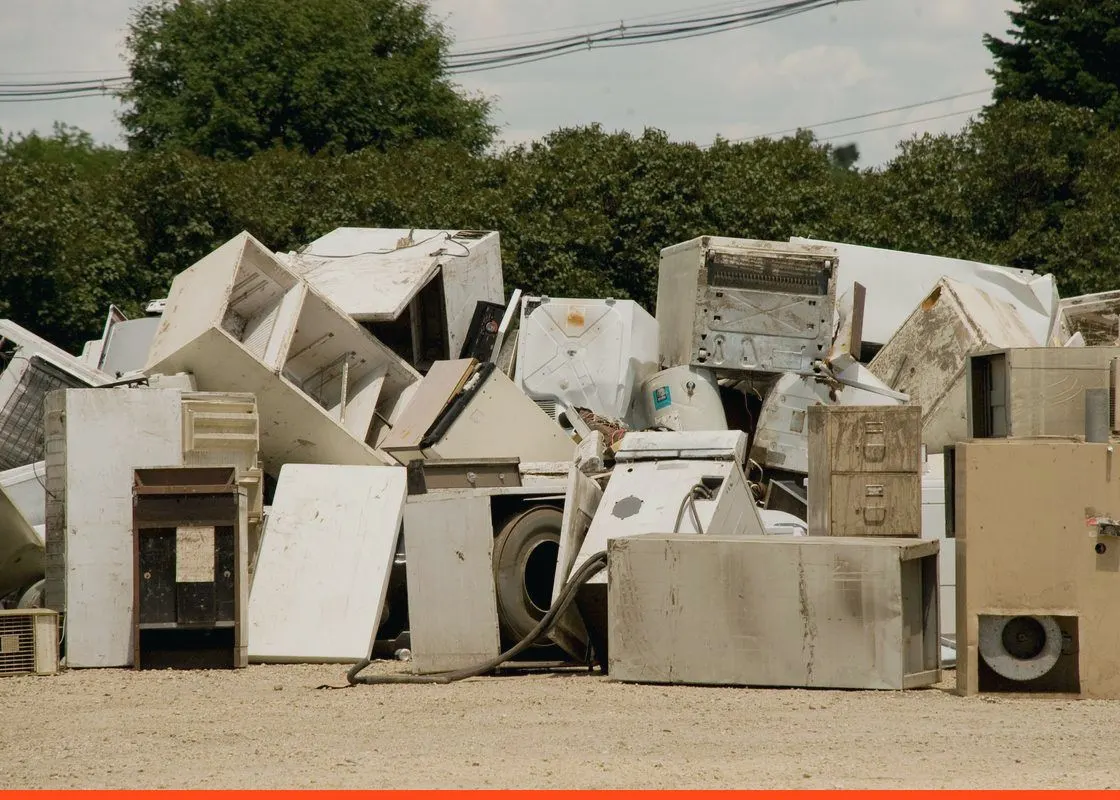
Old appliances are mostly metal, and metal recyclers want them. The catch is what is inside. Refrigerators, freezers and window air conditioners usually reach the waste stream with their refrigerant still in them, and federal rules require it to be recovered before final disposal.1 Sort what you have into those two groups before anything is loaded.
Why it is its own stream
Every appliance falls into one of two groups. The first needs refrigerant recovered and documented before it is scrapped. The second is metal once it is unhooked and drained. EPA's per-unit weights are on each tag.2
Which way out
For a few appliances, the right tool is usually not a dumpster.
A crew carries them out and hauls them away in one visit, often with the rest of a cleanout. Tell us which ones hold refrigerant. See junk hauling and cleanouts.
Washers, dryers and ranges can ride with remodel debris if the provider agrees. Our dumpster guide lists fridges, freezers and window units as ask first.
Buying a new fridge? The retailer delivering it, or a utility appliance recycling program, may take the old one. EPA's Responsible Appliance Disposal partners include utilities and retailers.4
How heavy
EPA's per-unit weights, and what ten of each come to.2 Handy for a cleanout of a building with many units.
| Appliance | EPA weight, one unit | Ten units |
|---|---|---|
| Refrigerator | 250 lb | About 1.25 tons |
| Clothes washer | 150 lb | About 0.75 tons |
| Stove | 150 lb | About 0.75 tons |
| Clothes dryer | 125 lb | About 0.63 tons |
| Dishwasher | 125 lb | About 0.63 tons |
Loose in a container, EPA puts major appliances at about 145 pounds a cubic yard, so they fill space well before they reach a typical weight limit.2 Limits vary by hauler and market, so confirm the tons included in writing. The dumpster weight limits guide explains tons included, and the dumpster size guide compares sizes.
What is inside
The metal shell is the easy part. What needs handling is inside.
Refrigerant
Refrigerant has to be recovered before final disposal. EPA does not accept a sticker on the appliance as proof; the final disposer still needs the signed statement.1
Used oil, mercury, PCBs
EPA's Responsible Appliance Disposal program counts avoiding the release of used oil, mercury and PCBs among the reasons its partners dispose of old refrigerated appliances with care.4 One more reason to send them to a recycler that handles them.
Water and gas
Water left in a tank or drum adds weight and leaks in the truck. Shut off and disconnect water and gas lines, and drain what you can, before the unit is moved.
Doors and lids
A fridge or freezer waiting at the curb or in a yard should not be able to close on anyone. Take the door off, or tape it shut, until pickup.
Prep
Every appliance, by type, and whether it holds refrigerant.
A retailer delivering a replacement, or a utility program, may take the old unit.
Water and gas off and disconnected by someone qualified. Drain hoses and tanks.
Food out of fridges, doors off or taped shut, loose shelves removed.
Know who recovers it and who signs the statement before a fridge goes to scrap.
A copy of the signed statement or contract stays with the job records.
Keep it out
Until it is dealt with, each of these can get a load refused. The disposal site or recycler has the final say, and state rules can be stricter.
The rules
Federal rules set the floor. States, cities and the recycler can add to them.
40 CFR 82, Subpart F
Under EPA's Section 608 safe disposal rules, the final person in the disposal chain, such as a scrap metal recycler or landfill owner, is responsible for making sure refrigerant is recovered before final disposal.1
40 CFR 82.155(b)
The final processor either recovers the refrigerant or verifies recovery. A signed statement must include the name and address of the person who recovered the refrigerant and the date. A contract with a regular supplier can take its place.5
40 CFR 82.155(b)(iii)
If all the refrigerant leaked out, the final processor needs a signed statement saying so. Cutting refrigerant lines does not count as a leak.5
40 CFR 82.155(c)
The final processor keeps the signed statements or contracts on site, on paper or electronically, for three years.5
How it works with Detritus
Send one request. For a handful of appliances, we source a local junk hauling crew to load and haul them; for a remodel or a large cleanout, a roll-off from a local provider in the markets we serve. Availability varies by market. Tell us which appliances hold refrigerant before anything is loaded, and we confirm with the provider how recovery is handled.
Decide
| Your situation | What to do |
|---|---|
| Replacing one fridge | Ask the retailer delivering the new one, or your utility, to take the old one |
| A few appliances in a move-out | A junk hauling crew. See junk hauling and cleanouts |
| A kitchen remodel with an old range and dishwasher | Declare them on the roll-off quote, disconnected and drained |
| A building full of old units | Plan refrigerant recovery first, then metal in its own container. See scrap metal dumpsters |
| Not sure if it holds refrigerant | Treat it as if it does, and ask before it is loaded |
| A dumpster or a crew? | Compare them in dumpster vs junk removal |
Common questions
Only after the refrigerant has been recovered. Federal rules make the final party in the disposal chain responsible for that, with a signed statement, so ask before you load one.
Often, if the provider agrees and they are disconnected and drained. Declare them when you order, because they are mostly metal and some loads go to a recycler.
Someone using proper recovery equipment, before the appliance reaches final disposal. The scrap recycler or landfill at the end of the chain must recover it or get a signed statement that it was recovered.
The name and address of the person who recovered the refrigerant and the date it was recovered. A contract with a regular supplier can take its place.
For a few appliances, junk hauling is usually simpler because a crew does the lifting. For a remodel or a large cleanout with other debris, a roll-off can make sense.
EPA uses 250 pounds for a refrigerator, 150 for a washer or stove and 125 for a dryer or dishwasher.
Call sales at (888) 588-2607 or request a quote with the address, each appliance and which ones hold refrigerant.
List them and say which hold refrigerant. Local providers do the work; we hold the contract, own the problems, and send one bill.
Related guides
Sources