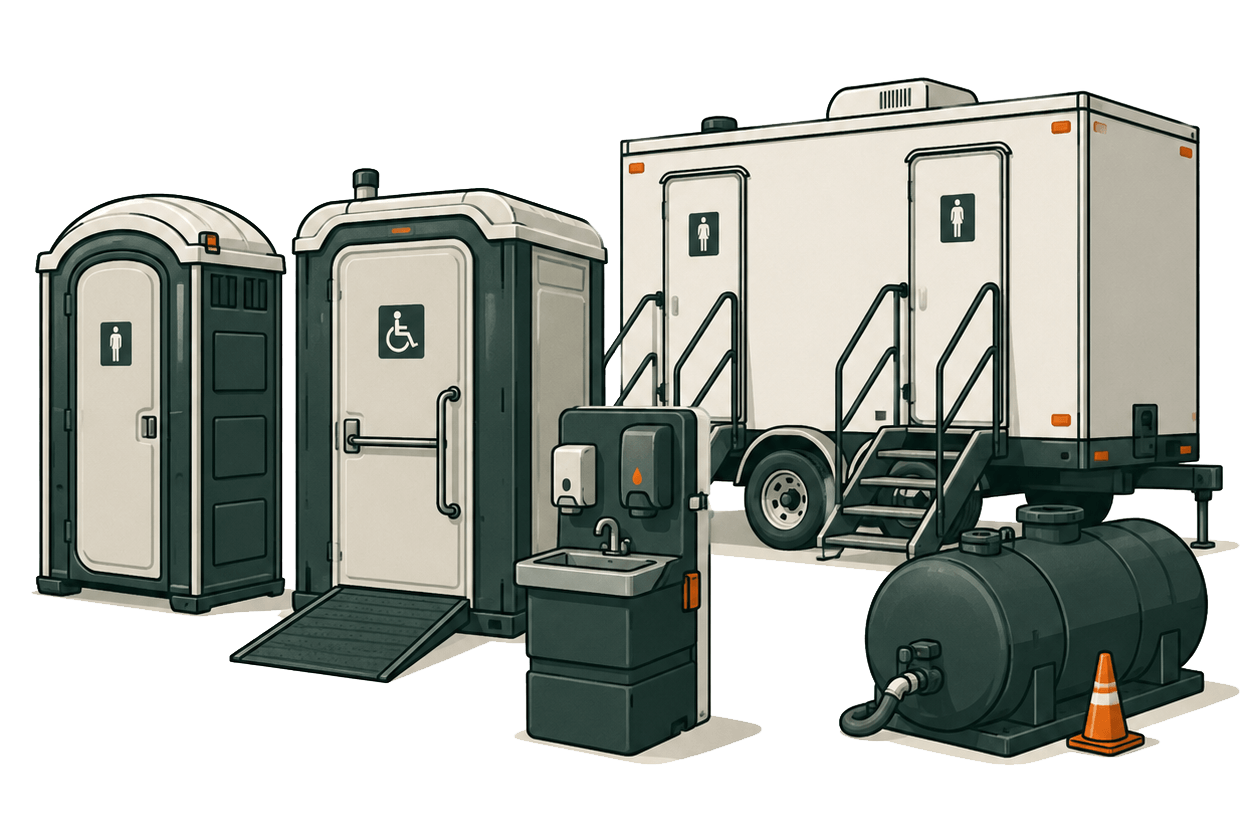
Portable sanitation
Standard and ADA restrooms, hand-wash stations, restroom and shower trailers, holding tanks, and scheduled septic service.
Detritus/Construction site services
One relationship, local providers
Detritus manages portable sanitation, dumpsters and waste, fencing, water, fuel, storage, temporary offices, power, and other temporary site services for construction programs operating across multiple U.S. markets.
Updated October 9, 2026.
Your projects use local service capacity without making every project team manage a different set of local vendors. Detritus holds the customer relationship, provider network, pricing, service records, compliance, billing, and escalation above it.
The operating problem
Finding a portable toilet or roll-off container in a major market is usually straightforward. The work changes when you have projects in twenty markets, several service categories on each site, and a superintendent who does not care whose fault a missed service was.
Without one program owner, each site builds its own vendor list. Rates, insurance certificates, service records, and invoices spread across providers and project teams. The same sourcing work starts over when the next project opens.
Detritus gives those local services one operating layer. The provider can change by market, category, capacity, or project phase. Your procurement process and escalation path do not.
Services under one relationship
Combine services from several categories under the same agreement, account team, and billing structure.
Standard and ADA restrooms, hand-wash stations, restroom and shower trailers, holding tanks, and scheduled septic service.
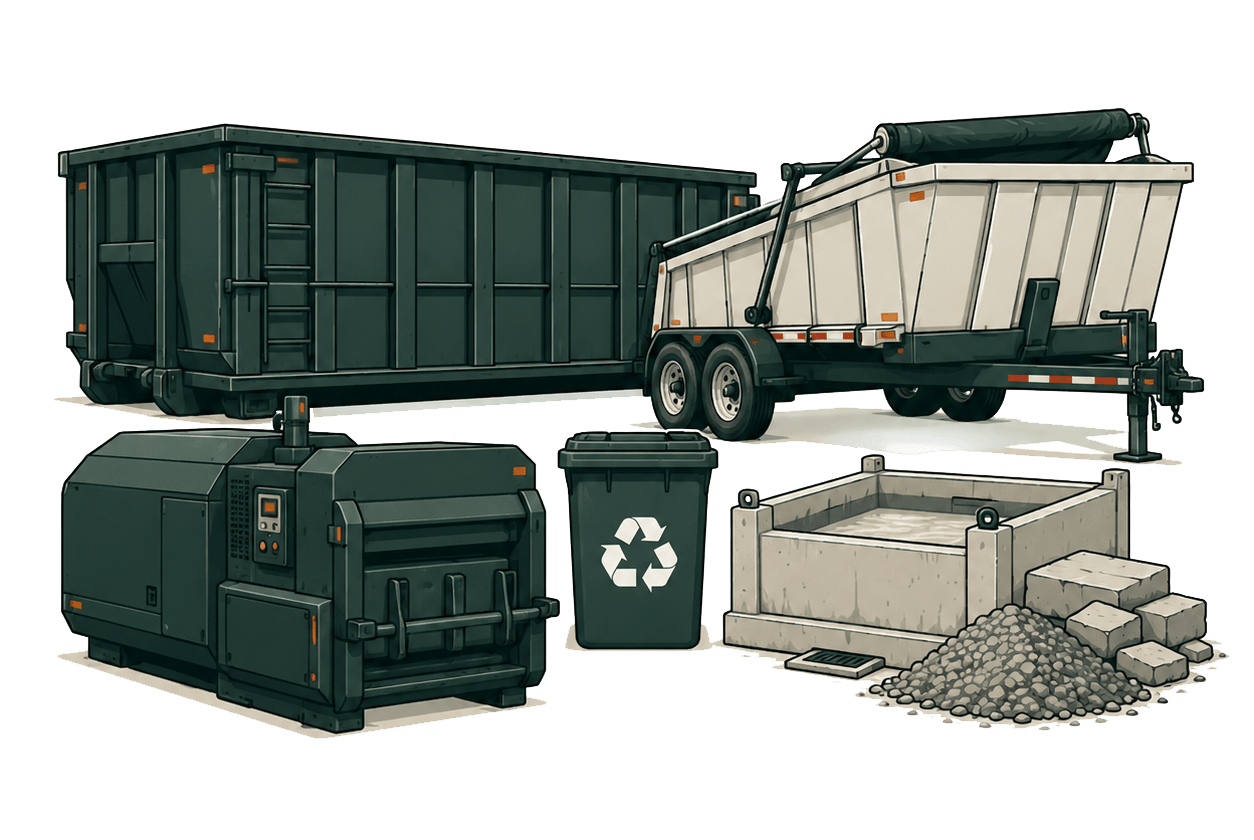
Roll-off dumpsters, dump trailers, compactors, recycling streams, hazardous waste, concrete washout, and aggregate haulage.
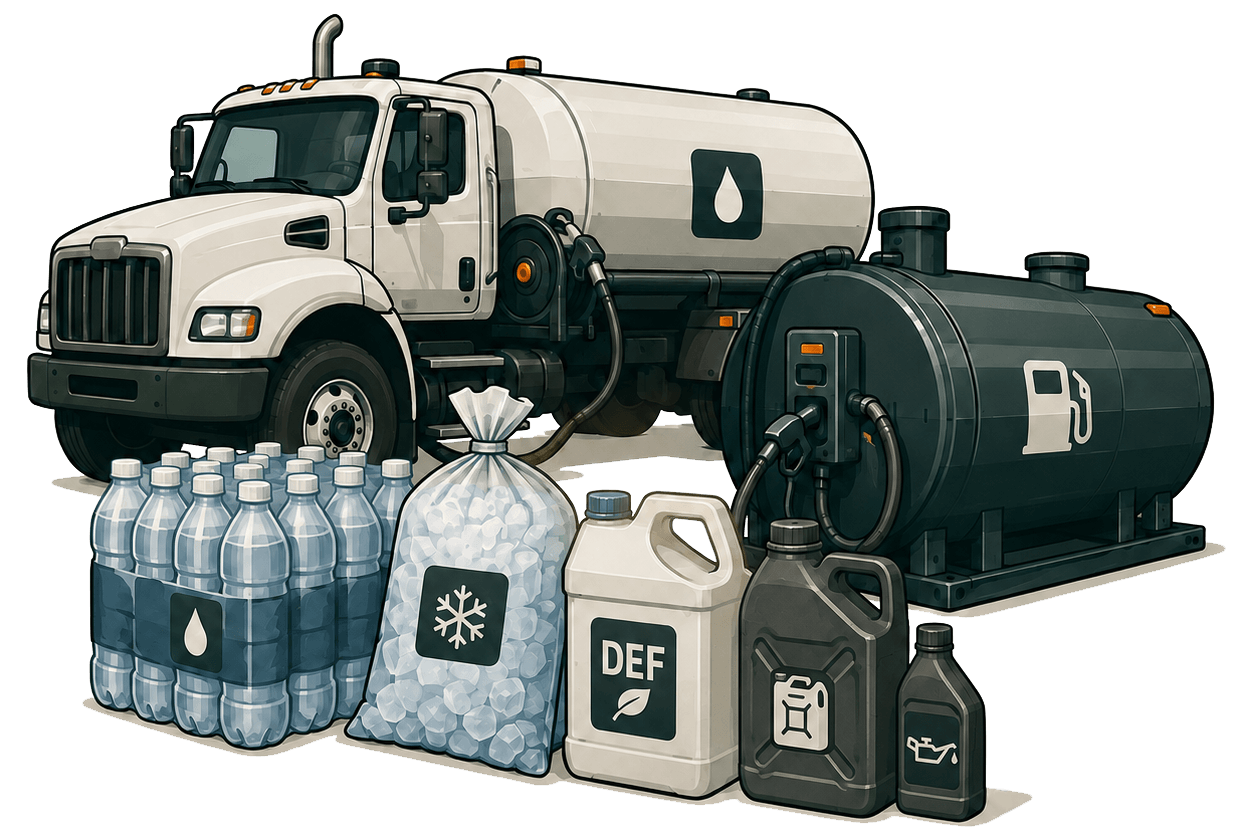
Potable and non-potable water, bottled water, packaged ice, diesel, gasoline, DEF, and lubricants.
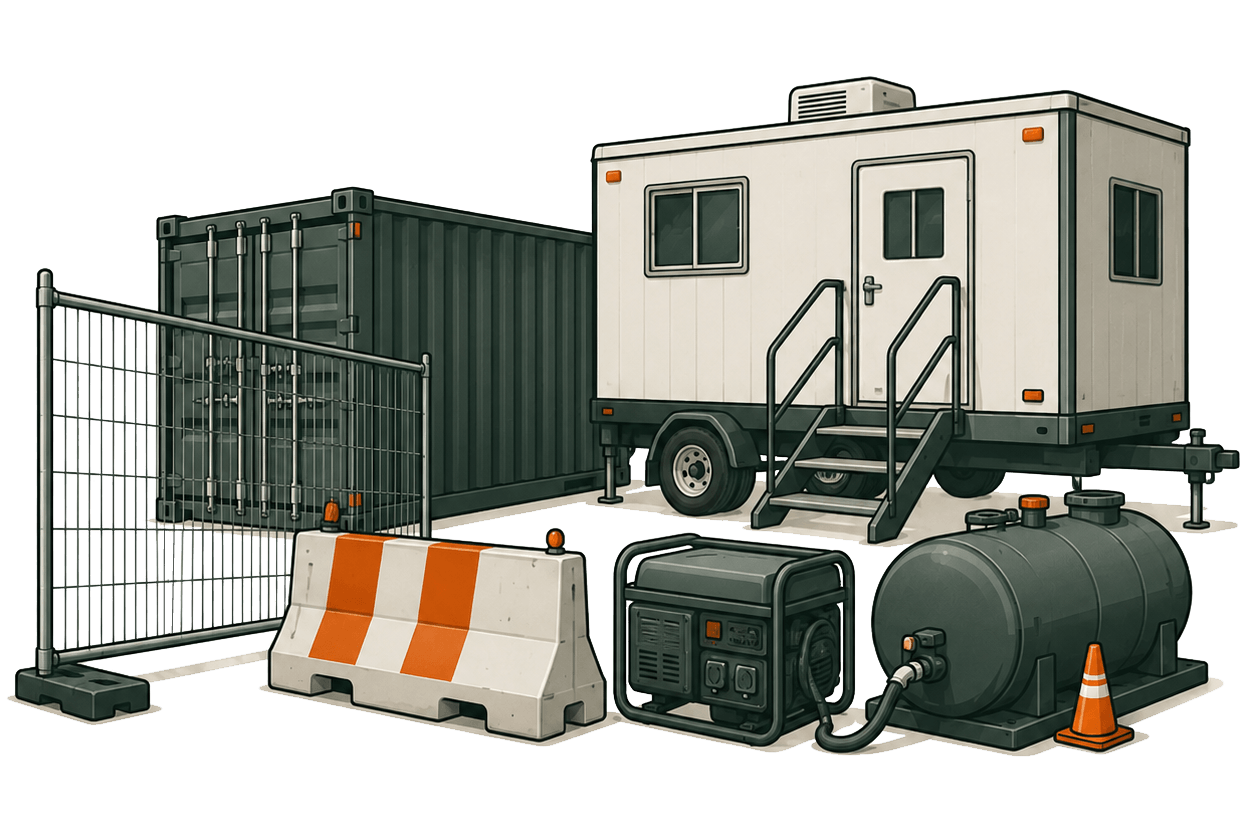
Temporary fencing, barricades, storage containers, office trailers, generators, fuel tanks, and heavy equipment.
One program across markets
A project address is matched against provider coverage, rates, insurance status, and service history. Pricing uses paid local transaction history where it exists, then nearby markets and provider rate cards where it does not.
Match the site and scope to providers whose documented service radius, capacity, rates, insurance status, and history fit the work.
Create a record for each delivery, service cycle, swap, tonnage event, and removal. Scheduled exceptions surface before they become an unanswered field complaint.
Keep the provider relationship, insurance documentation, service issues, and substitutions behind one named Detritus account team.
Apply account rates and tie provider charges to service records before producing one consolidated invoice, or invoices split by entity, region, or cost center.
Why the provider network exists
Detritus does not own a national fleet, and that is deliberate. Local providers perform the physical service, while Detritus manages the coverage, commercial terms, service records, compliance, escalation, and billing that make those providers operate as one program for the customer.
We are a managed provider network, not a referral service. A referral ends when a local company is introduced. With Detritus, the field work is local, but the commercial and operating accountability stays with us.
Construction sites are chosen for the project, not for their proximity to a service yard. A strong local provider can still run out of inventory or route capacity at peak. A distributed network lets the provider mix follow the actual location and demand without returning the complexity to your team.
Read the delivery-record analysis behind the provider model→
Nine questions to ask before you award a site services vendor→
Accountability above the fleet
A provider network only helps the customer if one company owns the seams between providers.
Rates are built from paid transaction history in the local market where available. For a new market, Detritus uses nearby paid history and rate cards from providers whose service radius reaches the site instead of applying one national average.
Provider insurance status and vendor documentation are maintained against the provider record. Your team contracts with Detritus instead of onboarding a separate provider for each service and market.
Service schedules are tracked at the unit level. Missed services become open exceptions with a named account manager responsible for resolution, and the provider record carries the miss into future assignment decisions.
Detritus holds the payment relationship with the local providers it engages. Your AP team does not establish a new payables relationship each time a provider changes.
Provider charges can be checked against delivery, service, swap, tonnage, and removal records before they reach the customer invoice. Billing can be consolidated or divided to match your entities, regions, and cost centers.
Each account includes a named account manager with a direct line. The customer app keeps sites, deliveries, service history, open invoices, and account ownership visible to your team.
Rural and difficult markets
Remote renewable sites, transmission corridors, heavy civil work, and infrastructure projects often land where local supply is thin. Detritus matches each location against provider records and service radius before presenting coverage and pricing.
If a market is too thin to support the scope reliably, the team says so before quoting a number it cannot hold. When several providers are needed, Detritus divides the work around actual capacity while keeping one agreement and escalation path for the customer.
Construction evidence
These figures come from Detritus service records. Placements are unit records, not peak simultaneous units on site.
Northern New England · 16 months
Detritus coordinated 423 sanitation and 159 waste placements, plus potable water, packaged ice, lubricants, and pallet recycling under one client agreement.
Read the low-density program profileMidwest · 15 months
Sanitation grew from 4 placements in month one to 90 in month nine. The program recorded 573 sanitation placements and added roughly 1,800 tons of aggregate.
Read the high-density program profileGulf Coast · 22 months
The program recorded 594 waste and 223 sanitation placements. Forty-one reconciliation and cost-review actions were worked to completion across four internal functions.
Read the long-duration program profileArizona · 13 months
Detritus's published record includes 294 sanitation placements on an extended heavy civil build for a national general contractor.
Review all twelve documented programsBest fit
Procurement questions
Yes. Detritus manages portable sanitation, waste, water, temporary infrastructure, and related services across all 50 states and DC. Multiple services and locations can operate under one customer relationship.
No. Local providers perform the physical service. Detritus manages sourcing, rates, provider records, compliance, dispatch, billing, service oversight, and escalation above that network.
No individual fleet can maintain local route density and inventory in every county where construction happens. Larger sites can also exceed one provider's capacity. Detritus can coordinate several local providers without creating several customer relationships.
Detritus operates a managed provider network, not a referral model. Local providers perform the physical service, but Detritus remains responsible for the customer agreement, quoted rates, service records, provider compliance and payment, escalation, and billing. You are not introduced to a local company and left to manage it.
Detritus quotes and applies the customer's account rates. Rates are built from paid local transaction history where available, then nearby market history and rate cards from providers whose service radius reaches the site. Provider charges are checked against service records before they reach the customer invoice.
The service schedule is tracked in the Detritus system. A missed service becomes an open exception owned by a named account manager, and the provider's record carries the miss when future work is assigned.
Detritus maintains provider insurance status and vendor documentation centrally. The customer contracts with Detritus instead of onboarding each local provider independently.
Detritus supports one consolidated invoice or billing divided by entity, region, or cost center. The local provider payment relationships remain behind the Detritus relationship.
Yes, including markets with thin local supply. Coverage is checked against provider records and service radius before quoting. A genuinely constrained market is identified before Detritus presents a price.
Yes. Documented programs have added water, ice, lubricants, recycling, and aggregate after mobilization on the existing agreement rather than sending the customer through a separate sourcing process.
Request coverage and pricing
A site list, drawing set, or rough project duration is enough to start. Detritus comes back with coverage confirmation, line-item pricing, and a proposed service schedule your operations or procurement team can review.
