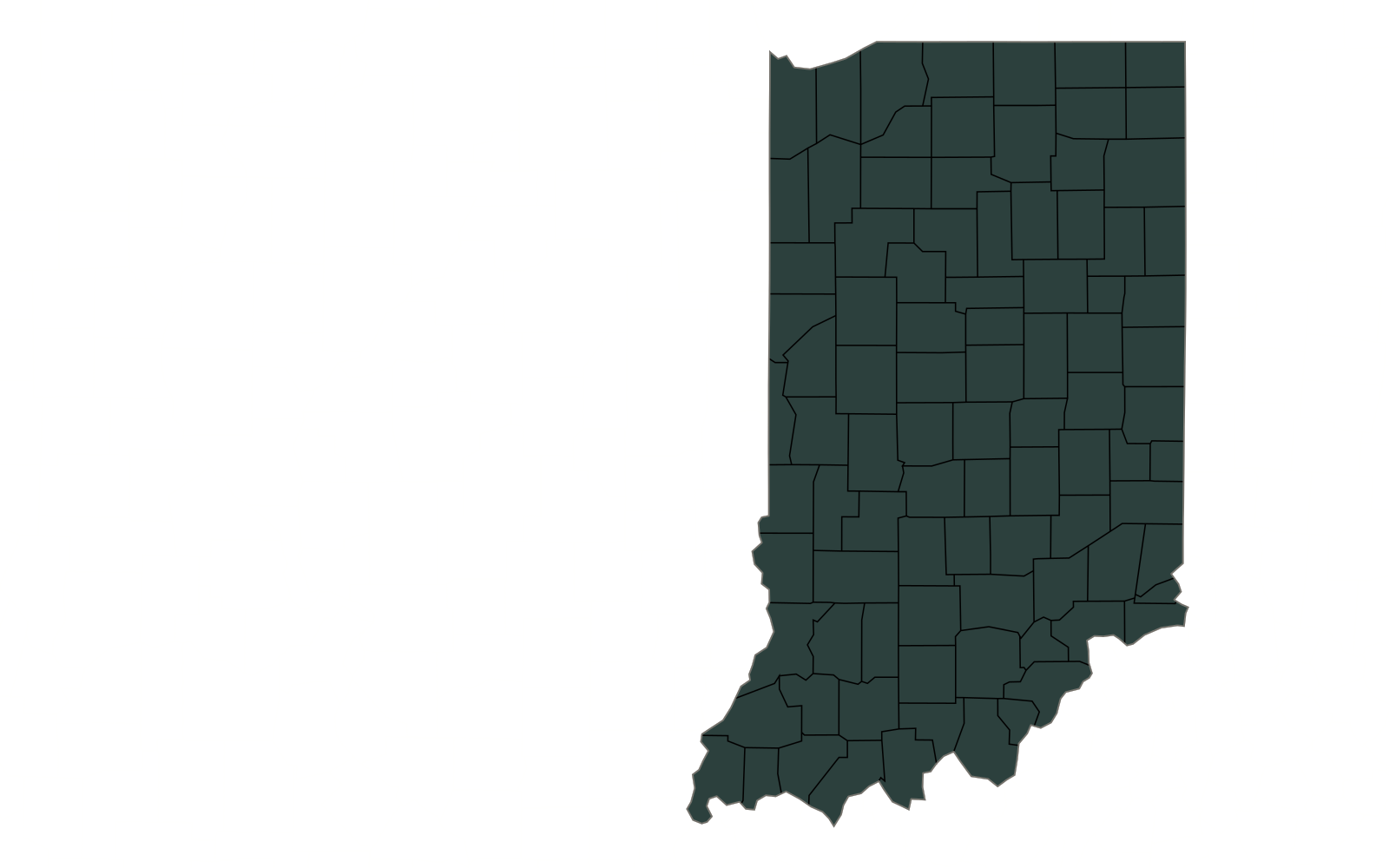
Indiana
Roll-offs and portable sanitation for sites in Indiana
Covering job sites and commercial properties across Indiana means pairing local haulers across regional markets while meeting IDEM landfill and septage management permit requirements. Below are our completed Indiana delivery totals through October 2026 alongside the state and municipal rules that affect site setup.
Last reviewed October 27, 2026.
One agreement for Indiana sites
Local Indiana providers operate the roll-off trucks and sanitation routes, while Detritus holds one master contract, manages dispatch and escalations, and rolls every job site onto a single consolidated invoice. One agreement covers roll-off dumpsters, portable toilets, and restroom trailers across your Indiana footprint. To compare vendor structures, read how a broker, a direct hauler, and a managed network differ.
Walk through how orders move from sourcing and pricing through dispatch and invoicing, or visit multi-site facilities if you manage locations across the Midwest.
The network
The network in Indiana
At Indiana job sites, October 26, 2024 through October 26, 2026 · Published figure
Figures are counts of completed deliveries, providers, and accounts in this window from our records, as of October 2026. Roll-off deliveries are containers delivered. Portable toilet deliveries are units placed, not orders. A company that completed both services is counted in both service rows, so those rows are not a split of the provider total. The counts are not a promise that every address is covered. Front-load service, compactors, and balers are not in these counts.
State rules
Indiana waste, septage, and street rules
Indiana Department of Environmental Management rules govern C&D disposal facilities, statewide septage permits for portable restrooms, and quarterly landfill fees, while cities administer curb-lane permits. This briefing offers operational context for commercial buyers. It is not legal advice, so check current state rules and local ordinances for each address.

C&D landfill disposal
Under IDEM’s construction and demolition waste guidance, C/D debris from building, remodeling, repair, or demolition must go to a state-permitted municipal solid waste landfill, non-MSW landfill, or authorized C/D site. Eligible materials include scrap lumber, bricks, concrete, stone, glass, drywall, roofing, plumbing fixtures, wiring, and non-asbestos insulation. Verify specific load restrictions with the receiving landfill before hauling.
Septage permits for portable restrooms
Per IDEM’s septage management program, anyone pumping, transporting, storing, treating, or disposing of septage must obtain an IDEM septage management permit before operating. IDEM’s portable sanitary units fact sheet classifies portable toilets and mobile restrooms as portable sanitary units and treats their waste as regulated septage. For crew-to-unit ratios, see our OSHA portable toilet requirements guide.
Municipal right-of-way permits
Roll-offs placed on private property bypass street permitting, whereas curb-lane or sidewalk placement requires city approval. In Indianapolis, right-of-way use permits are submitted through the Accela Citizen Access portal, with container placement listed as its own use permit under city regulations. Other Indiana municipalities enforce their own right-of-way permit rules.
State landfill disposal fee
According to IDEM’s solid waste fees schedule, landfills and solid waste disposal facilities remit quarterly state fees of $0.50 to $0.60 per ton depending on facility class. That is a statutory disposal fee paid by the facility, not a Detritus rental rate. See our landfill tipping fees guide for how gate fees factor into haulage.
Providers
Operate roll-off or portable sanitation trucks in Indiana? Connect with our network team through vendor support, and review the vendor payment guide for payout terms.
Answers
Common questions
Who permits a dumpster on an Indiana street?
Local municipal departments handle street-occupancy permits on city roads, while state highway rights-of-way require separate state approval. In Indianapolis, the Department of Business and Neighborhood Services issues right-of-way use permits that specifically cover container placement. Other Indiana cities administer their own right-of-way rules.
Where can construction debris from an Indiana project be hauled?
Under IDEM guidelines, construction and demolition debris (such as scrap lumber, brick, concrete, stone, glass, drywall, roofing, plumbing fixtures, wiring, and non-asbestos insulation) must go to a state-permitted municipal solid waste landfill, non-MSW landfill, or authorized C/D disposal site.
What permit is required to pump portable toilets in Indiana?
IDEM requires any business pumping, hauling, storing, treating, or disposing of septage to hold an active IDEM septage management permit, and explicitly classifies portable toilets and mobile restrooms as portable sanitary units whose contents are regulated septage.
What payment terms can an Indiana account receive?
All of your Indiana job sites can run under one master agreement and one consolidated invoice covering roll-off dumpsters, portable toilets, and restroom trailers. Approved accounts can be offered Net 30, 60, or 90, subject to credit review. Nothing on this page is an offer of credit. See the terms of use.
Talk to us
(888) 588-2607
Quote your Indiana locations together
Share your Indiana site addresses and equipment schedule, and we will price the full rollout on one quote.
Sources
Sources
- Detritus network figures as of October 2026. Definitions are on state coverage.
- IDEM, Solid waste fees, read October 27, 2026.
- IDEM, Septage management, read October 27, 2026.
- IDEM, Fact sheet: septage permits for portable sanitary units, read October 27, 2026.
- IDEM, Construction and demolition waste, read October 27, 2026.
- City of Indianapolis, Right-of-way permits, read October 27, 2026.
- City of Indianapolis, Chapter 200 Regulations for Activities Within Public Right-of-Way, read October 27, 2026.