U.S. EPA
Gypsum as a soil amendment
EPA's guidance on construction and demolition materials says de-papered and crushed gypsum can be used, in moderate quantities, as a soil amendment.8
Drywall, or gypsum board, comes out of almost every renovation. EPA puts broken demolition gypsum at 467 pounds per loose cubic yard.1 It usually rides in a construction debris box, but a clean, dry load can go to a gypsum recycler where one exists, and older walls need a lead and asbestos check first.
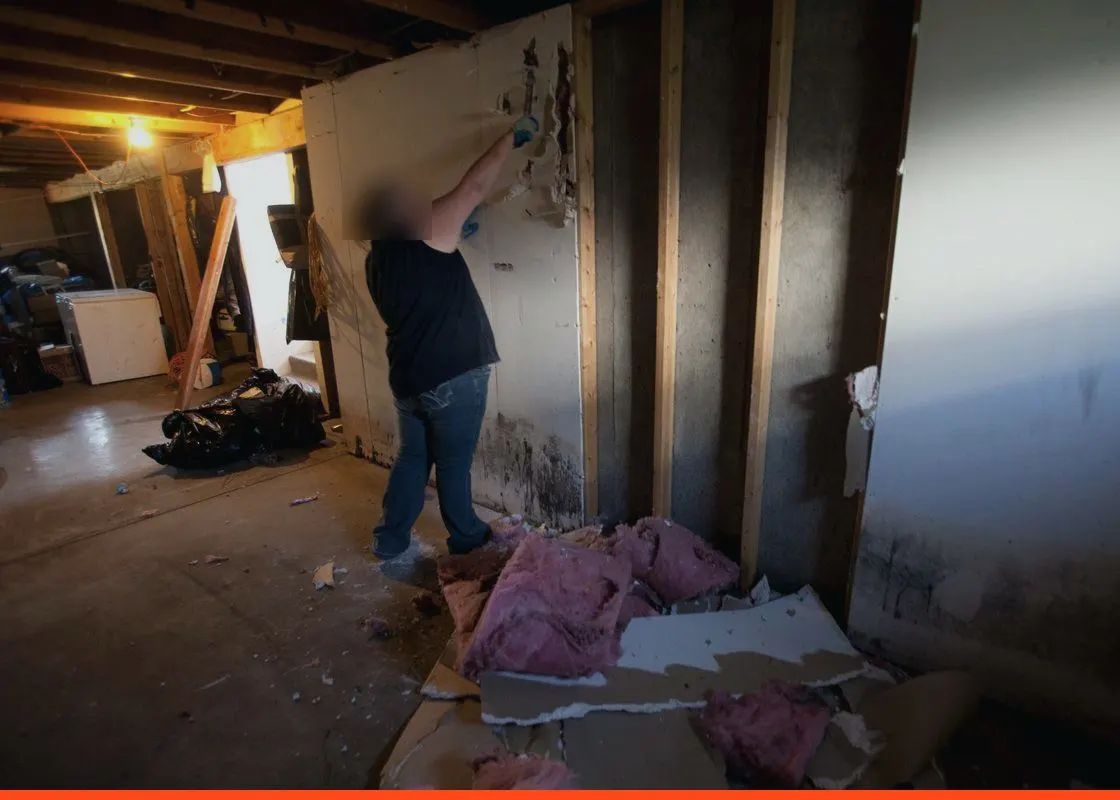
Why it is its own stream
One sheet is easy to carry. A gutted floor is not. By the board makers' figures in our drywall debris calculator, a 4 by 8 sheet of 1/2 in board weighs about 51 pounds and a 5/8 in Type X sheet about 70. At EPA's 467 pounds per loose cubic yard, that is about 9 sheets of 1/2 in board, or 6 to 7 of 5/8 in, in every yard of the box.1
A 10 yard box filled to the top with broken drywall is about 2.3 tons at EPA's figure.1 On a big gut job, drywall can reach the weight limit at about the same time as the rim. Gypsum also soaks up water, and the scale weighs the water too.
Three things make drywall its own stream: its weight adds up, wet board weighs more, and a clean gypsum load can only go to a recycler if nothing else is in it.
Which container
For most renovations, drywall goes with the rest of the demolition. A separate load only pays off where a recycler takes it.
Drywall is standard construction debris, so it can share a roll-off with flooring, trim and cabinets. Size the whole job, not just the board.
Some markets have gypsum recyclers. They set their own rules on paint, tape, compound and fasteners. Ask us when you order whether one is near the job.
Walls with textured coatings or patching compound that might contain asbestos, until tested. Buckets of liquid paint. See keep it out.
Keep drywall out of heavy-debris and wood recycling boxes. Our concrete disposal guide explains how trash, wood or drywall in a concrete box turns it into a mixed load at the disposal site.
How big
Walls and ceiling at 8 ft, one layer of 1/2 in board, from the same math as the drywall debris calculator.
| Job | Board area | Weight and loose volume |
|---|---|---|
| Bathroom, 8 by 5 ft | 248 sq ft | 400 lb, 0.8 cu yd |
| Bedroom, 12 by 12 ft | 528 sq ft | 840 lb, 1.8 cu yd |
| Kitchen, 15 by 12 ft | 612 sq ft | 980 lb, 2.1 cu yd |
| Basement, 30 by 25 ft, with 2x4 studs | 1,630 sq ft | 1.8 tons, 11.3 cu yd |
| 2,000 sq ft of wall and 1,000 of ceiling | 3,000 sq ft | 2.4 tons, 10.3 cu yd |
Drywall rarely comes out alone. Add cabinets, flooring and fixtures with the debris weight calculator, then pick a size in the dumpster size guide. Limits vary by hauler and market, so confirm the tons included in writing. The dumpster weight limits guide explains how overages are billed.
Older buildings
Neither is about the dumpster. Both decide how the work, and the waste, has to be handled.
EPA's Renovation, Repair and Painting rule requires anyone paid to disturb painted surfaces in homes, child care facilities and preschools built before 1978 to be certified, with trained workers. It generally does not apply to homeowners working on their own homes.2
If you are hiring the work out, ask the contractor for the firm's certification.
EPA lists textured paint and patching compounds used on walls and ceilings among products that may contain asbestos.3 It says you generally cannot tell by looking, that you should not saw, sand or scrape suspect material, and that removal must be done by a trained and accredited professional.4
For covered commercial and larger residential buildings, the asbestos NESHAP requires an inspection before demolition or renovation.5
Prep and loading
Note the year built. Test texture and compound on older walls before anyone cuts into them.
Square feet of wall and ceiling, the thickness and whether studs come out too. The calculator does the rest.
If a gypsum recycler is near the job, find out what it takes before you start, so the crew can keep board separate.
Broken board stacked flat wastes less space than whole sheets leaned in at angles.
Cover an open box before rain. Wet gypsum is heavier, and the scale counts every pound.
Overages are billed from the disposal site's ticket. Ask for a copy if you want to check the math.
Keep it out
The disposal site decides by what it sees in the box, and state rules can be stricter than federal ones.
Recycling
Recycling depends on a nearby recycler and a clean load. Both vary by market.
U.S. EPA
EPA's guidance on construction and demolition materials says de-papered and crushed gypsum can be used, in moderate quantities, as a soil amendment.8
U.S. EPA
The same guidance says understanding costs and recycling options in your area is key, and suggests asking recyclers about their licensing or certification.8
The recycler
Offcuts from new construction are plain board. Demolition board carries paint, tape, compound and screws. Ask the recycler which it takes before you separate anything.
Your project
If the project tracks recycling for LEED or a waste plan, a separate drywall stream can count toward it. See construction recycling and diversion reports.
How it works with Detritus
Send one request. We source a roll-off from a local provider in the markets we serve, and the quote states the tons included before the box arrives. Availability varies by market. Some markets have gypsum recyclers, so ask us where a local program exists.
Decide
| Your situation | What to do |
|---|---|
| One or two rooms | A small construction debris box shared with the rest of the demo |
| A whole floor or a gut job | Size by weight as well as space, and get the tons in writing |
| A gypsum recycler near the job | Keep board clean and separate, to the recycler's list, and ask us about a separate load |
| A home or child care facility built before 1978 | Paid work that disturbs paint needs an RRP certified firm |
| Textured walls or ceilings in an older building | Test for asbestos before anyone cuts or scrapes |
| Flood or water damage | Wet board is heavier. Plan for more weight and cover the box. See emergency restoration |
Common questions
Yes. Drywall is standard construction debris and can share a roll-off with the rest of a renovation. Keep it out of concrete, dirt and wood recycling boxes.
About 467 pounds per loose cubic yard, by EPA's figure for demolition gypsum. A 10 yard box filled to the top is about 2.3 tons.
Where a gypsum recycler operates, yes, usually as a clean and separate load. EPA notes that de-papered and crushed gypsum can be used in moderate quantities as a soil amendment. Availability depends on the market.
Gypsum soaks up water, and the disposal site's scale weighs the water too. Cover an open box before rain.
It can. EPA lists textured paint and patching compounds used on walls and ceilings among products that may contain asbestos. Test before you cut or scrape older walls.
If someone is paid to disturb painted surfaces in a home, child care facility or preschool built before 1978, EPA's RRP rule requires a certified firm. Homeowners working on their own homes are generally exempt.
Call sales at (888) 588-2607 or request a quote with the address, the square feet of board and the dates.
Send the square feet and the dates. Local providers do the work; we hold the contract, own the problems, and send one bill.
Related guides
Sources