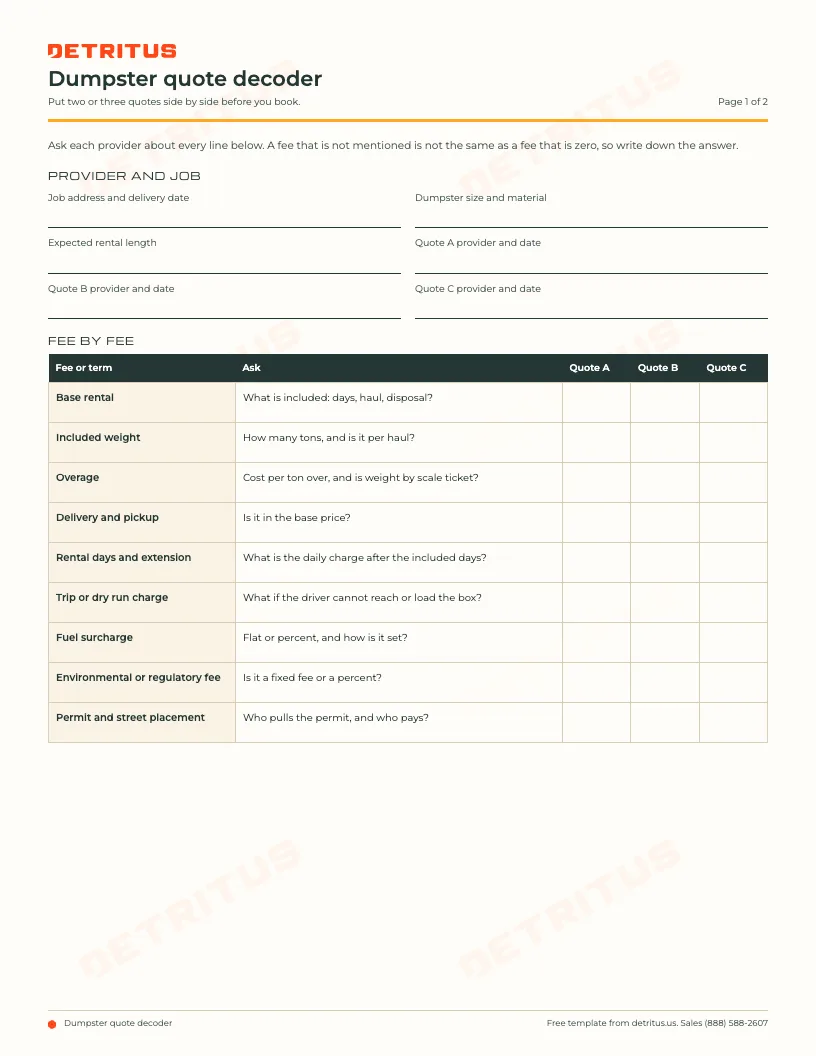
Page 1: the fee table
Provider and job details, then nine fees and terms, each with the question to ask and a column for each quote.
UseAsk on every call
Two roll-off quotes with nearly identical base haul numbers can settle hundreds apart the moment a project runs two days long, tips a ton heavy at the scale house, or has a parked truck blocking the container on pickup morning. Use the line-by-line guide and free two-page quote checklist below to uncover every conditional charge before you book.
The fee list
No fee below is inherently unfair on its own; haulers pay real disposal, diesel, and driver costs when loads run heavy or gates stay locked. Trouble starts when one vendor bundles them into the base haul and another tacks them onto the back of the invoice. For real municipal fee examples, see our commercial dumpster cost guide.
| Fee or term | What it is | What to ask |
|---|---|---|
| Base rental | Upfront haul charge covering container drop-off, final pickup, a set rental window, and a stated tonnage cap | How many calendar days and disposal tons sit inside the base haul rate? |
| Included weight and overage | Bundled disposal tonnage, followed by a per-ton charge on scale weight above the cap | How many tons are included per pull, what is the per-ton overage rate, and do you provide scale tickets? |
| Rental days and extension | Included days on site (counted from delivery), followed by a daily or weekly demurrage rate | What is the additional daily rate past the window, and does calling off the box stop billing that day? |
| Trip charge or dry run | Dispatch fee billed when the roll-off driver arrives and cannot drop or pull due to a locked gate, parked vehicle, or overloaded box | What triggers a dry-run fee, what does a wasted trip cost, and does the driver call the site contact before leaving? |
| Fuel surcharge | Flat fee or percentage surcharge tied to on-highway diesel costs | Is fuel baked into the haul rate, fixed per pull, or floating against a published weekly diesel index? |
| Environmental or regulatory fee | Flat or percentage charge added by private haulers to cover landfill compliance and host fees | Does an environmental or administrative percentage apply on top of the quoted haul and overage lines? |
| Permit and street placement | Municipal right-of-way fee, barricades, and filing paperwork when a box sits on a public street or alley | Who pulls the street permit, how much lead time does the city require, and is the permit passed through at cost? |
| Overfill or contamination | Penalty when debris rises above the top rail (unsafe to tarp) or includes banned items like tires, paint, batteries, or appliances | Which materials carry per-piece landfill surcharges, and what happens if a box is heaped above the rim? |
| Relocation or extra swap | Dispatch charge to reposition a container on the jobsite or dump-and-return an extra load mid-phase | Does every dump-and-return swap bill at the exact base haul rate, and how much lead time do swaps need? |
| Cancellation or reschedule | Dispatch charge when an order is canceled or pushed after trucks are routed | What is the cutoff hour the day before delivery to reschedule without a fee? |
Share your jobsite address, debris type, box size, and schedule. We spell out included days, tonnage caps, overage rates, and dry-run terms before a truck rolls.
Fuel
Many commercial haulers add a variable fuel surcharge on top of base haul and overage lines. While the U.S. Energy Information Administration publishes the weekly retail on-highway diesel price series that freight and waste contracts commonly reference, EIA does not set, approve, or regulate surcharge formulas; every hauler writes its own rate table.1 Always ask two questions before signing: is fuel included in the base haul rate or billed separately, and if it floats, which published diesel series and percentage table govern it?
Comparing quotes
The lowest base haul price routinely loses once scale weight and schedule slip enter the math. Run every bidder through two quick totals on the worksheet:
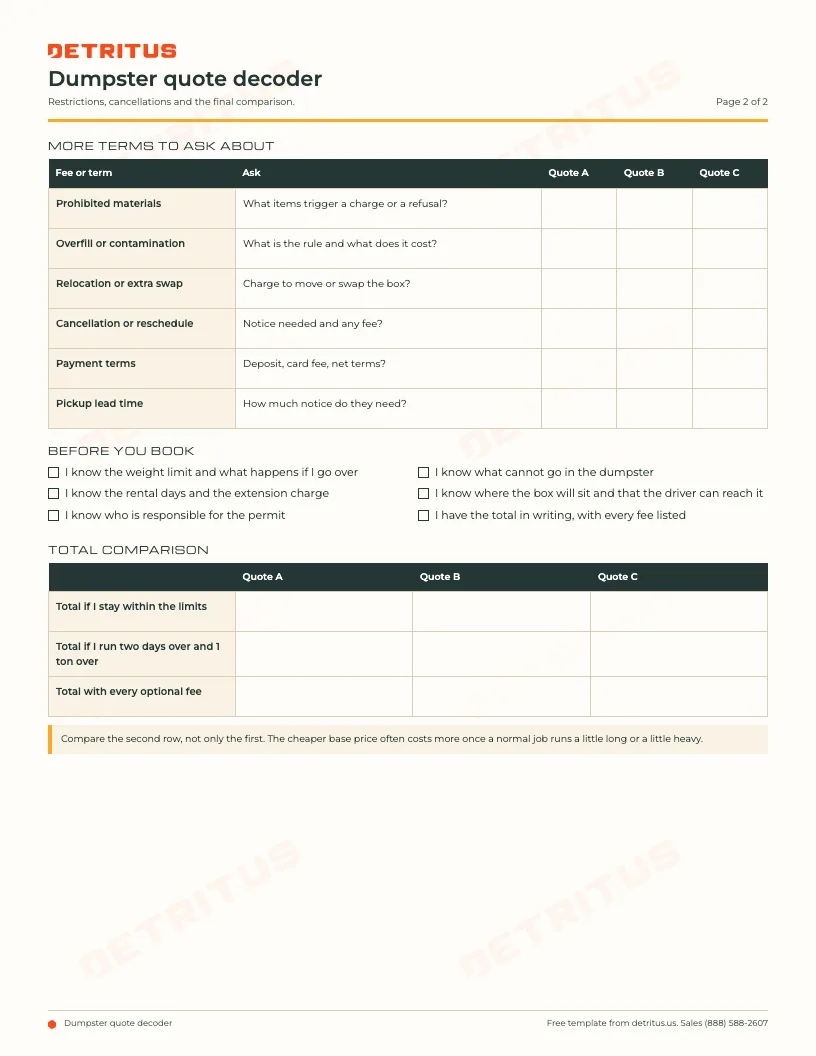
Total the base haul, initial delivery, fuel surcharge, and any mandatory environmental or administrative percentage. That gives you the true floor if the box leaves on time and under the weight cap.
Add two extra rental days and one ton of scale overage using each vendor's stated rates. On renovation, roofing, and demo work, this second total predicts your real invoice far better than the headline quote.
Note street-permit fees, blocked-access dry-run rates, and same-day cancellation cutoffs side by side. A vendor who refuses to put overage or dry-run rates in writing is shifting open-ended risk onto your job budget.
Attach the completed fee sheet to your purchase order or job file so accounts payable can check the final haul invoice against the exact numbers quoted.
The checklist
Two letter size pages. The PDF has fields you can type into, and the Word version opens in any editor. Fill in one column per quote.
Provider and job details, then nine fees and terms, each with the question to ask and a column for each quote.
UseAsk on every call
More terms to ask about, a before you book checklist and a total comparison for the two scenarios.
UseCompare before you pay a deposit
Common questions
Beyond base haul and rental, commercial quotes commonly itemize included tonnage and per-ton overage, included days and daily demurrage, blocked-access dry-run trips, fuel and environmental surcharges, street permits, and penalties for heaped loads, banned items, mid-job relocations, or late cancellations.
A dry run is a wasted dispatch billed when the roll-off driver arrives on site and cannot set, swap, or pull the container because a gate is locked, cars or pallets block the approach, overhead wires obstruct the hoist, or debris extends above the top rail.
When a loaded roll-off crosses the certified scale at the transfer station or landfill, any net disposal weight above your quote's included tonnage cap bills at the stated per-ton overage rate (either prorated to the tenth of a ton or rounded up, depending on hauler terms). Always ask whether overage is prorated or rounded to the next whole ton.
One quote may bundle 14 days, four tons of disposal, delivery, and fuel into a single all-in haul rate while another advertises a low pull fee with seven days, two tons, and double-digit fuel and environmental surcharges added afterward. Running both quotes through our two-scenario checklist makes them directly comparable.
Containers placed entirely on private driveways, parking lots, or fenced jobsites rarely need a municipal street permit. When a box must sit in a public street, curb lane, or alley, cities require a right-of-way permit pulled by either the contractor, property owner, or hauler; see our dumpster permits guide for city-by-city rules.
Yes. Call sales at (888) 588-2607 with your jobsite address, debris stream, container size, and target dates, and we will send a written quote listing included days, included tons, overage rates, and ancillary terms before you book.
Local providers do the work; we hold the contract, own the problems, and send one bill. If a pickup gets missed, we contact the hauler the same business day.
Read next
Sources