30 yard dumpster
30 yard dumpster: size, weight limit and what fits.
The same footprint as a 20 with walls about six feet tall: 810 cubic feet, or about 13 pickup loads. Built for light, bulky debris from kitchens, cleanouts and new construction.
Last reviewed October 27, 2026.
Dimensions
- Length
- 22′9″ to 23′
- Width
- 7′9″ to 8′
- Height
- 5′11″ to 6′2″
Most 30-yard quotes include 2 to 4 tons, and 3 tons is both the median and the most common figure. That's from 15,039 30-yard orders with tons on the quote. It's the size our provider network delivered most: 15,621 30-yard deliveries from October 2024 through October 2026, through 1,063 providers in 49 states and DC.2
Size and weight check
Will it fit in a 30?
Pick the material and how much of it you have. We estimate the weight from loose weight per cubic yard and compare it with the tons a typical quote includes.4
Your load
Over the allowanceAbout 1.2 tons over a typical quote.
Weight past the included tons is billed per ton from the scale ticket, and an overloaded container may not be removed. Plan a swap at about 14 cubic yards, or ask for more tons included.
Too small or too big
When a 30 is the wrong call.
Roof tear-offs
Shingles are heavy. Use a 20 and plan a swap rather than paying to haul a half-empty 30. A single-layer roof stays within about 25 squares at 3 tons included.
Concrete, brick, asphalt, dirt
A 10-yard heavy-debris container, which usually includes 10 tons.
Light, bulky debris
Framing scrap, cabinets, flooring and furniture fill a 30 by volume before they reach its weight allowance. If you're keeping the walls and ceiling, you'll produce far less, and a 20 may be enough.
Before it arrives
Placement, permits and billing.
Placement and clearance
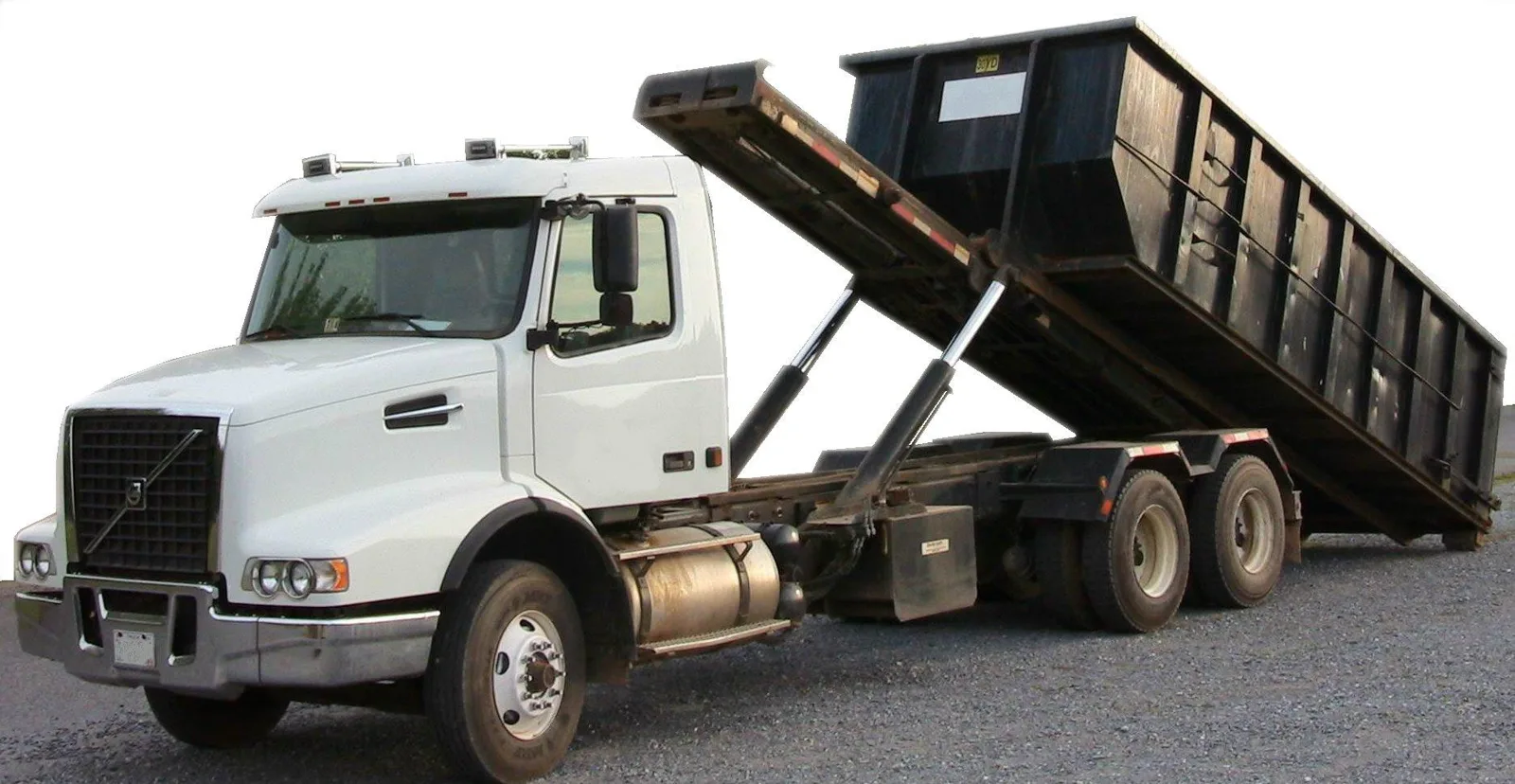
The truck needs access width, a straight run to back in and overhead clearance to tip the container off.11 Pick firm, level ground, protect pavers and asphalt, and stay at least 10 feet from power lines.10 Many contractors lay plywood or boards under the rails and rollers to spread the load on asphalt and pavers. That's common contractor practice, not a manufacturer requirement.
Permits and what stays out
A container on a public street usually needs a permit; rules vary by locality. Hazardous waste, batteries, asbestos, refrigerant appliances, tires and liquids stay out.13
How it is billed
Every quote should give the rental period, tons included, the per-ton overage rate and the daily rate after the period ends. Rates, tons and days vary by provider and market.
Size comparison
How the 30 compares.
| Size | Length | Width | Height | Volume | Tons included |
|---|---|---|---|---|---|
| 10 yard | about 14 ft 9 in | about 8 ft | about 4 ft | 270 cu ft | 1 to 3 |
| 20 yard | 22′9″ to 23′ | 7′9″ to 8′ | 4′3″ to 4′7″ | 540 cu ft | 2 to 4 |
| 30 yard (this page) | 22′9″ to 23′ | 7′9″ to 8′ | 5′11″ to 6′2″ | 810 cu ft | 2 to 4 |
| 40 yard | 22′9″ to 23′ | 7′9″ to 8′ | 7′7″ to 8′ | 1,080 cu ft | 3 to 5 |
Approximate outside dimensions from manufacturer spec sheets; included tons from quotes in our provider network. Both vary by provider and market.12
What are the dimensions of a 30 yard dumpster?
Outside, about 22 ft 9 in to 23 ft long, 7 ft 9 in to 8 ft wide and 5 ft 11 in to 6 ft 2 in tall. Inside walls run 5 ft 1 in to 5 ft 10 in.
How much weight can a 30 yard dumpster hold?
Quotes typically include 2 to 4 tons, with a median of 3. The container itself weighs 4,897 to 5,600 lb empty. Weight over the included tons is billed per ton from the scale ticket.
Is a 30 yard dumpster big enough for a kitchen remodel?
Usually. A 150 sq ft kitchen gut is about 23 cubic yards and 4.8 tons: it fits by volume, so ask for more than the typical 3 tons on the quote. If you're keeping the walls and ceiling, you'll produce far less.
Should I get a 20 or a 30?
Heavy debris like shingles and drywall: a 20. Light, bulky debris like framing scrap, cabinets, flooring and furniture: a 30.
Can a 30 yard dumpster go in my driveway?
Often, yes. It has the same footprint as a 20. The driveway needs to be firm and level, with a straight run for the truck, overhead clearance and at least 10 feet from power lines.
Billing
How dumpster rental is billed.
Most quotes in our provider network are a flat rate per haul. That rate covers delivery, pickup, disposal up to the tons included and a set number of rental days. Across our 20-, 30- and 40-yard orders, the median rental period was 14 days, and 7, 14 and 30 days were the most common.2 A second model is a base rate plus per-ton disposal from the scale tickets. Ask about swap delivery, dry-run, relocation, overfill, permit and special-item charges.
Charges you might see: tonnage overage from the scale ticket, extra days, a swap or extra haul, a dry run when the spot is blocked, relocation on site, special items, overfill, contamination, permit fees, and fuel, environmental or disposal surcharges.
For a sample invoice with the amounts left off, see how dumpster rental is billed.
- Swaps: we schedule swaps on a set cadence or on call. Call before the load is at the rail. Paying for air is the other way a schedule drifts.
- Scale tickets: every overage should trace to a scale ticket. Ask and we'll get it from the provider.
- Multi-site billing: containers at every site roll up to one invoice, with each line tagged to its site and haul.
- Missed pickups: we contact the provider the same business day.
Rates, tons included and rental days vary by provider, market and material. We don't publish prices on this page. Your written quote lists every rate that applies to your job.
| Debris | Pounds per loose cubic yard | Source |
|---|---|---|
| Clean lumber | 169 | US EPA4 |
| Mixed household trash, loose | 250 to 300 | US EPA4 |
| Mixed construction debris | 417 | US EPA4 |
| Drywall | 467 | US EPA4 |
| Asphalt shingles (tear-off) | 731 | US EPA4 |
| Concrete pieces, as hauled | 860 | US EPA4 |
| Dirt and sand, as hauled | 929 | US EPA4 |
| Topsoil, dug and loose | 1,620 | FHWA9 |
| Earth (loam), dug and loose | 2,070 to 2,360 | FHWA9 |
| Broken concrete slab, loose | 2,370 | FHWA9 |

Sources
- Container manufacturer spec sheets: Wastequip rectangular roll-off brochure; Custom Container Solutions standard rectangular roll-off; Rudco roll-off containers; American Made Dumpsters rectangular roll-off product sheet. Accessed Oct 27, 2026.
- Detritus provider network order records, 20-, 30- and 40-yard and 10-yard heavy-load containers delivered Oct 26, 2024 to Oct 26, 2026, canceled orders excluded.
- Ford, 2026 F-150 specifications: cargo volume 52.8 cu ft (5.5 ft bed), 62.3 cu ft (6.5 ft bed), 77.4 cu ft (8 ft bed).
- US EPA, Volume-to-Weight Conversion Factors, April 2016.
- US EPA, Estimating 2003 Building-Related Construction and Demolition Materials Amounts (EPA530-R-09-002, March 2009), Tables 2-3 and 2-5 and Appendix A.
- CertainTeed Landmark technical data sheet, 229 to 300 lb per square.
- USDA Forest Products Laboratory, Wood Handbook (FPL-GTR-282), Table 5-3b.
- NIST, American Softwood Lumber Standard PS 20-25, dressed sizes.
- FHWA, earthwork density and swell table (Exhibit 5-1A): broken concrete 3,960 lb per in-place cu yd, 2,370 lb loose, 67% swell; asphalt 3,240 lb in place, 50% swell; topsoil 2,430 lb in place, 56% swell.
- eCFR: 23 CFR 658.17 (vehicle weight); 29 CFR 1926.600(a)(6) (equipment near power lines); 40 CFR 82.155 (refrigerant recovery before appliance disposal).
- Roll-off hoist spec sheets: JWR AFCD-OR-22/24 and Galbreath AF series (raised height above frame 173 to 191 in, frame 45 in above ground, tire width 98 to 101.5 in, hoist length 281.5 to 305.5 in).
- Michigan FACE Program, Michigan State University, investigation report #08MI005, roll-off container truck driver electrocuted.
- US EPA, Household Hazardous Waste.
- US EPA, Universal Waste.
- US EPA, Asbestos NESHAP overview.
- US EPA, Section 608 appliance disposal.
- US EPA, Lead Renovation, Repair and Painting Program.
Ready for a 30?
Send us the job, the material and the ZIP. We quote the rental period, tons included, overage and daily rate, then schedule the drop.