What is on it
Categorize the data
NIST tells organizations to categorize the information, assess the media and decide its future before choosing a sanitization method.4
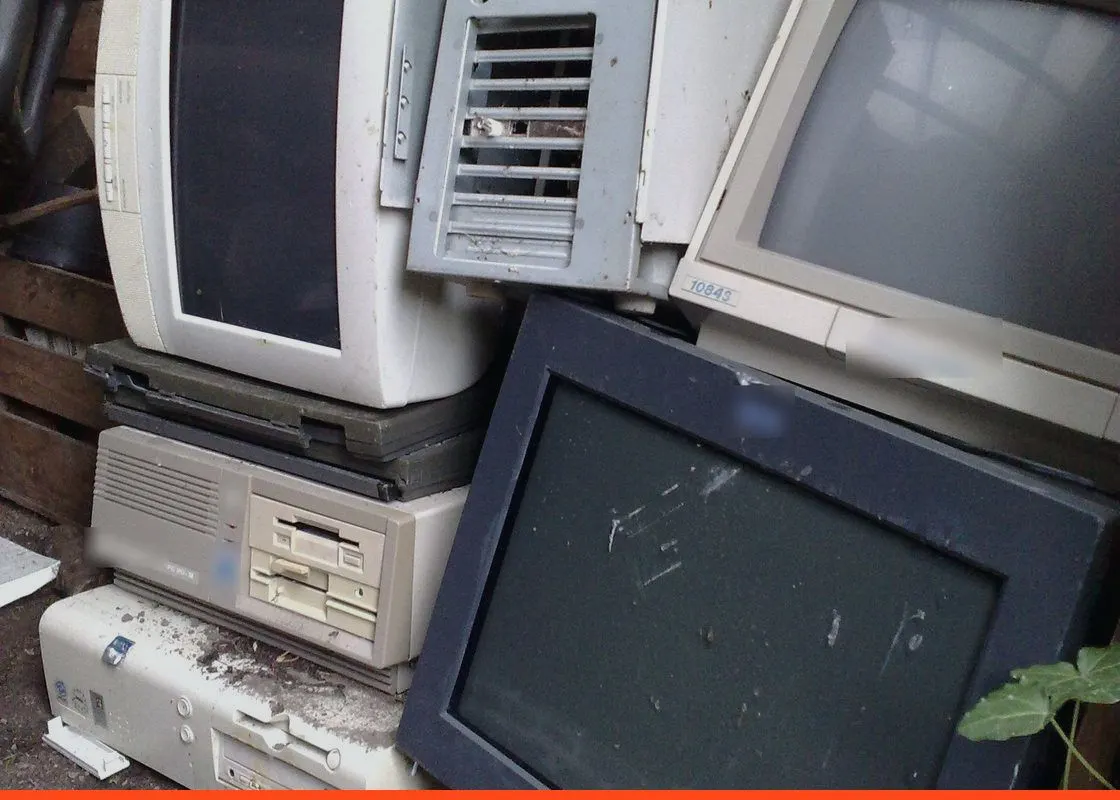
TVs, computers, monitors and the batteries inside them do not belong in a debris box. EPA recommends certified electronics recyclers,1 states such as New York ban covered electronics from the trash,2 and lithium-ion batteries are a fire risk in garbage and recycling.3 Detritus does not arrange electronics recycling, so this guide covers where e-waste goes and what we can help with around it.
Why it is its own stream
Electronics carry two problems a debris box cannot fix: the data on them and the batteries in them. NIST's media sanitization guidelines define three ways to deal with the data, matched to how sensitive it is.4
Method 1
Logical techniques, such as overwriting or a factory reset, that protect against simple recovery through the normal interface. The device usually stays usable.
Method 2
Techniques, such as cryptographic erase, that make recovery infeasible even with state-of-the-art laboratory methods while leaving the device potentially reusable.
Method 3
Shredding, disintegrating, pulverizing, melting or incinerating, so recovery is infeasible and the media can never store data again.
NIST notes that the technique has to match the media: overwriting that works on an older hard drive can leave data behind on flash storage.4 Certified recycling standards also require destruction of all data on used electronics.1
Where it goes
EPA says manufacturers and retailers offer several options to donate or recycle electronics.5
EPA recognizes two accredited standards, R2 and e-Stewards, audited by independent third parties.1 Ask for both the certificate and a record of how data was handled.
In New York, manufacturers must offer free recycling to most consumers; larger businesses may be charged.2 Other states run their own programs, or none.
Our dumpster guide lists electronics as ask first because state and site rules differ. Batteries are a no.
Counting it
Recyclers count units and pounds, not cubic yards. EPA's per-unit weights help you describe a load.6
| Device | EPA weight, one | 25 of them |
|---|---|---|
| Desktop computer | 27 lb | 675 lb |
| Laptop | 9.8 lb | 245 lb |
| CRT monitor | 40 lb | 1,000 lb |
| Flat panel monitor | 24 lb | 600 lb |
| CRT TV, over 19 inch | 73 lb | 1,825 lb |
| Flat panel TV | 29 lb | 725 lb |
| Printer | 16.1 lb | About 400 lb |
Planning figures. A recycler quotes from its own count and scale. Old CRT screens are the heavy ones, so list them separately.
For businesses
IT asset disposition, or ITAD, is the job of retiring company devices safely. A certified recycler or ITAD provider does it; these are the questions to settle first.
What is on it
NIST tells organizations to categorize the information, assess the media and decide its future before choosing a sanitization method.4
Who does it
EPA recommends certified electronics recyclers, and lists data security among the services they may provide.1
What you get back
Ask for a list of what was received, by serial number where you track assets, and how the data on each was handled.
What it costs
New York lets manufacturers charge for-profit businesses with 50 or more full-time employees and nonprofits with 75 or more.2 Check your state's rules.
Prep
Count devices by type, and note anything that stores data.
Copy what you need and remove devices from accounts and management systems.
Clear, purge or destroy to match the data, or leave it to a certified provider in writing.
EPA says to remove batteries from electronics, since they may need to be recycled separately.5
Stage electronics away from the cleanout debris, so nothing ends up in the dumpster.
The recycler's certificate and data handling record stay with your asset records.
Keep it out
These go to a recycler or a collection point, not a debris load. State rules can be stricter than federal ones.
The rules
Disposal bans and take-back programs differ from state to state, so check your state environmental agency. One state example, and the federal guidance:
NYSDEC, New York
Since January 1, 2015, covered electronics, including computers, monitors, printers, small electronics and TVs over 4 inches, cannot go in landfills, waste-to-energy plants or the trash. Manufacturers must offer free and convenient recycling to most consumers.2
U.S. EPA
EPA recommends certified electronics recyclers and names two standards, R2 and e-Stewards, which require destruction of all data on used electronics.1
NIST SP 800-88 Rev. 2
NIST's September 2025 guidelines define clear, purge and destroy, and say to pick the method by the sensitivity of the data and the type of media.4
U.S. EPA
Lithium-ion batteries go to separate recycling or household hazardous waste collection points, not garbage or recycling bins.3
How it works with Detritus
Detritus does not arrange electronics recycling. Electronics go to a certified electronics recycler or a manufacturer or retailer program. What we arrange is the rest of the job: a junk hauling crew or a roll-off for the furniture, fixtures and debris from an office move or cleanout, from local providers in the markets we serve. Availability varies by market. Tell us what electronics are in the space, so they are set aside for the recycler and not loaded.
Decide
| Your situation | What to do |
|---|---|
| One old TV or computer at home | A manufacturer or retailer take-back, or a local collection site |
| An office refresh with laptops and monitors | A certified recycler or ITAD provider, with a data handling record |
| Drives with sensitive data | Purge or destroy, matched to the media, before or by the provider |
| Loose lithium-ion batteries | Tape or bag them and take them to a battery collection point |
| An office move with furniture and debris too | Electronics to the recycler; the rest by crew or roll-off. See junk hauling and cleanouts |
| Not sure what your state allows | Check your state environmental agency before anything goes in a dumpster |
Common questions
Ask first, and usually no. Some states ban covered electronics from the trash, disposal sites set their own rules, and batteries inside them are a fire risk. A certified recycler is the usual route.
No. We arrange junk hauling and roll-offs for the rest of a cleanout or office move. Electronics go to a certified electronics recycler or a manufacturer or retailer program.
A recycler certified to one of the two accredited standards EPA names, R2 or e-Stewards, which are checked by independent third-party auditors.
NIST describes three methods: clear, purge and destroy. Match the method to how sensitive the data is and the type of media, or have a certified provider do it and give you a record.
A battery damaged in a truck or at a facility can start a fire. EPA says they belong at separate recycling or household hazardous waste collection points.
Sometimes. In New York, manufacturers must offer free recycling to most consumers, but larger businesses may be charged. Rules differ by state.
Call sales at (888) 588-2607 or request a quote with the address, what is going and the date.
The electronics go to a certified recycler. Tell us about the rest. Local providers do the work; we hold the contract, own the problems, and send one bill.
Related guides
Sources