Hand washing station requirements for job sites
OSHA's construction sanitation standard (29 CFR 1926.51) sets no headcount table for sinks, but paragraph (f) mandates general workplace lavatories and dedicated washing facilities near hazardous contaminant work. Meeting the rule comes down to running water, soap and single-use drying supplies, station placement, and refill frequency.
- WaterRunning, with soap
- TowelsSingle use or blowers
- PlaceNear the work and toilets
29 CFR 1926.51(f)
Washing facilities vs. workplace lavatories
Federal construction rules split hand and body washing into contaminant washdown, general lavatories, and shift-end showers.1
| Topic | What the standard says |
|---|---|
| Contaminant washdown, 1926.51(f)(1) | Adequate washing facilities must sit in near proximity to the worksite whenever crews apply paints, coatings, herbicides, or insecticides, or handle other harmful contaminants |
| Sanitary upkeep, 1926.51(f)(2) | All washing facilities must be maintained in a sanitary condition |
| Workplace lavatories, 1926.51(f)(3) | Lavatories must be available at all places of employment, except for mobile crews or normally unattended sites with ready transportation to compliant nearby facilities |
| Running water temperature | Lavatories under (f)(3) require hot and cold running water, or tepid running water |
| Soap and hand drying | Hand soap or an equivalent cleansing agent, paired with individual paper or cloth hand towels, warm-air blowers, or clean sections of continuous cloth toweling |
| Showers, 1926.51(f)(4) | Triggered only when a specific standard requires showering: one shower per 10 employees of each sex (or fraction thereof) showering on the same shift |
Unlike Table D-1 for restrooms, 29 CFR 1926.51(f) publishes no numeric worker-to-sink ratio for construction sites. For restroom fixture counts and State Plan wash-water rules, see our OSHA portable toilet requirements guide.
Need hand wash stations on site?
Share your peak headcount, trade hazards, and site layout. We deliver portable sinks stocked with water, soap, and paper towels and bundle weekly refills on one invoice.
Site planning
Equipping and placing jobsite wash stations
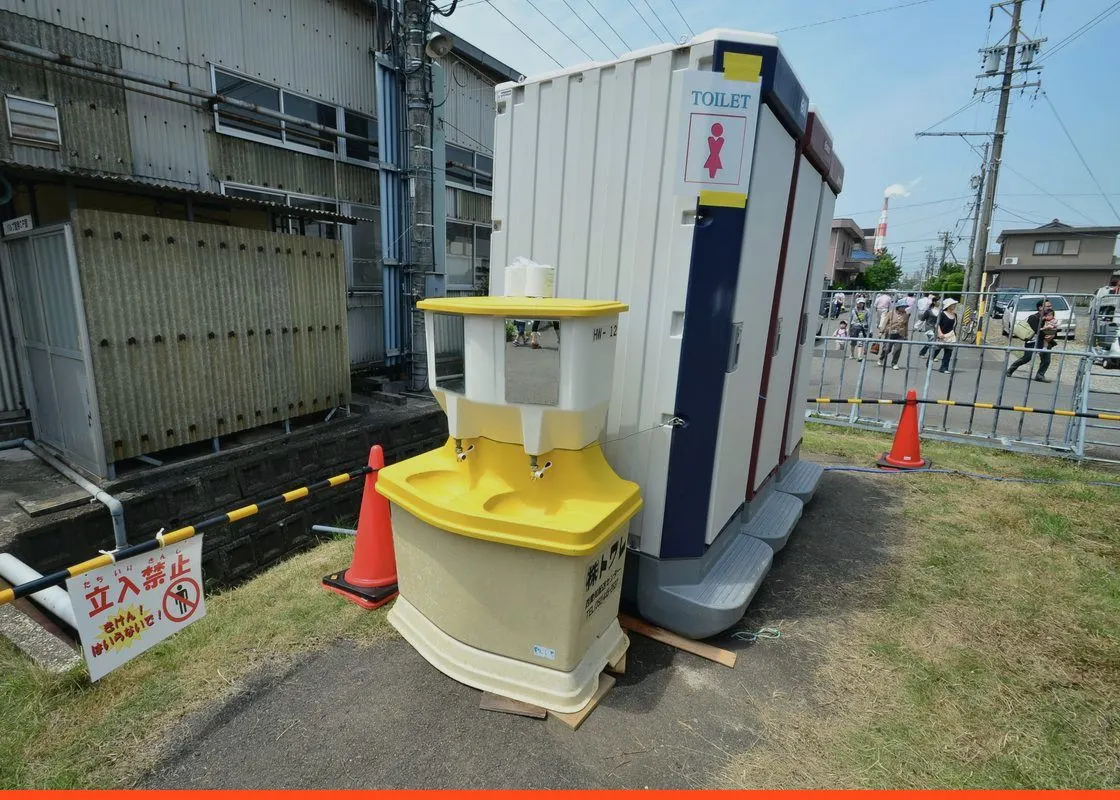
Self-contained foot-pump sinks hold limited fresh water, so crew headcount and contaminant work dictate how many units and refills a jobsite needs.
- 01
Verify water, soap, and towels
Check that every station delivers running water alongside liquid soap and single-use paper towels. Neither sanitizer gel nor an open water bucket meets 1926.51(f)(3); if your state or contract mandates heated tepid water, specify heated sinks or a plumbed trailer.
- 02
Stage by toilet banks and break tents
Place at least one dual-basin sink alongside each cluster of two to four portable toilets and another outside designated lunch or break areas so crews do not walk across active equipment lanes with unwashed hands.
- 03
Position washdown near chemical and coating work
Under 1926.51(f)(1), crews working with wet concrete, epoxies, primers, solvents, or herbicides need potable wash water and soap right at the work zone rather than back at the main gate.
- 04
Match refill intervals to tank capacity
Standard twin-basin portable sinks carry roughly 20 to 45 gallons of fresh water and empty faster than toilet holding tanks on large crews. Schedule freshwater refills and graywater pump-outs alongside restroom service; for agricultural hand-labor crews, follow the stricter 1-per-20 ratio in field sanitation requirements.
Common questions
Hand washing questions
Does OSHA require hand wash stations on construction sites?
Yes. Under 29 CFR 1926.51(f)(3), employers must make lavatories available at all places of employment (exempting only mobile crews and unattended sites with ready transport to nearby compliant facilities), and 1926.51(f)(1) separately requires nearby washing facilities whenever workers handle paints, coatings, herbicides, insecticides, or other harmful contaminants.
How many hand wash stations do I need?
Federal construction rules set no fixed sink-to-worker ratio, unlike agricultural field sanitation (which requires 1 sink per 20 workers). On construction sites, superintendents typically place one dual-basin station for every two to four portable toilets, plus dedicated units at lunch areas and hazardous coating or concrete zones.
What must a hand wash station provide?
Under 29 CFR 1926.51(f)(3), a compliant lavatory must supply hot and cold or tepid running water, hand soap or an equivalent cleansing agent, and individual paper or cloth hand towels, warm-air blowers, or clean sections of continuous cloth toweling, all maintained in sanitary condition.
Are showers required?
Showers are required under 29 CFR 1926.51(f)(4) only when another specific OSHA standard (such as lead, asbestos, or hazardous waste operations) mandates decontamination showering. When triggered, employers must provide at least one shower per 10 employees of each sex (or fraction thereof) showering on the same shift, supplied with hot and cold water, body soap, and clean individual towels.
Is hand sanitizer enough?
No. Both the contaminant washing rule in 1926.51(f)(1) and the lavatory rule in 1926.51(f)(3) require soap and water, so waterless hand sanitizer dispensers or wipes can supplement a sink station but cannot replace running water on a covered jobsite.
Can you supply hand wash stations?
Yes. We deliver portable foot-pump hand wash stations, heated sink units, and restroom trailers nationwide with scheduled freshwater refills, soap, paper towels, and graywater pumping. Visit our hand wash station rental page or call sales at (888) 588-2607.
Put wash stations, restrooms, and refills on one agreement
Vetted local providers handle delivery and pumping while we manage dispatch, resolve missed stops the same business day, and consolidate every jobsite onto a single invoice.
Read next
Sources
- 29 CFR 1926.51, Sanitation, paragraph (f) and Table D-1. Checked November 3, 2026. ecfr.gov
 Planning guide