Site services for home builders and remodelers

A house goes through demolition or excavation, framing, roofing, drywall and finish, and each phase throws away something different. Concrete and dirt want their own containers, a container on the street may need a permit, and the crew needs a restroom from day one. We source those from local providers in the markets we serve. Availability varies by market.

  • Per phaseContainers by material
  • Heavy loadsConcrete and dirt apart
  • CrewsRestrooms and storage
  • Industry
  • Updated November 4, 2026
  • Sources: OSHA, EPA
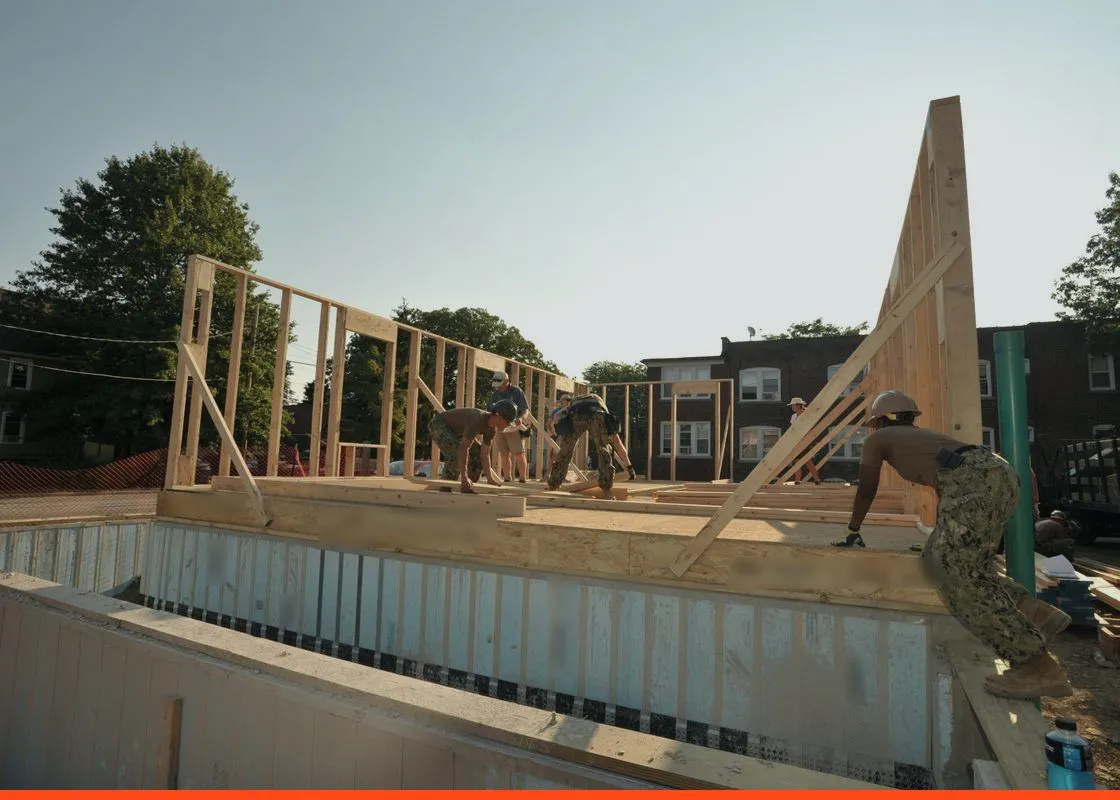
A crew raising the wood-framed walls of a new house on its foundation
Photo: U.S. Navy, public domain, cropped and color adjusted, with product markings blurred.

Keep streams apart

One container per material

A few yards of concrete or dirt in a general debris container can use up all of its included weight. Keeping heavy material in its own load keeps the scale ticket predictable.

  • Most phases

    Mixed debris

    Framing offcuts, drywall, packaging and old fixtures. The general container for most of the build.

  • Heavy

    Concrete and masonry

    Broken slabs, block and brick fill a container by weight long before they fill it by volume. Order it as its own load.

  • Heavy

    Dirt from excavation

    Spoil from footings, basements and utility trenches, kept free of trash for a dirt container.

  • Heavy

    Roofing

    Shingles from a reroof or an addition. Estimate the weight by squares and layers before you order.

For a mixed load, the debris weight calculator estimates tons from the materials, and the dumpster size guide compares containers. For one phase at a time, use the drywall debris calculator, the concrete debris calculator or the roofing dumpster calculator.

By job type

Typical needs on residential jobs

A starting point, not a rule. The house, the scope and the city change the list.

JobContainersCrew and siteWatch for
New homeA dirt or concrete load at the start, then mixed debris through framing, drywall and finishRestroom and hand wash from day one, storage for materials, power before the meterHeavy loads at excavation, packaging at drywall and finish
Whole-house remodelContainers sized to the demolition, swapped as rooms are guttedA restroom for the crew, storage for fixtures and materialsPainted surfaces in homes built before 1978
Kitchen or bathA smaller container for cabinets, tile and fixturesA restroom if the home's are off limitsTile and plaster are heavy for their size
AdditionDirt from the foundation, then mixed debrisA restroom, storage and fence if the site is openA container on the street may need a permit
Several homes or a subdivisionContainers by lot and phase on one scheduleRestrooms and hand wash shared or per lot, fence and storage at a laydown areaStormwater coverage for the common plan of development

The services

What builders and remodelers order

Each line is sourced from a local provider and goes on the same agreement as the rest.

NeedWhat to ask forRead more
Debris by phaseRoll-offs sized to each phase and swapped as they fillDumpster rental
Concrete and masonryA separate load for broken concrete, block and brickConcrete disposal
Excavation dirtA dirt container for spoilDirt dumpsters
Street placementA permit when the container sits on a street, sidewalk or other public spaceDumpster permits
Crew restroomsA portable toilet and hand wash station, serviced on a schedulePortable toilet rental
StorageA ground-level container for tools, fixtures and materialsStorage container sizes
Site securityTemporary fence and gates on an open lotTemporary fence
PowerA temporary service from the utility, or a generator sized to the loadTemporary power

Building or remodeling several homes?

Send us the addresses and the schedule. We source local providers and keep the homes on one agreement, with charges by job on one invoice.

The rules

Rules to check before the first container

Federal rules set the floor. Your state and city can add to them, so check with your building department.

EPA Renovation, Repair and Painting

Lead-safe work in homes built before 1978

EPA's rule applies to anyone paid to perform work that disturbs painted surfaces in homes, childcare facilities and preschools built before 1978. Firms have to be certified, and workers trained in lead-safe work practices.1

29 CFR 1926.252

Debris out as the work goes

Scrap lumber, waste material and rubbish have to be removed from the immediate work area as the work progresses, and solvent waste, oily rags and flammable liquids kept in fire resistant covered containers.2

29 CFR 1926.51(c)

A restroom for the crew

Toilets are required by crew size, starting at one for 20 or fewer employees, and under temporary field conditions at least one toilet facility has to be available.3 See the OSHA portable toilet guide.

EPA Construction General Permit

Small lots can still need stormwater coverage

A Clean Water Act permit is required for stormwater discharges from construction that disturbs 1 acre or more, or less than 1 acre when it is part of a common plan of development or sale, such as a lot in a subdivision.4 See erosion control.

Most cities want a permit when a container sits on a street, sidewalk or other public space. Who files it and how far ahead varies by city. See dumpster permits.

How it works with Detritus

One request for the whole build

You get one point of contact. Local providers deliver, service and haul the equipment.

  1. You tell us the job

    The address, the phases, the materials coming out and the dates.

  2. We source local providers

    Providers in your market for the containers, the restroom and storage, quoted together.

  3. Delivery

    The restroom and storage arrive for the start, and each container for the phase that needs it.

  4. Swaps and service

    Call us to swap a full container or add a service. If a service is missed, we contact the provider the same business day.

  5. Removal and one bill

    Everything comes off at the end, and the job's charges go on one invoice.

For a quote

What to tell us

The more of this we have on the first call, the faster the quote.

  • The address, or the list of homes or lots
  • New build, remodel or addition
  • What is coming out: mixed debris, concrete, dirt or roofing
  • Where containers can sit, and whether that is the street
  • The start date and how long each phase runs
  • Crew size, for restrooms
  • Storage, fence and power needs

One container for one remodel? Our brand sites quote and book single orders directly: Dumpster Rental Dogs, Porta Potty Dogs and Storage Container Dogs.

Common questions

Home builder and remodeler questions

Do I need a separate dumpster for concrete or dirt?

It is usually the better plan. Concrete, block and dirt fill a container by weight before volume, so a few yards in a general debris container can use up its included weight.

Do I need a permit for a dumpster at a house?

It depends on the city and where the container sits. Most cities want a permit when it sits on a street, sidewalk or other public space. Check with your city before delivery.

Do lead rules apply to remodeling?

EPA's Renovation, Repair and Painting rule applies to anyone paid to perform work that disturbs painted surfaces in homes, childcare facilities and preschools built before 1978. Firms need certification and workers need lead-safe training.

Does a home building site need a portable toilet?

OSHA rule 29 CFR 1926.51 requires toilets for employees by crew size, with at least one available under temporary field conditions.

Can you handle several homes at once?

Yes. We source local providers in the markets we serve and keep the homes on one agreement, with charges by job on one invoice.

How do I get a quote?

Call sales at (888) 588-2607 or request a quote with the address, the phases and the dates.

Every phase of the house on one agreement

Local providers do the work. We source them, schedule them with your other site services and send one bill.

Read next

Sources

  1. U.S. EPA, Renovation, Repair and Painting Program. Checked November 4, 2026. epa.gov
  2. 29 CFR 1926.252, Disposal of waste materials, paragraphs (c) and (e). Checked November 4, 2026. osha.gov
  3. 29 CFR 1926.51, Sanitation, paragraph (c). Checked November 4, 2026. osha.gov
  4. U.S. EPA, Stormwater Discharges from Construction Activities. Checked November 4, 2026. epa.gov