Waste and recycling for restaurants and food service

A kitchen makes wet trash every day, cardboard with every delivery and food scraps that some cities now want kept separate. We arrange front-load dumpsters, compactors, balers and organics containers where local programs exist, from local providers in the markets we serve, with one agreement and one invoice across locations.

  • TrashFront-load or compactor
  • CardboardBaled or collected
  • Food scrapsWhere programs exist
  • Industry
  • Updated November 4, 2026
  • Sources: EPA, OSHA
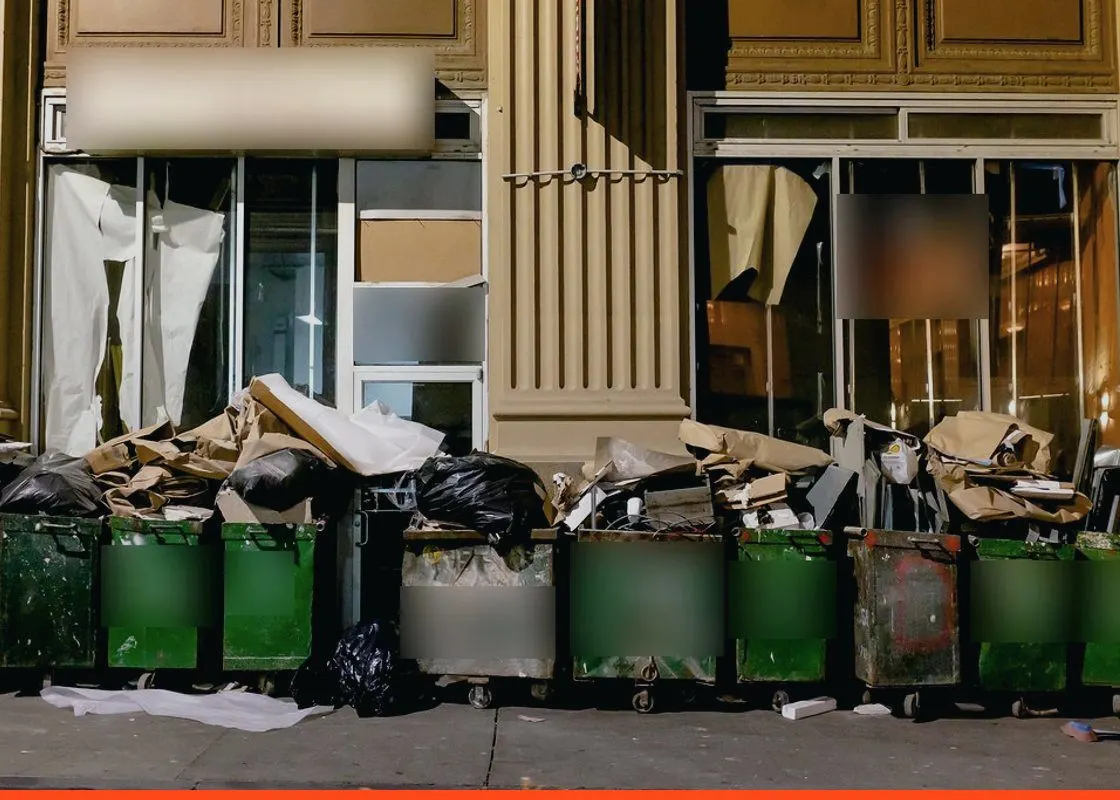
A row of overfilled waste carts on the sidewalk outside a city restaurant at night, piled with flattened boxes and trash bags
Photo: Billie Grace Ward, CC BY 2.0, cropped and color adjusted, with business names and phone numbers blurred.

Back of house

Four streams we arrange, one we don't

Most kitchens sort into the same few containers. The fewer of them that overflow, the less odor and the fewer pests at the back door.

  • Every day

    Trash

    Wet and heavy. A front-load container on a schedule, or a compactor where volume is high.

  • Every delivery

    Cardboard

    Broken down and baled, or collected in its own container, so it stops filling the trash.

  • Front of house

    Recycling

    Cans, bottles and containers, collected beside the trash where the local hauler takes them.

  • Where programs exist

    Food scraps

    An organics container, where a local program or rule calls for food waste collection.

  • Not ours

    Grease and used oil

    Grease and used cooking oil stay with your grease or rendering service. We do not arrange them.

Food scraps

Where a hauler fits on EPA's Wasted Food Scale

EPA's Wasted Food Scale, an update to its earlier Food Recovery Hierarchy, ranks the ways to handle wasted food from most to least preferred.1 Prevention and donation come first. A collection service comes in lower down, at composting and anaerobic digestion, which still rank above the landfill.

  1. Prevent wasted food
  2. Donate food
  3. Upcycle food
  4. Feed animals
  5. Leave unharvested
  6. Anaerobic digestion, digestate used Collected
  7. Compost Collected
  8. Anaerobic digestion, digestate not used Collected
  9. Apply to the land
  10. Down the drain, landfill or incineration Least preferred

Collected marks the pathways where food scraps usually leave in an organics container for a composting or digestion facility. Whether one takes commercial food scraps near you depends on the market.

Some states and cities require food scraps to be separated once a business passes a threshold. Our commercial recycling laws page tracks those rules, with the trigger for each.

Ask us whether an organics program is available at your address, and we will tell you what the local providers offer.

The services

What a kitchen usually orders

Local providers do the work; we hold the contract, own the problems, and send one bill. Availability varies by market.

NeedWhat to ask forRead more
Daily trashA front-load container with pickups set to how fast it fillsCommercial dumpsters and compactors
High volume or wet wasteA self-contained compactor, hauled when fullCompactors and balers
CardboardA baler or a cardboard containerBaler vs compactor
Food scrapsAn organics container, where a local program existsCommercial recycling laws
The enclosureContainers that fit the enclosure, with room for each streamEnclosure requirements
Remodels and buildoutsA roll-off with swaps for the projectDumpster rental
A plumbing outageA restroom trailer and hand wash stationsEmergency restrooms

Grease is not part of what we arrange. Grease traps, interceptors and used cooking oil stay with your grease or rendering service. Keep grease out of the dumpster and the compactor.

Planning a new enclosure? Count the grease container if it shares the space. Our enclosure guide shows how one city treats it.

By area

Typical needs by area and by operation

General guidance, not a rule. Your volume, your lease and your local hauler's routes decide the setup.

Area or operationTypical needWorth asking about
Prep and the lineTrash, plus food scraps kept separate where there is a programWhether an organics pickup is available at the address
ReceivingCardboard from every deliveryA baler or a cardboard container
Dining roomMixed recycling and trashWhat the local hauler accepts as recycling
Grocery and marketsWet waste and a lot of cardboardA self-contained compactor and a baler
Processors and commissariesHigh volume trash and packaging, often on a dockCompactor hauls and a backup roll-off
CafeteriasTrash and recycling, with peaks around service hoursPickup days that match the calendar
GreaseGrease trap and used oil serviceYour grease or rendering service, not us
  1. 01

    Odor is a frequency problem

    Food waste that sits for days is what smells. More pickups, or a compactor that seals the waste, usually fixes it faster than a bigger container.

  2. 02

    Pests find open lids

    Bags beside the container and lids that will not close draw pests. Size the container and the pickups so it closes every night.

  3. 03

    Keep the pad clean

    Leaks and spills around the container add to the smell. Tell us when a container is damaged or leaking and we contact the provider.

  4. 04

    Watch the busy weeks

    Holidays, events and patio season fill containers faster. Ask us for an extra pickup before the week, not after.

Several locations

One agreement for every location

A group of restaurants or stores rarely sits on one hauler's routes. The same service standards and the same invoice at every location is the point of using us.

  1. 01

    One invoice

    Charges by location on one invoice, which can be split by entity, region or cost center.

  2. 02

    One call

    Managers call us about a missed pickup, and we contact the local provider the same business day.

  3. 03

    New locations

    Open a new location and we source a provider in that market. Ask us which markets we cover.

  4. 04

    Waste data

    Ask us for tons by stream, diverted and landfilled, by location, from hauler and facility tickets.

Sustainability report due? See ESG waste reporting for what the data can include, and the diversion rate calculator to check a rate yourself.

Several kitchens, several haulers?

Send the location list and what each uses today. We source local providers and put them on one agreement and one invoice.

The rules

What the primary sources say

Food scrap rules come from your state and city. These federal sources cover the ranking of food waste options and the safety of the machines at the dock.

U.S. EPA

The Wasted Food Scale

EPA's scale prioritizes actions that prevent and divert wasted food from disposal. It is an update to the earlier Food Recovery Hierarchy, and puts sending food down the drain, to landfill or to incineration at the bottom.1

OSHA SHIB 08-13-2013

Baler and compactor discharge doors

OSHA warns that fatigue cracks can make a baler or compactor discharge door lock fail, a potentially fatal hazard to workers nearby. It lists the lockout and tagout and machine guarding standards and points to ANSI Z245.2

State and city rules

Food scrap thresholds

Where food scrap rules exist, coverage usually turns on weekly trash volume or tons of food waste. Our commercial recycling laws page links each rule to its text.

For a quote

What to tell us

The more of this we have on the first call, the faster the quote.

  • Each address, and the kind of operation
  • What each location uses today, and how often it is picked up
  • Whether you have a compactor or a baler
  • Whether you want food scraps collected
  • The enclosure: size, gate and access for the truck
  • How you want the invoice split

Common questions

Restaurant and food service questions

What waste services does a restaurant need?

Usually a front-load container or compactor for trash, a baler or container for cardboard, recycling where the local hauler takes it, and an organics container where a local program exists.

Do you collect food scraps for composting?

Where a local program exists, we can arrange an organics container. Whether a composting or digestion facility takes commercial food scraps depends on the market, so ask us about your address.

Do you handle grease or used cooking oil?

No. Grease traps and used cooking oil stay with your grease or rendering service. Keep grease out of the dumpster and the compactor.

What is EPA's Wasted Food Scale?

It is EPA's ranking of ways to handle wasted food, from prevention and donation at the top to landfill and incineration at the bottom. It updates the earlier Food Recovery Hierarchy.

Can you cover restaurants in different cities?

Yes. We source local providers in each market we serve and keep one agreement and one invoice. Availability varies by market.

How do I get a quote?

Call sales at (888) 588-2607 or request a quote with the location list and what each uses today.

Every stream in its own container

Local providers do the work. We source them, keep the service record and send one bill for every location.

Read next

Sources

  1. U.S. EPA, Wasted Food Scale (last updated September 16, 2026): the ranked pathways and the update to the Food Recovery Hierarchy. Checked November 4, 2026. epa.gov
  2. U.S. OSHA, Safety and Health Information Bulletin, Operating Hazards of Baler Discharge-Door Locks (SHIB 08-13-2013). Checked November 4, 2026. osha.gov