Dumpsters and site services for restoration contractors
Mitigation and rebuild losses rarely wait for business hours: a sprinkler main bursts overnight, a hurricane makes landfall, or a commercial fire clears for board-up. Your crews need an open-top roll-off for waterlogged drywall and carpet, portable restrooms at the curb, and generator power for air movers and dehumidifiers, often in a city where you have no local vendor relationships. We source vetted local providers across the markets we serve under one agreement, with job-coded billing ready for claim files.
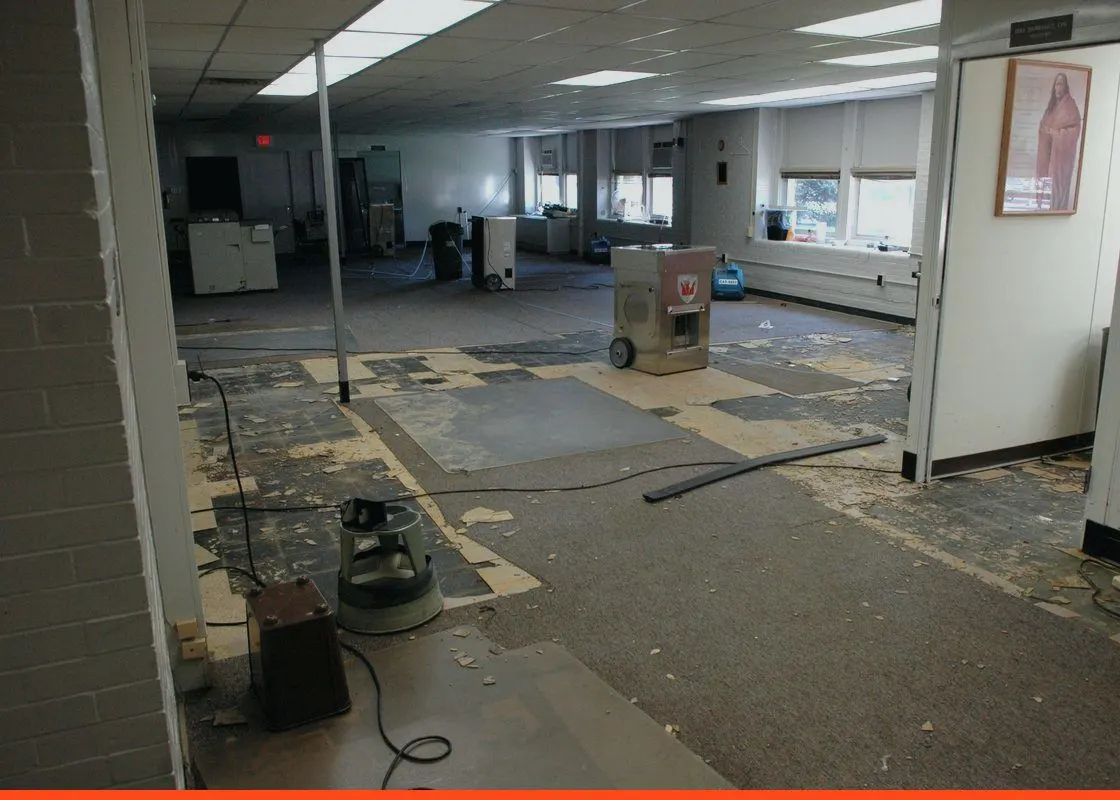
- Tear-outRoll-offs at the curb
- CrewsRestrooms and hand wash
- DryingGenerators and fuel
Rapid mobilization
First-day equipment on water, fire, and storm losses
Whether your crews are extracting water from a flooded office floor or gutting smoke-damaged framing, day-one site support comes down to getting boxes, sanitation, and power on the ground without burning hours calling unfamiliar haulers.
| Scope | What we set up | Related |
|---|---|---|
| Tear-out debris | 20, 30, and 40-yard roll-offs sized for heavy waterlogged drywall, carpet, and charred framing, with live swaps during gut-out | Dumpster rental |
| Crew sanitation | Portable toilets and foot-pump hand wash stations when building water is shut off or restrooms sit inside the loss zone | Portable toilet rental |
| Drying power | Towable diesel generators sized to run commercial dehumidifiers, HEPA air scrubbers, and axial fans when utility service is pulled | Temporary power |
| Water and fuel | Scheduled diesel refueling so drying equipment stays running overnight, plus potable crew water and washdown supply | Water |
| Perimeter and lockup | Temporary panel fencing around fire or structural losses and ground-level Conex boxes for pack-out contents or gear | Temporary site setup |
Mobilizing crews into a storm or catastrophe market?
Call with the loss address, drop instructions, and target arrival window. We check local hauler and generator availability right away and put the order on your account.
Pre-demo compliance
Mold windows, pre-1978 lead paint, and asbestos NESHAP checks
Dry-out timelines leave zero slack, and pre-demolition environmental rules still govern what can go into an open-top C&D roll-off. EPA mold guidance calls for drying clean-water intrusion within 24 to 48 hours before mold colonizes wet materials.1 Before gutting walls, ceilings, or flooring, check the building's age and hazardous-materials survey. EPA's Renovation, Repair, and Painting (RRP) rule requires certified firms and lead-safe containment on paid work disturbing painted surfaces in pre-1978 housing, childcare facilities, and preschools.2 Under the federal asbestos NESHAP (40 CFR 61.145), the owner or operator must thoroughly inspect affected areas for asbestos prior to demolition or renovation and file written notice at least 10 working days before regulated asbestos stripping or removal above threshold quantities begins.3 Regulated asbestos, hazardous chemicals, and biohazard waste cannot go in standard C&D containers; verify state and local abatement rules before ordering boxes.
National CAT & regional accounts
Why restoration teams run multi-market losses on one agreement
When project managers are dispatching extraction crews, filling out credit applications with three unfamiliar vendors in every city slows down mitigation.
- 01
Vetted haulers in each market
We match each loss address to local roll-off, sanitation, and generator providers with trucks on the ground.
- 02
Claim-ready billing by job
Charges arrive itemized by loss address or project number on one consolidated invoice so job costing and adjuster backup stay clean.
- 03
Same-day dispatch escalation
Your field lead calls one line for live swaps or missed pickups, and our team follows up with the local provider the same business day.
- 04
Add gear as the scope opens
Layer on extra roll-off hauls, perimeter fence, or generator refueling once walls open up without setting up another vendor.
Common questions
Restoration contractor questions
What site services do restoration crews typically order on day one?
Most mitigation and rebuild losses start with 20, 30, or 40-yard roll-off dumpsters for wet tear-out debris, portable toilets and hand wash stations when building plumbing is shut off, and towable diesel generators with scheduled refueling for drying banks, plus panel fence and Conex lockup on larger commercial losses.
How quickly can you get a roll-off or restroom onto a loss site?
Lead times depend on local fleet capacity, especially right after a regional hail, flood, or hurricane event. Call us with the loss address and drop constraints and we will confirm real truck windows in that market before booking.
What is EPA's dry-out window for clean-water damage?
EPA's mold prevention guidance advises drying water-damaged areas and materials within 24 to 48 hours of clean-water intrusion to prevent mold growth.
When does EPA's lead RRP rule apply to flood or fire tear-outs?
EPA's Renovation, Repair, and Painting rule covers paid work disturbing painted surfaces in homes, apartments, childcare centers, and preschools built before 1978. Emergency renovations have narrow interim exceptions, but clean-up, training, and firm-certification rules still apply; check EPA and state lead rules for your loss.
Can asbestos or hazardous remediation waste go into a standard C&D roll-off?
No. Under 40 CFR 61.145, facilities must be inspected for asbestos before demolition or renovation, with advance written notice required above threshold amounts. Regulated asbestos, chemical, and biohazard waste require licensed abatement haulers and manifested disposal, not general C&D boxes.
How do we dispatch a loss or set up a multi-market account?
Call sales at (888) 588-2607 with the loss address, drop spot, and equipment list, or reach out before storm season to put a master agreement in place for your regional or CAT teams.
Roll-offs, restrooms, and drying power on one agreement
Local providers run the trucks while we manage sourcing, swap dispatch, and claim-ready job billing. If a scheduled haul or pump-out runs late, we follow up with the provider the same business day.
Read next
Sources
- U.S. EPA, Water Damage Table: Mold Prevention and Mold Remediation in Schools and Commercial Buildings. Checked November 3, 2026. epa.gov
- U.S. EPA, Renovation, Repair and Painting Program. Checked November 3, 2026. epa.gov
- 40 CFR 61.145, Standard for demolition and renovation (asbestos). Checked November 3, 2026. ecfr.gov