29 CFR 1926.252(a)
Over 20 feet, use an enclosed chute
When material is dropped more than 20 feet to any point outside the exterior walls of the building, it has to go down an enclosed chute of wood or equivalent material.2 See trash chutes.
On a tear-off, the dumpster fills by weight long before it fills by volume. Shingles are heavy, a second layer adds its own weight, and overages are billed from the scale ticket. We source roll-offs and crew restrooms from local providers in the markets we serve and schedule swaps on multi-day jobs. Availability varies by market.
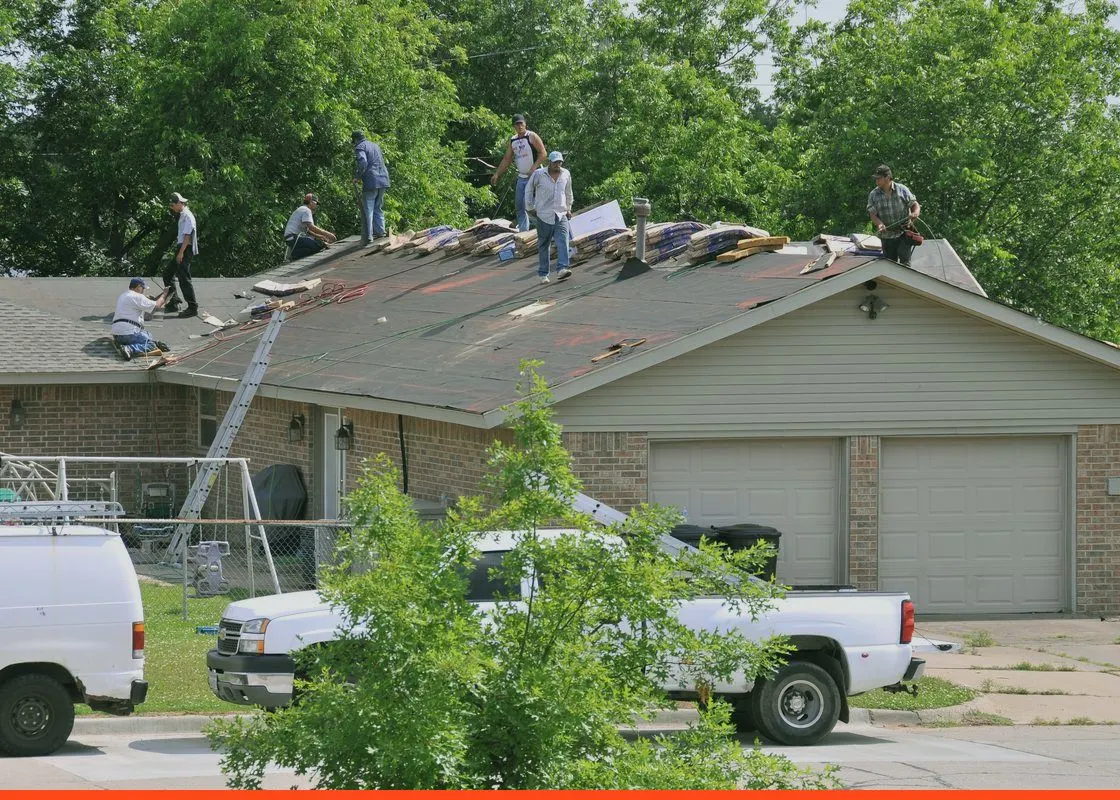
Tear-off weight
IKO, a shingle manufacturer, estimates tear-off weight per square, counting underlayment, nails and other debris, at about 200 pounds for 3-tab shingles, 240 for laminate and 300 for premium. Premium shingles vary the most: IKO puts them anywhere from 230 to 450 pounds per square before the extra.1
| Roof size | 3-tab | Laminate | Premium |
|---|---|---|---|
| 15 squares | 3,000 lbabout 1.5 tons | 3,600 lbabout 1.8 tons | 4,500 lbabout 2.3 tons |
| 20 squares | 4,000 lbabout 2 tons | 4,800 lbabout 2.4 tons | 6,000 lbabout 3 tons |
| 30 squares | 6,000 lbabout 3 tons | 7,200 lbabout 3.6 tons | 9,000 lbabout 4.5 tons |
| 40 squares | 8,000 lbabout 4 tons | 9,600 lbabout 4.8 tons | 12,000 lbabout 6 tons |
One layer, using IKO's per-square estimates. IKO's sizing chart treats a 1,500 square foot roof as 15 squares. For a second layer, IKO says to run a separate calculation and not to assume the bottom layer matches the top. Wet debris weighs more.
Then compare that number with the tons included on the quote. IKO notes that dumpster companies set their own weight limits.1 Our dumpster weight limits guide shows roofing goes over the included tons more than any other material, the dumpster tonnage guide explains how included tons work, and the dumpster size guide compares containers. To add decking and check every size on space and weight, use the roofing dumpster calculator.
The services
Most residential reroofs need two things: a container that can take the weight and a restroom for the crew. Commercial and taller jobs add more.
| Need | What to ask for | Read more |
|---|---|---|
| Tear-off debris | A roll-off sized to the weight, placed where the crew can load it from the roof edge | Dumpster rental |
| Multi-day jobs | Swaps when the container is full, scheduled with the tear-off | Dumpster tonnage |
| Driveway protection | Ask us about boards or plywood under the container, and tell us the surface when you order | Dumpster size guide |
| Street placement | A permit when the container sits on a street, sidewalk or other public space | Dumpster permits |
| Crew restrooms | A portable toilet, and a hand wash station, for the length of the job | Portable toilet rental |
| Material staging | A storage container on longer or commercial jobs | Storage containers |
| Taller buildings | An enclosed debris chute into the dumpster | Trash chutes |
Not sure what can go in with the shingles? See what can go in a dumpster, or run a mixed load through the debris weight calculator.
Storm season
After hail or high wind, a crew can go from a few jobs a week to a backlog, often in a city where it has no vendors yet.
Every roofer in the area is ordering containers at once. The earlier we have the addresses and dates, the sooner we can tell you what the local providers can do.
We source local providers in the markets we serve, so a new city does not mean a new vendor search. Ask us which markets we can cover.
Every job on one agreement, with charges by job on one invoice, so each one bills to the right customer.
Storm crews run larger. OSHA's restroom minimums follow headcount, so tell us the crew size with each job.
Send the addresses, the squares and layers, and the dates. We source the containers and restrooms and schedule the swaps.
The rules
Two OSHA construction standards cover most of it: waste disposal and sanitation. Read them for your job and plan the container placement with your safety lead.
29 CFR 1926.252(a)
When material is dropped more than 20 feet to any point outside the exterior walls of the building, it has to go down an enclosed chute of wood or equivalent material.2 See trash chutes.
29 CFR 1926.252(c)
Scrap lumber, waste material and rubbish have to be removed from the immediate work area as the work progresses. Place the container where the crew can load it as they strip.2
29 CFR 1926.252(e)
Solvent waste, oily rags and flammable liquids have to be kept in fire resistant covered containers until they are removed from the worksite.2
29 CFR 1926.51(c)
Toilets are required by crew size, and under temporary field conditions at least one toilet facility has to be available. The rule does not apply to mobile crews having transportation readily available to nearby toilet facilities.3 See the OSHA portable toilet guide.
Putting the container on the street? Most cities want a permit when the box sits on a street, sidewalk or other public space. See dumpster permits.
How it works with Detritus
You get one point of contact. A local provider delivers, swaps and hauls the equipment.
The address, the squares, the layers, the shingle type and the dates.
A provider in your market for the roll-off, and a restroom if the crew needs one, quoted together.
The container is set where the crew can load it, before the tear-off starts.
Call us to schedule a swap when the container is full.
The last load is hauled when the roof is on, and the job's charges go on one invoice.
For a quote
The more of this we have on the first call, the faster the quote.
One dumpster for one roof? Our brand site quotes and books single orders directly: Dumpster Rental Dogs.
Common questions
IKO estimates about 200 pounds per square for 3-tab shingles, 240 for laminate and 300 for premium, counting underlayment, nails and other debris. One layer of laminate on a 30 square roof is about 7,200 pounds, or 3.6 tons.
Size by weight first. Estimate it from the squares, layers and shingle type, then check the tons included on the quote. The hauler sets its own weight limits, so confirm them before delivery.
Yes. Call us to schedule a swap when the container is full.
OSHA rule 29 CFR 1926.51 requires toilets for employees, with at least one under temporary field conditions. It does not apply to mobile crews having transportation readily available to nearby toilet facilities.
Ask us. Tell us the surface when you order and we will tell you what the local provider can do.
Call sales at (888) 588-2607 or request a quote with the address, the squares, the layers and the dates.
Local providers do the work. We source them, schedule the swaps with your crews and send one bill.
Read next
Sources