Site services for utility and infrastructure crews

Transmission, pipeline, telecom, road and solar work runs along a corridor, often far from the nearest service yard. The work front keeps moving, and the restrooms, water and fuel have to keep up. We source those services from local providers in the markets we serve and keep the whole job on one agreement. Availability varies by market.

  • LinearWork fronts that move
  • RemoteCoverage checked by site
  • One agreementYard to last segment
  • Industry
  • Updated November 4, 2026
  • Sources: OSHA, EPA
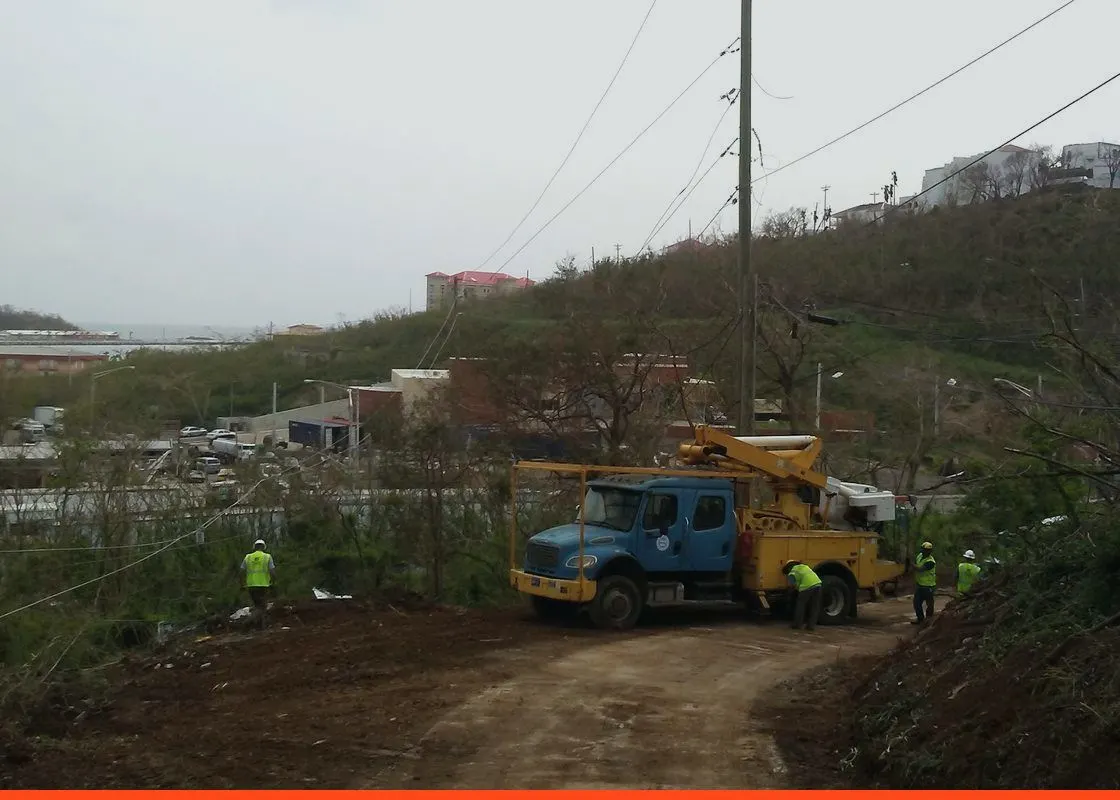
A line crew in high-visibility vests working beside a bucket truck on a dirt access road under a power line
Photo: Western Area Power Administration, CC BY 2.0, cropped and color adjusted.

Linear work

A yard, a work front and a long line between them

Most corridor jobs split into a fixed staging yard and a crew that moves along the route. Plan the services for each separately.

  1. Fixed

    Staging yard

    Office trailer, storage, fence and gates, fuel and water, and restrooms for the people based there.

  2. Behind the crew

    Finished segment

    Units picked up and debris hauled, with erosion controls and devices left where the permit wants them.

  3. Today

    Work front

    Restrooms and hand wash the crew can reach, drinking water, lights for early starts, and barricades where the work meets traffic.

    Moves with the crew

  4. Ahead

    Next segment

    Clearing and access, and the next drop points for units. Tell us the schedule so delivery lines up.

Moving units along the route is the provider's work. How often that can happen depends on the market, so ask us when you send the schedule.

The services

What corridor and remote jobs order

Each line is sourced from a local provider and goes on the same agreement as the rest.

NeedWhat to ask forRead more
Crew restroomsPortable toilets near the work front, relocated as it movesPortable toilet rental
Hand washingHand wash stations beside the restroomsHand wash stations
Trailers with no sewerHolding tanks with scheduled pump-out for office or restroom trailersHolding tanks
FuelDiesel, gasoline, DEF and lubricants delivered to equipment and generatorsFuel delivery
WaterDrinking water for crews, bulk water for dust control and compactionWater delivery
LightingMobile light towers for night work and early startsLight towers
Work zonesBarricades, barriers, cones and arrow boardsBarricades
Yard securityTemporary fence and gates around the yard or laydown areaTemporary fence
StorageContainers for materials, tools and sparesStorage containers
Heat and coldTemporary heaters or portable cooling, with fuel scheduledHeating and cooling
StormwaterSilt fence, wattles, inlet protection and stabilized entrancesErosion control

Building solar or wind? The program is written out on solar and renewables. Working through summer? See heat illness prevention and jobsite drinking water.

By job type

Typical layouts and what they need

A starting point for planning. The route, the crew count and the season change the list.

Job typeTypical layoutServices that come up
Transmission and distributionA yard plus structures spread along a right of wayRestrooms moved between structures, fuel for equipment, water, fence at the yard
PipelineA long spread with a yard and several crews working apartRestrooms per crew, holding tanks at the yard, fuel, bulk water, lighting
Telecom and fiberShort daily moves along roads and easementsRestrooms the crew can reach, cones and barricades in the work zone
Road and bridgeWork zones next to live traffic, often at nightBarricades and arrow boards, light towers, restrooms, concrete washout
Solar and energyA large fenced site with a laydown yardRestrooms that scale with headcount, water, ice, fuel, fence and storage. See solar

A route that crosses several markets?

Send the route, the yards and the schedule. We match each segment to local providers and keep the job on one agreement.

The rules

What the rules say about crews on the move

OSHA's construction sanitation rule has a specific line for mobile crews, and stormwater rules follow the disturbed area. Read them for your job with your safety lead.

29 CFR 1926.51(c)(4)

The mobile crew exception

The toilet requirements do not apply to mobile crews having transportation readily available to nearby toilet facilities. Where that is not the case, toilets are required by crew size, and at least one under temporary field conditions.1 See the OSHA portable toilet guide.

29 CFR 1926.51(a)

Drinking water everywhere

An adequate supply of potable water has to be provided in all places of employment, including a work front far from a building.1 See jobsite drinking water.

29 CFR 1926.51(f)(1)

Washing after herbicides and coatings

Crews applying paints, coatings, herbicides or insecticides, or working with other harmful contaminants, need adequate washing facilities in near proximity to the worksite, equipped to remove those substances.1 See hand washing requirements.

EPA Construction General Permit

Stormwater from an acre or more

A Clean Water Act permit is required for stormwater discharges from construction that disturbs 1 acre or more, or less than 1 acre when it is part of a common plan of development or sale. EPA's permit covers areas where EPA is the permitting authority, so check which permit applies along your route.2

Working next to traffic? Place devices to your traffic control plan and your state's work zone rules. See barricades and light towers.

How it works with Detritus

One request for the whole route

You get one point of contact. Local providers deliver, service, move and remove the equipment.

  1. You send the route

    The yards, the route or segment list, crew counts and the schedule.

  2. We check coverage

    Each location is matched to providers whose service radius reaches it. If a market is too thin for the scope, we say so before we quote.

  3. Delivery

    The yard is set up first, then units go to the first work front.

  4. Service as the front moves

    Restrooms are serviced and fuel and water delivered on a schedule. If a service is missed, we contact the provider the same business day.

  5. Demobilization and one bill

    Units come off as segments finish, and the job's charges go on one invoice.

For a quote

What to tell us

The more of this we have on the first call, the faster the quote.

  • Yard locations, and the route or segment list
  • Crew counts at the yard and on each front
  • How often the work front moves
  • Access: paved, gravel or off-road
  • Fuel and water needs, and for what equipment
  • Night work, traffic control or winter work
  • Start date and expected duration

Common questions

Utility and infrastructure questions

Do mobile utility crews need portable toilets?

OSHA rule 29 CFR 1926.51(c) does not apply to mobile crews having transportation readily available to nearby toilet facilities. Where that is not the case, toilets are required by crew size, with at least one under temporary field conditions.

Can portable toilets move with the crew?

Ask us. Moving units is done by the provider in each market, so tell us how often the front moves and we will tell you what can be scheduled.

Can you supply fuel and water to remote sites?

We source fuel and water delivery from local providers and keep it on the same agreement as the restrooms and containers. Availability varies by market, so send the locations.

What if the route crosses several markets?

We match each location to providers whose service radius reaches it and keep the job on one agreement. If a market is too thin for the scope, we say so before we quote.

Do corridor jobs need a stormwater permit?

A Clean Water Act permit is required for stormwater discharges from construction that disturbs 1 acre or more, or less than 1 acre as part of a common plan of development or sale. Check whether EPA or your state issues it.

How do I get a quote?

Call sales at (888) 588-2607 or request a quote with the yards, the route and the schedule.

The yard and the work front on one agreement

Local providers do the work. We source them along the route, schedule them with your crews and send one bill.

Read next

Sources

  1. 29 CFR 1926.51, Sanitation, paragraphs (a), (c) and (f). Checked November 4, 2026. osha.gov
  2. U.S. EPA, Stormwater Discharges from Construction Activities. Checked November 4, 2026. epa.gov