LEED construction waste credit: v4.1 and v5 requirements
The LEED construction and demolition waste credit rewards projects that divert most of their debris from the landfill and can prove it. The rules changed between v4.1 and v5, and the difference decides how you set up the dumpsters on day one. This guide lays out both versions, what counts and what does not, and the records you need to keep.
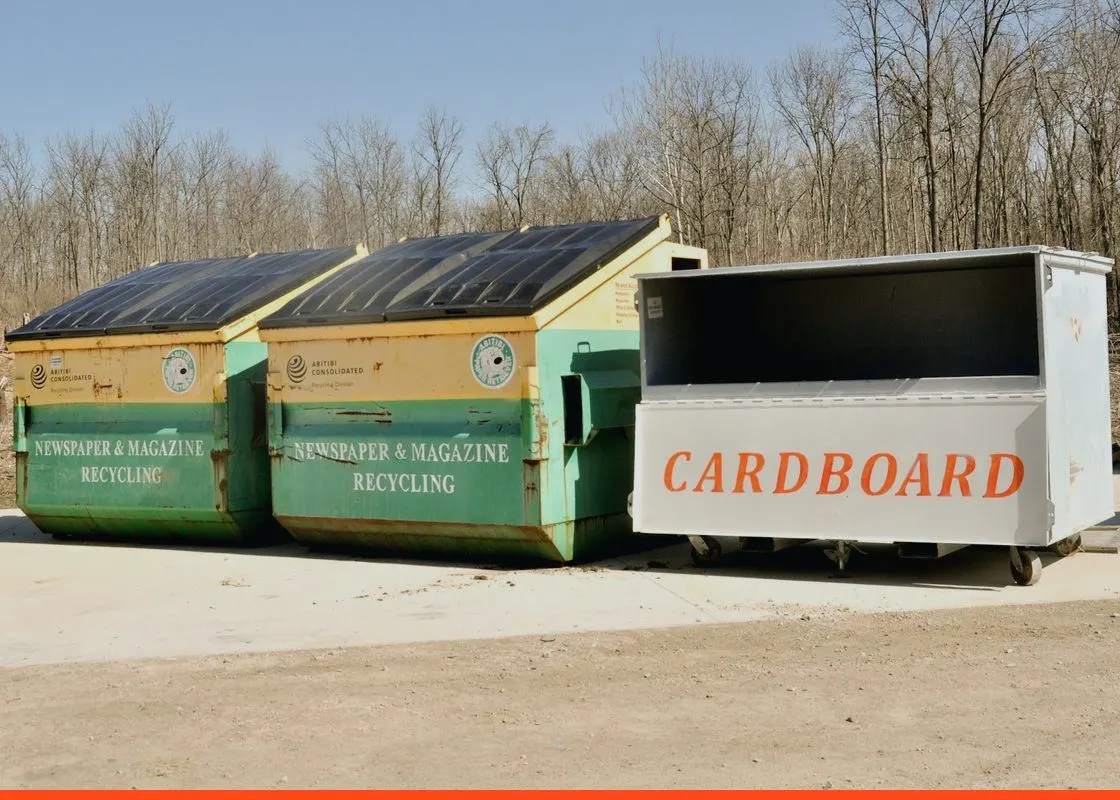
- StreamsSorted at the source
- WeightsFrom scale tickets
- PlanWritten before demolition
Version 4.1
LEED v4.1: four ways to earn the credit
In v4.1 BD+C the credit is worth 1 to 2 points. Calculations can be by weight or volume, but you must use one method throughout.1
| Path | What you must do | Points |
|---|---|---|
| Divert 50% and two streams | Divert at least 50% of total construction and demolition material, across at least two material streams | 1 |
| Divert 50% through a certified commingled facility | Divert at least 50%, with all commingled recycling sent to an offsite sorting facility certified by the Recycling Certification Institute or an approved equivalent | 1 |
| Divert 75% and three streams | Divert at least 75%, across at least three material streams | 2 |
| Divert 75% with a certified commingled facility | Divert at least 75%, with commingled recycling as one of at least two streams, sent to a certified facility | 2 |
| Reduce total waste (Option 2) | New construction generates no more than 7.5 pounds of waste per square foot, or under 2.5 pounds for warehouse and distribution projects. Renovation and demolition must salvage or recycle at least 75% | 2 |
Not everything counts the same. Material that goes to alternative daily cover counts as waste, not diversion, and so does waste to energy other than wood converted to fuel. Excavated soil and land clearing debris are excluded from the calculation.1 A companion prerequisite requires a waste management plan that names at least five materials targeted for diversion, says whether each is separated or commingled and where it goes, and gives expected diversion rates. A final report on all major waste streams, with disposal and diversion rates, is also required.1
Setting up a LEED project?
Tell us the project, the streams you plan to separate and the start date. We source the containers and the weights and keep the paperwork in one place.
Version 5
LEED v5: the credit changes
In v5 the credit is called Construction and Demolition Waste Diversion and is worth 1 to 2 points for New Construction and Core and Shell. The plan is part of the credit instead of a separate prerequisite, and how you separate material now changes the math.2
| Topic | What v5 requires |
|---|---|
| Plan | Develop and implement a construction and demolition materials management plan, and submit a final report on all waste generated |
| 1 point | Divert at least 50%, and at least 10% of what you divert must be salvaged or source separated and sent to single material recyclers |
| 2 points | Divert at least 75%, and at least 25% of what you divert must be salvaged or source separated and sent to single material recyclers |
| Source separated material | Counts as 100% diverted |
| Salvaged material | Counts at 200% |
| Mixed debris | Uses the processing facility's average recycling rate. Rates not verified by a third party assume at most 35% |
| Does not count | Alternative daily cover and incineration or energy recovery count as waste. Hazardous waste, excavated soil and land clearing debris are excluded |
Check which version your project is registered under before you plan, and read the current rating system and reference guide. This page is a summary, not a substitute for them.
On the site
What to do on the job
The credit is won or lost on site in the first weeks, when habits form.
- 01
Write the plan before demolition
Name the streams, who picks them up and the target percentage. LEED asks for the plan, so do it first, and share it with the crews.
- 02
Separate at the source
Source separated streams are the cleanest way to count diversion, and under v5 they count in full. Put a labeled container for each stream where the work happens.
- 03
Keep a weight ticket for every haul
Calculations need weights or volumes. Ask each hauler for a scale ticket or weight record per pickup, and keep them by stream.
- 04
Report monthly, not at the end
A running tally shows you early if you will miss 50% or 75%. See diversion reports for what a monthly report lists, and our waste management plan guide for the outline.
Common questions
LEED waste credit questions
What does the LEED construction waste credit require?
In v4.1, diverting at least 50% or 75% of construction and demolition material across a set number of streams, or reducing waste per square foot, plus a waste management plan. In v5, a materials management plan and 50% or 75% diversion, with part of it source separated or salvaged.
How many points is the credit worth?
One to two points in both v4.1 BD+C and v5 for the project types named in each rating system.
Does soil count toward diversion?
No. Excavated soil and land clearing debris are excluded from the calculation in both versions.
Does waste to energy count?
Not in v5, where incineration and energy recovery count as waste. In v4.1 only wood converted to fuel is included, and other waste to energy is not diversion.
Do I need scale tickets?
The credit calculates by weight or volume and needs a final report, so you need records for every haul. Scale tickets are the usual proof for weight.
Can you set up the containers and reporting?
Yes. We source containers by stream and track weights through local providers. Call sales at (888) 588-2607 with the project and the credit version.
Containers, weights and reports in one place
Local providers do the work; we hold the contract, own the problems, and send one bill. If a pickup gets missed, we contact the provider the same business day.
Read next
Sources
- U.S. Green Building Council, LEED v4.1 Building Design and Construction rating system, MR credit Construction and Demolition Waste Management, and the matching prerequisite. Checked November 3, 2026. usgbc.org
- U.S. Green Building Council, LEED v5 Building Design and Construction rating system, July 2026, MRc5 Construction and Demolition Waste Diversion. Checked November 3, 2026. usgbc.org