Frequency
Empty it before it turns
More pickups usually fix odor faster than more capacity. Set the schedule to the busy days, not the average.
Food scraps are heavy, wet and the stream most likely to smell. EPA's Wasted Food Scale puts prevention and donation first, and composting and anaerobic digestion above landfill.1 Where a local program takes commercial food scraps, an organics container collects what is left, and some states and cities require it.
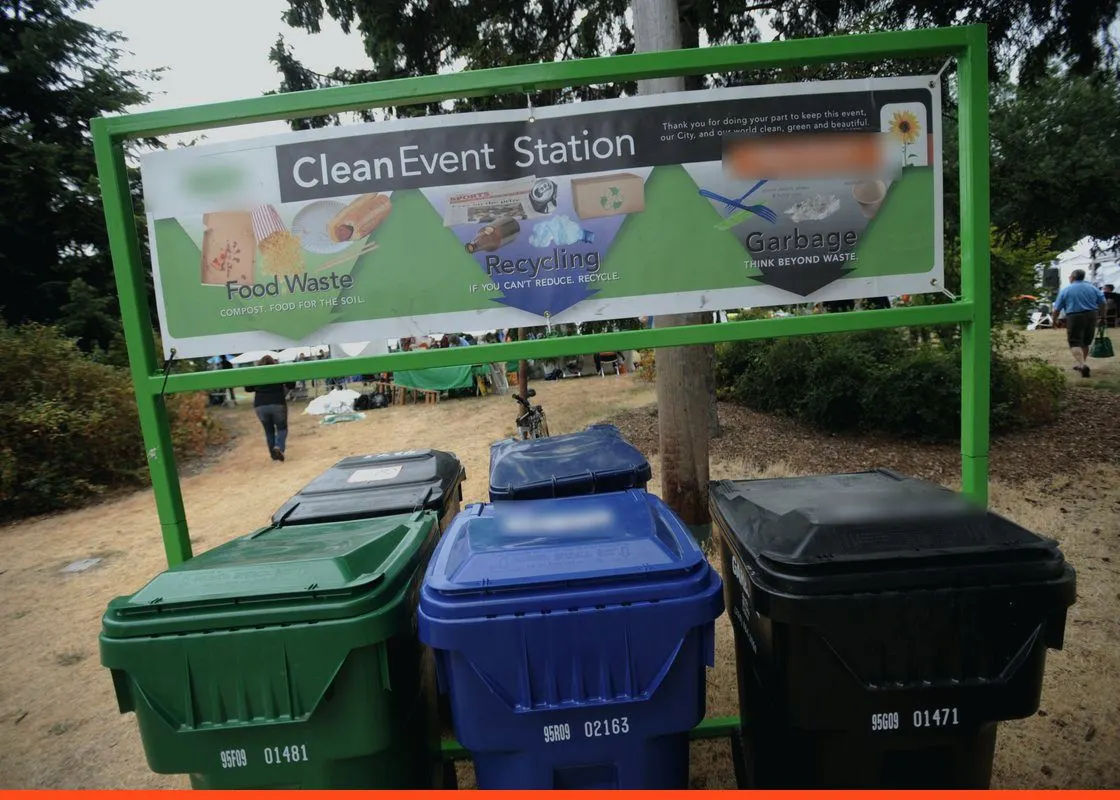
Why it is its own stream
An organics program only works if the cart holds what the composting or digestion facility can take. Each program sets its own list; this is the usual shape of it.
Food scraps cart
Ask the facility
EPA says certified compostable products are designed for commercial composting facilities only, and some of those facilities do not accept them.2
Not in organics
Which container
Food scraps are dense, so the container is sized by weight a person can move and how often it is emptied.
Carts or a container set beside the trash and recycling, emptied on a schedule by a hauler that takes food scraps to a composting or digestion facility.
Edible food that is safe to eat goes to a food recovery organization first. EPA calls donating one of the most preferred pathways.1
Where nobody takes food scraps, wet waste usually goes in a self-contained compactor that keeps liquid sealed. It is still trash. See compactors and balers.
How much
EPA puts a full 64 gallon cart of food waste at about 150 pounds.3 Count the carts you would fill in a normal week and compare the weight with the thresholds on our commercial recycling laws page.
| Full 64 gallon carts a week | About | Where that weight starts to matter |
|---|---|---|
| 2 carts | 300 lb | Vermont covers any amount of food scraps |
| 7 carts | 1,050 lb | Past Massachusetts' commercial food ban threshold of half a ton a week |
| 14 carts | 2,100 lb | Past Maryland's 1 ton a week, if a facility is within 30 miles |
| 27 carts | 4,050 lb | Past New York's 2 tons a week through 2026, if a facility is within 25 miles |
Planning figures only. Thresholds and distances are summarized from our commercial recycling laws tracker, which links each rule to its text; other states use annual tons or trash volume instead. EPA also lists restaurant food waste at about 396 pounds and food waste at about 463 pounds a loose cubic yard,3 so a container of food scraps reaches a weight limit long before it looks full.
Odor and pests
Food scraps that sit for days are what smell and draw pests. Most fixes are about frequency and lids, not a bigger container.
Frequency
More pickups usually fix odor faster than more capacity. Set the schedule to the busy days, not the average.
Lids
Bags beside the cart and lids that will not close draw pests. Size the carts and pickups so every lid shuts.
The pad
Leaks and spills around the carts add to the smell. Tell us when a cart is damaged or leaking and we contact the provider.
Peaks
Holidays, events, banquets and move-in weeks fill carts faster. Ask for an extra pickup before the week, not after.
Setting it up
Order and prep to cut waste, and send safe, edible surplus to a food recovery organization.
Ask whether a hauler near you takes commercial food scraps, and get its accepted list.
Count carts or weigh a few days, including a busy one.
Small, labeled bins where food is scraped, emptied into the outside carts.
Pictures of what goes in, in the languages your staff read. Recheck after staff changes.
Tons by stream from hauler and facility tickets, if a law or a report asks for them.
Keep it out
Contamination is how an organics load gets rejected. The composting or digestion facility has the final say on what it takes.
Laws and rules
Food scrap rules come from your state and city. Our commercial recycling laws tracker has the trigger for each; these are the primary sources we checked for this guide.
U.S. EPA
EPA ranks prevention, donation, upcycling and feeding animals first, then anaerobic digestion and composting, with landfill, incineration and down the drain least preferred because landfilled food generates methane.1
California SB 1383
California set a 2025 goal of 75 percent less organic waste sent to landfills, and of 20 percent of unsold, still-edible food going to food recovery organizations. Jurisdictions must provide organic waste collection to all residents and businesses.4
Vermont Universal Recycling Law
Since July 1, 2020, everyone in Vermont has had to keep food scraps out of the trash, and haulers must offer food scrap pickup to businesses and institutions unless another hauler does.5
Other states and cities
Massachusetts, Rhode Island, Maryland, New Jersey, New York, Connecticut and Washington cover businesses above a food waste or volume threshold, often only near a facility. See the tracker for each.
How it works with Detritus
Send one request. Where a local program takes commercial food scraps, we arrange an organics container from a local provider, beside your trash and recycling, on one agreement and one invoice. Availability varies by market, so ask us whether a program exists at your address. Grease and used cooking oil are not part of what we arrange.
Decide
| Your situation | What to do |
|---|---|
| A restaurant with daily prep waste | An organics container where a program exists. See restaurants and food service |
| A hotel with banquets | Donate edible surplus first, then organics. See hotels and hospitality |
| A school or campus dining hall | Pickups that follow the calendar. See schools and universities |
| A state or city rule may cover you | Check the trigger on commercial recycling laws |
| No program takes food scraps near you | Wet waste in a self-contained compactor or a front-load container, picked up often enough to stay closed |
| You report diversion or ESG numbers | Weights by stream from tickets. See ESG waste reporting and diversion reports |
Common questions
Where a local program exists, we can arrange an organics container. Whether a composting or digestion facility takes commercial food scraps depends on the market, so ask us about your address.
EPA puts a full 64 gallon cart of food waste at about 150 pounds, and loose food waste at about 463 pounds a cubic yard.
Only if the facility takes them. EPA says certified compostable products are made for commercial composting facilities, and some of those facilities do not accept them.
Empty it more often, keep the lids closed and the pad clean. Food that sits for days is what smells, so frequency usually beats a bigger container.
Yes, where it is safe to eat. EPA's Wasted Food Scale ranks donation above composting and anaerobic digestion.
No. Grease traps and used cooking oil stay with your grease or rendering service. Keep grease out of the dumpster and the compactor.
Call sales at (888) 588-2607 or request a quote with each address, your weekly food scraps and what you use today.
Send the addresses and what each throws away. Local providers do the work; we hold the contract, own the problems, and send one bill.
Related guides
Sources