Porta potty vs restroom trailer: which do you need?
A porta potty is the standard answer for a job site, and a restroom trailer is the upgrade for events, long projects and places where people expect a real bathroom. The right choice depends on the crowd, the setup you can support and what the rules count. This guide compares them side by side.
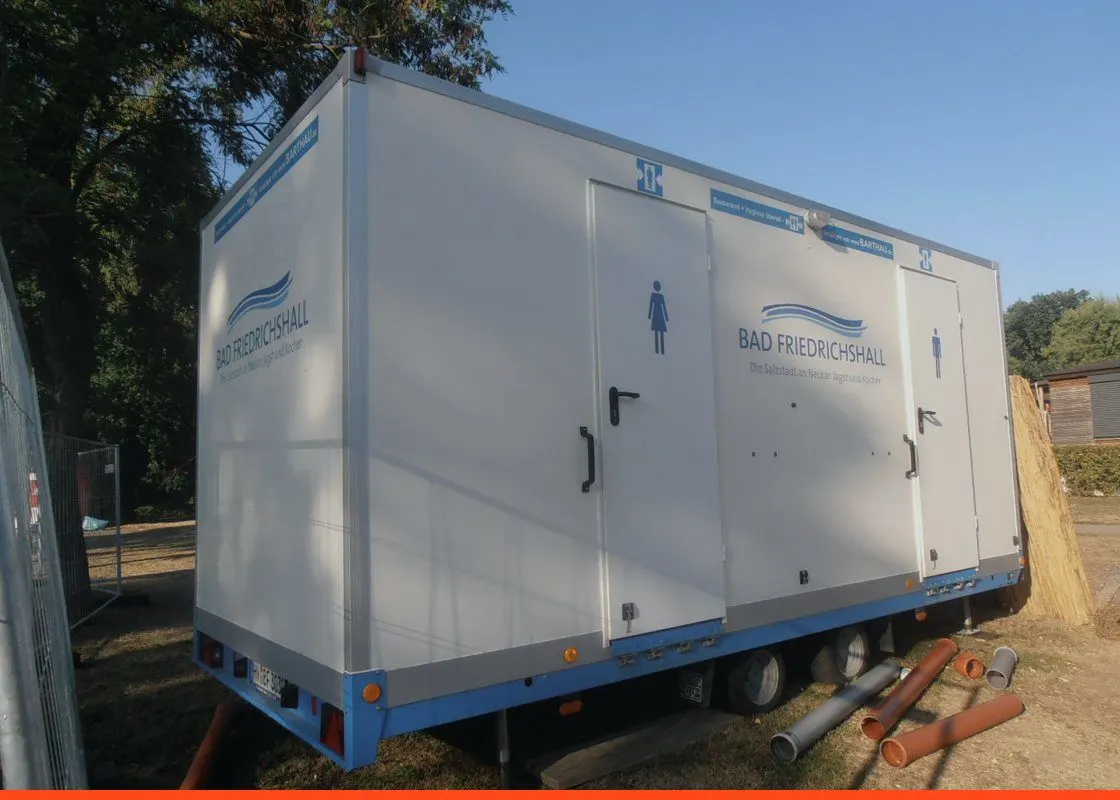
- Porta pottySimple and fast
- TrailerSinks, flush, climate
- RulesOSHA and ADA
Side by side
How they compare
Both are portable restrooms. They differ in what they ask of the site and what they give the user.
| Question | Portable toilet | Restroom trailer |
|---|---|---|
| What it is | A single unit, set in a row | A trailer with several stalls, often with sinks and flushing |
| Best for | Job sites, short events, large crowds on a budget | Events, long projects, offices and places where comfort matters |
| What the site must provide | Level, reachable ground | A level pad, plus power and water or tanks. See restroom trailer requirements |
| Servicing | Pumping and cleaning on a schedule | Tank service, supplies and checks. Water and power as needed |
| Cost | See portable toilet rental cost | See restroom trailer rental cost |
| Types and options | See portable toilet types | See restroom trailer rental |
Not sure which fits?
Tell us the site, the crowd and the dates. We recommend one and source it.
The rules
What OSHA and the ADA say
Two sets of rules affect the choice.
| Rule | What it says |
|---|---|
| OSHA toilet counts, construction | One toilet facility for 20 or fewer workers, then one toilet seat and one urinal per 40 workers, and per 50 workers at 200 or more. Where there is no sanitary sewer, chemical, recirculating, combustion toilets or privies may be used unless local codes prohibit them1 |
| ADA, construction sites | Portable toilets provided exclusively for construction personnel on a construction site are not required to comply with section 2132 |
| ADA, clustered portable units | Where covered, no more than 5 percent of the toilet units at each cluster are required to comply with section 6032 |
Events and public sites are treated differently from crew-only construction toilets. Our ADA portable toilet guide and event restroom planning guide go through it.
Choosing
Questions that settle it
Most decisions come down to four questions.
- 01
Who will use it?
A crew of workers is fine with porta potties. Guests at a wedding or a client site visit may expect more.
- 02
How long?
Long projects and permanent crowds make trailers more attractive, because comfort adds up.
- 03
What can the site support?
Trailers need a level pad and power or water. If the site cannot offer them, portable toilets are simpler.
- 04
Who must be able to use it?
Check the accessibility rules for the site, and ask about accessible units in either option.
Common questions
Porta potty and trailer questions
What is the difference between a porta potty and a restroom trailer?
A porta potty is a single portable unit. A restroom trailer is a trailer with several stalls, usually with sinks and flushing, and it needs a level pad plus power and water or tanks.
When should I choose a restroom trailer?
For events, long projects and places where comfort matters, and when the site can support power and water.
How many toilets does OSHA require on a construction site?
One toilet facility for 20 or fewer workers, then one seat and one urinal per 40 workers, and per 50 at 200 or more.
Do portable toilets need to be ADA accessible?
Portable toilets for crew only on a construction site are not required to comply with ADA section 213. For covered sites, no more than 5 percent of clustered units are required to be accessible.
Which costs more?
Restroom trailers usually cost more. See our cost guides for the public bid prices behind each.
Can you supply both?
Yes. Call sales at (888) 588-2607 with the site and the crowd.
Portable toilets and trailers on one agreement
Local providers do the work; we hold the contract, own the problems, and send one bill. If a delivery gets missed, we contact the provider the same business day.
Read next
Sources
- 29 CFR 1926.51, Sanitation, paragraph (c) and Table D-1. Checked November 3, 2026. ecfr.gov
- U.S. Access Board, 2010 ADA Standards for Accessible Design, sections 203.2 and 213.2. Checked November 3, 2026. access-board.gov