Any combination below, on any site, in any state, on one agreement and one invoice. These are the specifications we quote against, including the sizing rules that determine whether a container works for the load or hits its weight limit first.
Every unit runs on a defined service cycle rather than an as-needed call. Construction placements default to a 28-day rental with a 28-day service cycle; event placements default to four days and are sized with the event restroom planning guide. Service frequency is set per unit, so one provider running behind does not degrade the site. If a building has lost water, start with the emergency restroom response guide.
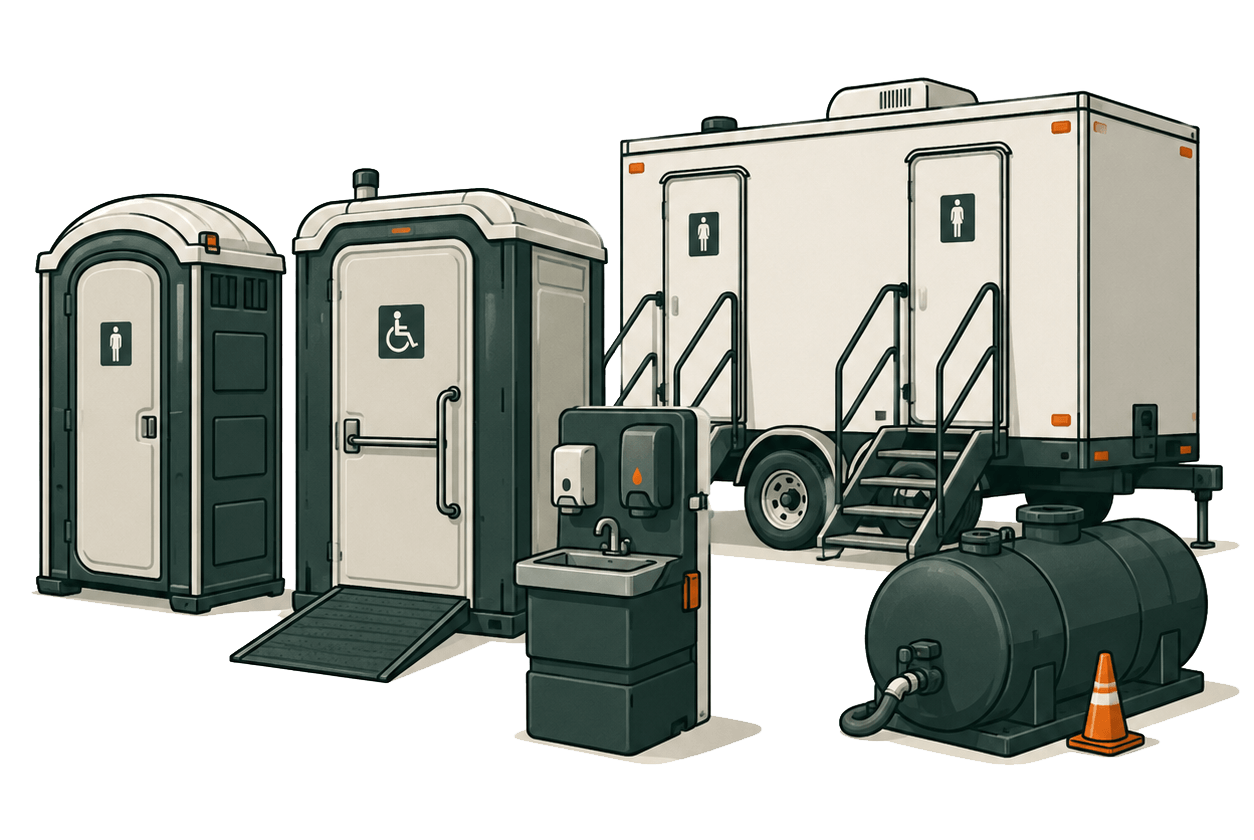
The workhorse unit for construction and long-duration site use. Built for durability under daily crew traffic rather than short event runs. Use the portable toilet planning guide to size a placement against headcount and service frequency. Published contract and bid prices are on the portable toilet rental cost guide.
DetailTypical spec: freestanding, no water or power connection required, serviced on a recurring cycle
Flushing unit with an exterior occupancy indicator that reads red when locked and green when free. Used where the site is client-facing or crew count is high enough that turnover matters.
A single unit combining a restroom with an interior sink. Common on long-duration projects and in locations with no public services, and used in disaster response where footprint is constrained.
DetailTypical spec: interior handwash, reduced footprint versus separate units
A restroom mounted on a towable trailer for placement where a direct drain connection is not feasible and where the unit needs to relocate as work moves across a site.
DetailTypical spec: towable, self-contained, relocatable without a service truck
Freestanding station with fresh water, soap, and paper towels. Often specified separately from restrooms by contract, and one of the most common omissions when scoping a site.
DetailTypical spec: foot-pump or gravity-fed freshwater, soap and towel dispensers
Multi-stall towable trailer with flushing fixtures, sinks, lighting, and climate control. Operates with independent electricity, water, and waste, so it can serve locations with no utility connection at all. Review the restroom trailer site requirements before delivery.
DetailRequires: a level pad, and either utility hookups or a holding tank and generator
Higher-specification trailer for client-facing sites, commissioning events, and executive site visits. It can be installed outdoors or, where access dimensions allow, indoors.
DetailRequires: level pad, larger access clearance than a standard trailer
Sealed mobile tank collecting waste from trailers and temporary fixtures, pumped on a schedule. The pumping cadence rather than the tank rental usually drives the cost.
DetailTypical spec: mobile placement, no permanent installation, scheduled pump-out
Vacuum-truck pumping of on-site septic systems for buildings not connected to municipal sewer. The dominant service line on rural retail and facilities portfolios.
DetailDelivered as: recurring scheduled service, with repair and assessment available
Portable restrooms, accessible units, hand wash stations and restroom trailers for events, with service scheduled around your hours.
DetailPlanning: count by expected attendance
0214 services
Waste and recycling
Recurring collection for occupied buildings is a different service from a project roll-off. Front-load, rear-load, carts, and compactors stay on site and are emptied on a schedule. Commercial dumpsters and compactors is that program, including recycling containers on the same agreement. Published city rates for recurring containers and roll-off hauls are on the commercial dumpster cost guide.
Front-load and rear-load dumpsters, carts, compactors and balers that stay on your property and are emptied on a schedule, plus recurring roll-off hauls, for retail, restaurants, offices and property portfolios. Container size and pickup frequency are set per site, with a named account executive.
DetailRecurring service. One agreement and one invoice across locations.
A cardboard container or a baler for stores and warehouses, collected beside the trash on the same agreement.
DetailContainer or baler, sized from a week of boxes
Project containers
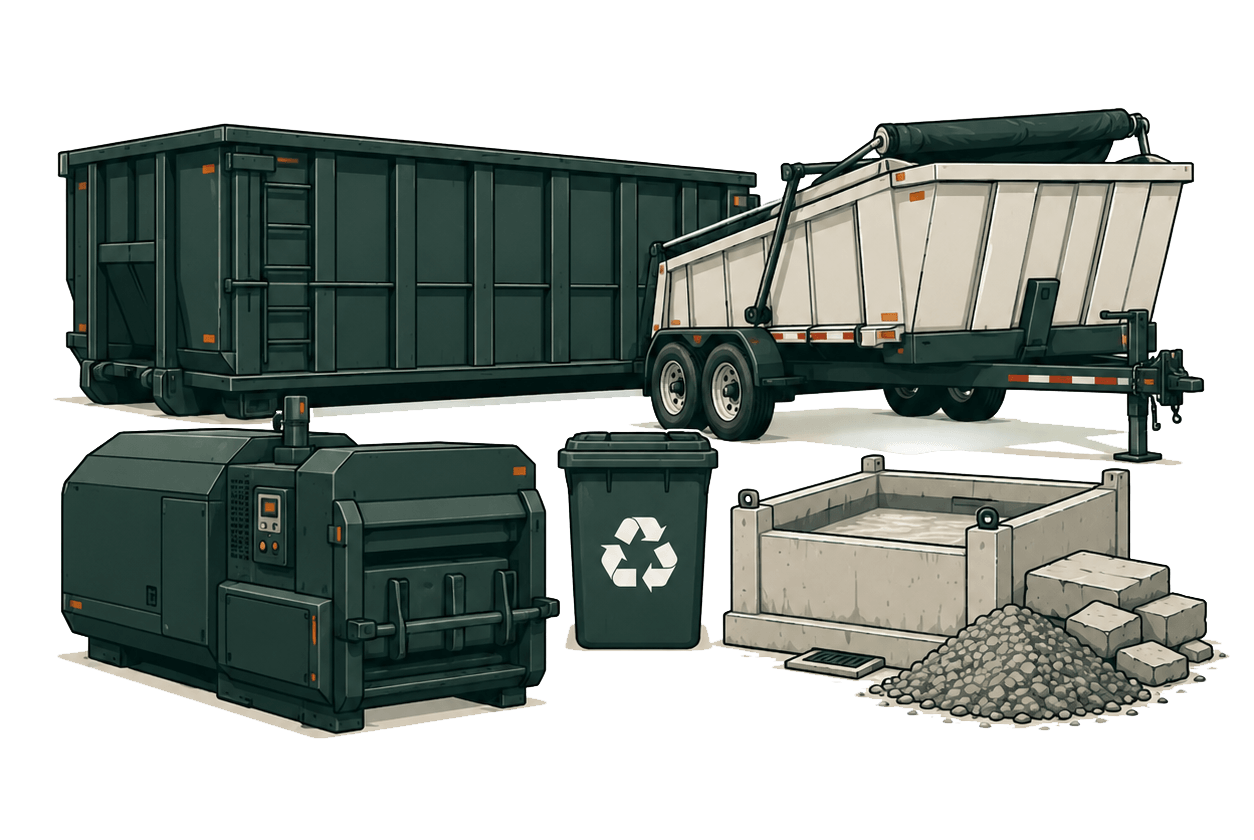
Project containers are sized in cubic yards from 10 to 40. Dense material such as concrete, dirt, and shingles hits weight limits well before volume limits, so heavy loads are usually placed in a smaller container or filled part way. The dumpster size guide explains how material weight changes the right container. Dimensions are on the 20 yard, 30 yard, and 40 yard pages. Every quote states the rental period, the weight allowance, and how overage is billed before you commit.
10203040
Same footprint from 20 to 40 yards. Only the wall height changes, roughly 4 to 8 feet.
For constrained sites and dense debris. The right choice for concrete, dirt, and asphalt, where a larger container would exceed weight limits before it filled.
DetailHandles: up to roughly 25 to 30 squares of single-layer shingles, one to two room projects
Commercial shells, multi-family construction, large residential demolition, and land clearing. Sizing up here reduces swap trips and the downtime that comes with them.
DetailHandles: commercial and insulated roofing, land clearing and landscape debris
The largest standard roll-off, for large commercial construction and warehouse-scale cleanouts where minimizing haul count matters more than footprint.
DetailHandles: large warehouse cleanouts, major commercial roofing, large-scale demolition
Stationary and self-contained compactors, pre-crushers, and vertical and horizontal balers, available to rent through the provider network. Hauls and service sit on the same agreement. A roll-off can sit beside a machine that is down until it is repaired.
DetailRental through the network. Terms set by site and machine.
Separated collection for metal, concrete, plastic, and pallets. Worth separating where the material has value or where a diversion target applies to the project.
A contained unit for rinsing concrete equipment so slurry does not reach soil or storm drains. Usually a permit or stormwater plan requirement rather than a convenience.
DetailDriven by: permit conditions and stormwater pollution prevention plans
Bulk material in
Aggregate haulage
Delivery of limestone, sand, and select fill for access roads and equipment pads, reconciled by ticketed tonnage load by load.
DetailBilled by: delivered tonnage against a delivery ticket
A local crew loads and hauls furniture, appliances and debris, with reuse and recycling first and special items flagged before loading.
DetailUse when: a dumpster is not the right fit
034 services
Water and consumables
The category most often left out of a site services scope and then sourced under pressure. Running it on the same agreement means one invoice and one escalation path rather than a separate vendor per item.
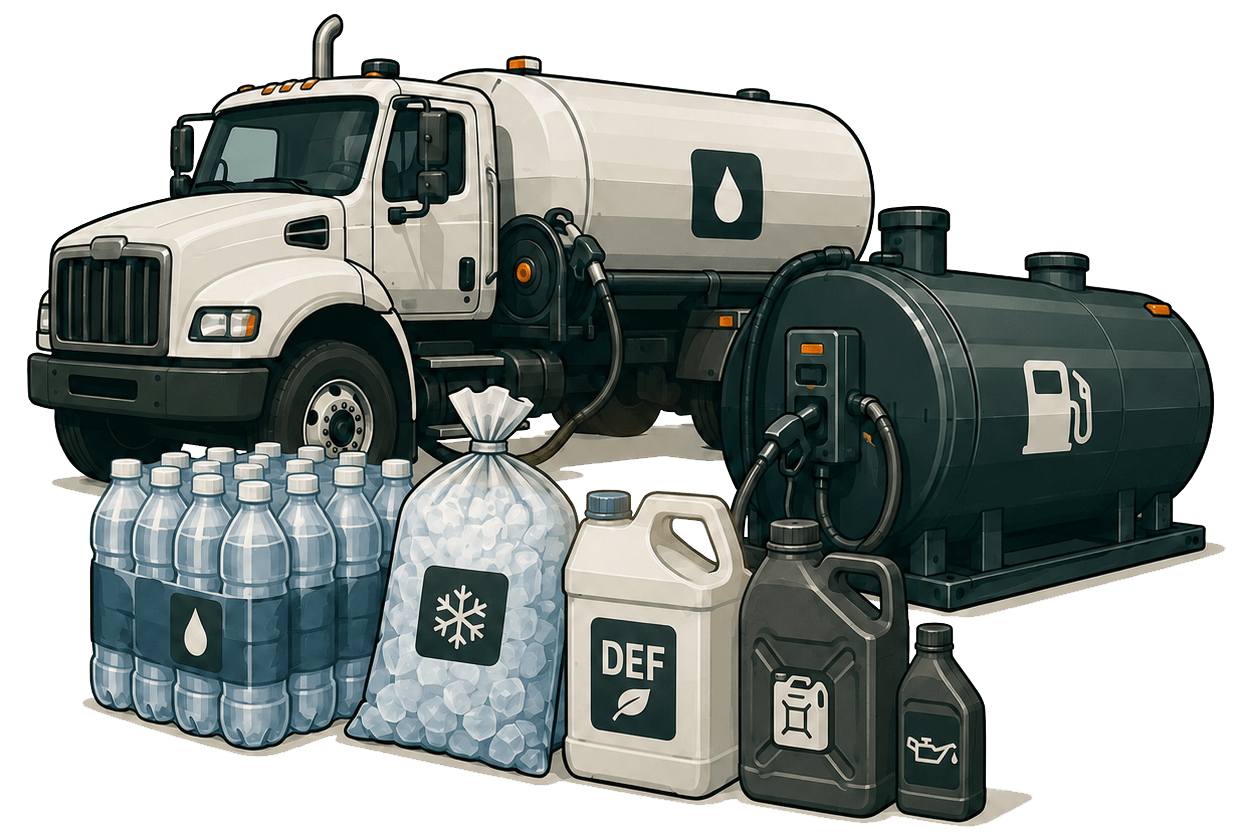
Recurring pallet deliveries of bottled water and packaged ice. On hot-climate sites this is a safety item, not a convenience, and it scales with crew count.
DetailDelivered as: recurring pallet cadence set against crew count
Scheduled fuel, diesel exhaust fluid, and lubricant delivery for site equipment, held on the same agreement as everything else.
DetailDelivered as: scheduled refills, or on request
0413 services
Site infrastructure
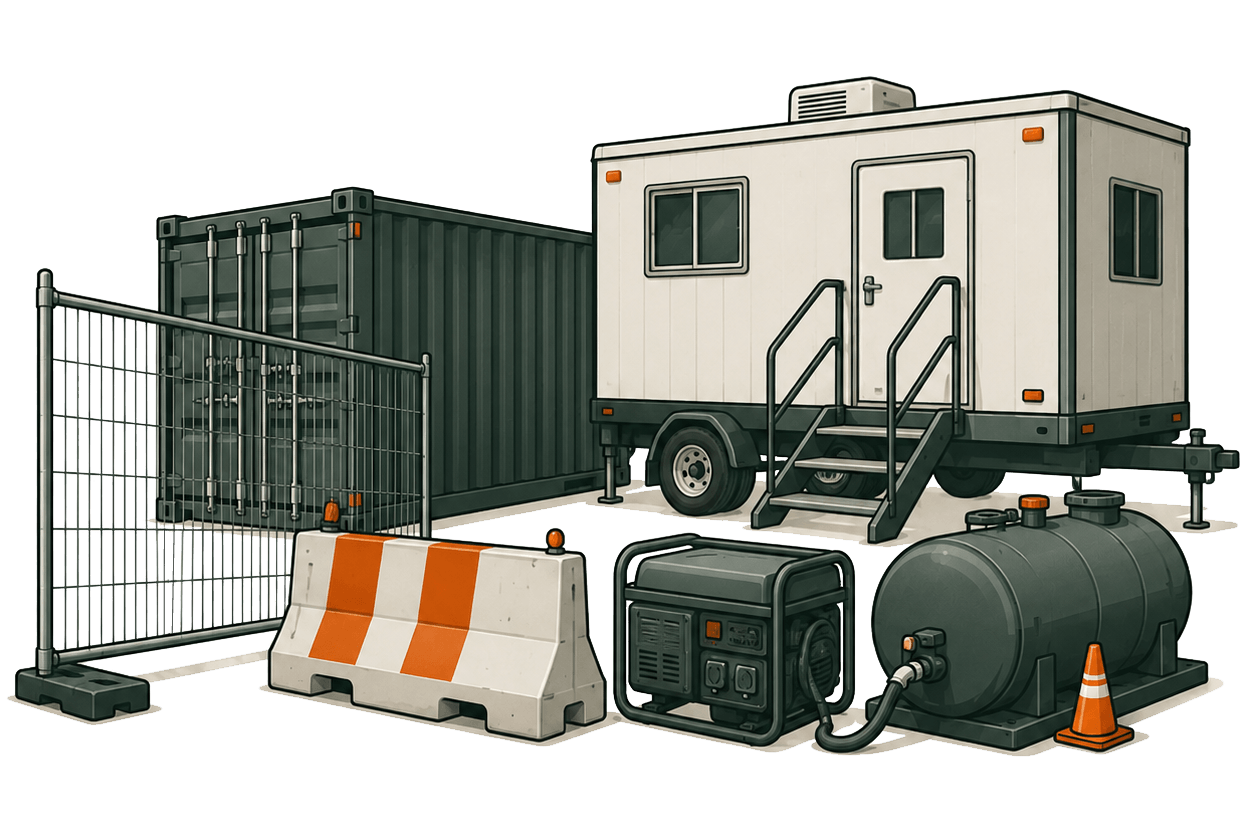
Temporary structures and enclosures. These carry longer lead times than sanitation and waste, so scope them with the rest of the program before mobilization.
Silt fence, wattles, inlet protection and stabilized entrances, supplied and installed to the stormwater plan.
DetailReference: EPA construction stormwater permit, sediment controls
Before you compare quotes
Sizing rule worth knowing before you compare quotes
Landfills charge by weight, so a quote is only comparable if you know four things. Concrete, dirt, and saturated debris reach the allowance fast. Our quotes state all four line by line. Definitions.
01Rental period
02Weight allowance
03Per-ton overage rate
04Per-day rateonce the rental period ends
Managing several services across several projects?
Single-site orders quote and book faster through our brand sites: Dumpster Rental Dogs for waste containers, Porta Potty Dogs for sanitation. This page is for multi-site and program work.