Dust control and air quality for job sites
Structural demolition, mass grading, and interior concrete cutting kick up airborne dust that triggers neighbor complaints, air-district fines, and OSHA silica citations. We source water trucks, misting cannons, and HEPA air scrubbers through local providers and keep them on one agreement with the rest of your site services.
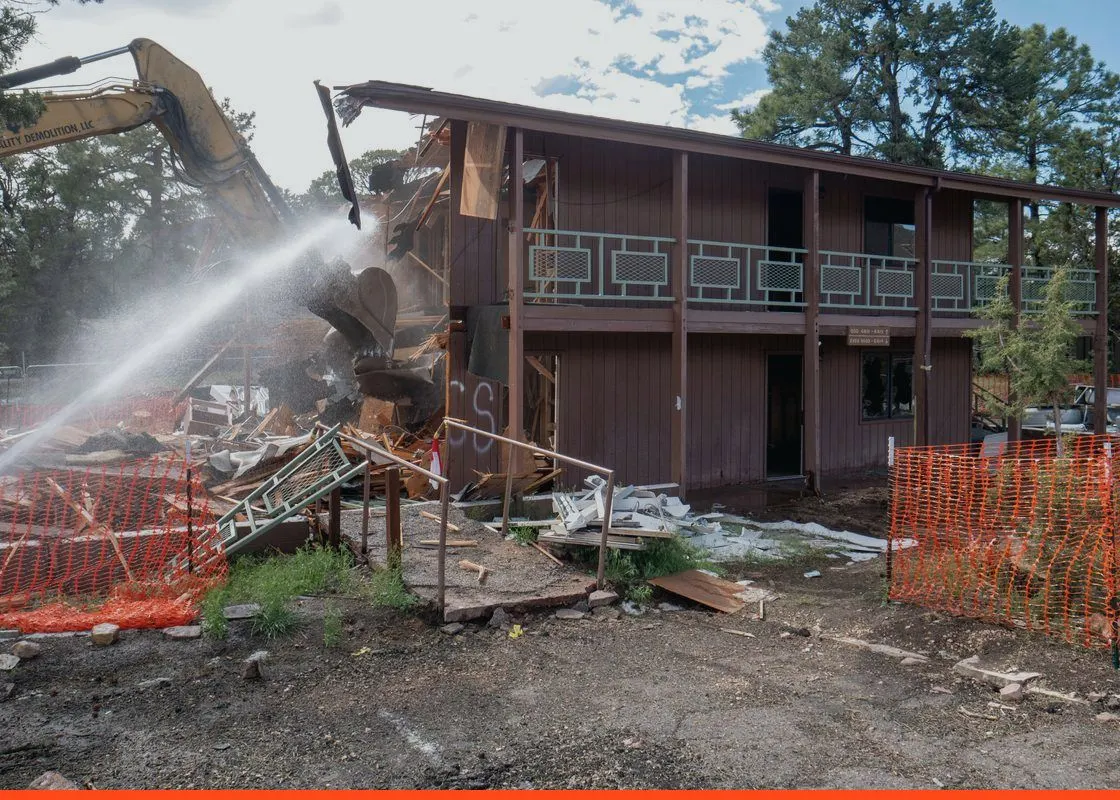
- WaterBefore, during and after
- CaptureShrouds and HEPA vacuums
- Clean airScrubbers indoors
Worker exposure
What OSHA requires for silica dust
OSHA's silica standard lists engineering controls for common tasks. Examples include water-fed saws, shrouded drills and HEPA-filtered vacuums.1
| Task | Control in the standard |
|---|---|
| Handheld and walk-behind saws | A saw with an integrated water delivery system that continuously feeds water to the blade |
| Drilling | A drill with a commercially available shroud or cowling and a dust collection system, and a HEPA-filtered vacuum when cleaning holes |
| Grinding | Grinders with a commercially available shroud and dust collection system |
| Housekeeping | No dry sweeping or dry brushing where it could expose workers, unless wet sweeping, HEPA vacuuming or other methods are not feasible |
Table 1 covers additional masonry and demolition tasks along with assigned protection factors for respirators when work runs past four hours. Review the full table with your safety director before cutting or grinding starts.
Need dust suppression or air scrubbers?
Share your scope, disturbed acreage or room volume, water access, and dates. We source local water trucks, misters, and HEPA units.
Neighbors and regulators
Property-line opacity and county dust permits
Beyond worker exposure at the tool, local air quality districts enforce fugitive dust limits right at your fence line. Maricopa County, Arizona, for instance, caps fugitive dust opacity at 20 percent, prohibits visible plumes from crossing the property boundary, and requires pre-wetting, active watering during earthwork, and crusting or stabilization afterward.2 Many western and urban counties require a stamped dust control permit and designated dust monitor before grading starts, so verify local thresholds during pre-construction.
Planning
Four layers of job-site dust control
Keeping plumes down takes water on exterior haul roads, tool capture at the cut, and negative air or scrubbing indoors.
- 01
Suppress at the pile and haul road
Pre-wet soil before excavation, run misting cannons during structural demo, and keep haul lanes and stockpiles damp without causing runoff.
- 02
Capture silica right at the blade
Pair wet saws, shrouded grinders, and HEPA dust extractors to the exact Table 1 method for each trade.
- 03
Scrub indoor air during build-outs
Stage HEPA air scrubbers with flex ducting in occupied renovations, hospital wings, and enclosed interior phases.
- 04
Stop mud before it dries into street dust
Dirt tracked onto asphalt turns into airborne dust under traffic. Pair dust suppression with wheel wash and track-out, our construction site checklist, and concrete washout.
Common questions
Dust control questions
What does OSHA require for silica dust?
Under 29 CFR 1926.1153, contractors must control respirable crystalline silica using specified Table 1 engineering controls (such as continuous water-fed saws, shrouded drills and grinders with dust collectors, and HEPA vacuums) or conduct objective exposure assessments, and dry sweeping is prohibited wherever it could expose workers.
How do you control dust on a demolition site?
Exterior demolition relies on misting cannons, high-volume hoses, water trucks on haul roads, and damp or tarped stockpiles, while interior gut-outs pair wet methods and tool shrouds with HEPA air scrubbers.
What is a dust control plan?
A written fugitive-dust permit submittal required by many county air districts before earthwork or demolition begins, detailing water sources, stockpile stabilization, track-out pads, and opacity monitoring.
Do air scrubbers help on a construction site?
Yes, portable HEPA air scrubbers filter fine airborne particulates inside enclosed floors and occupied renovations, and can be ducted to create negative pressure, though they supplement rather than replace wet cutting or tool-shroud capture at the source.
Can you supply water trucks and misting?
Yes, we source water trucks, towable water trailers, misting cannons, and indoor air scrubbers through local providers. Send your site address, water hookup availability, and schedule.
How do I get a quote?
Call sales at (888) 588-2607 or submit your job address, scope of work, and dates through our quote form.
Water, equipment and cleanup on one agreement
Local providers do the work; we hold the contract, own the problems, and send one bill. If a delivery gets missed, we contact the provider the same business day.
Read next
Sources
- 29 CFR 1926.1153, Respirable crystalline silica, Table 1 and paragraph (f). Checked November 3, 2026. ecfr.gov
- Maricopa County Air Quality Department, Dust Abatement Handbook (February 2026). Checked November 3, 2026. maricopa.gov