Barricades and barriers for job sites and work zones
A road closure, a lane shift or a trench by a sidewalk all need the right device in the right place. We source barricades, barriers, cones and arrow boards from local providers, deliver them on your schedule and keep them on one agreement with the rest of your site services.
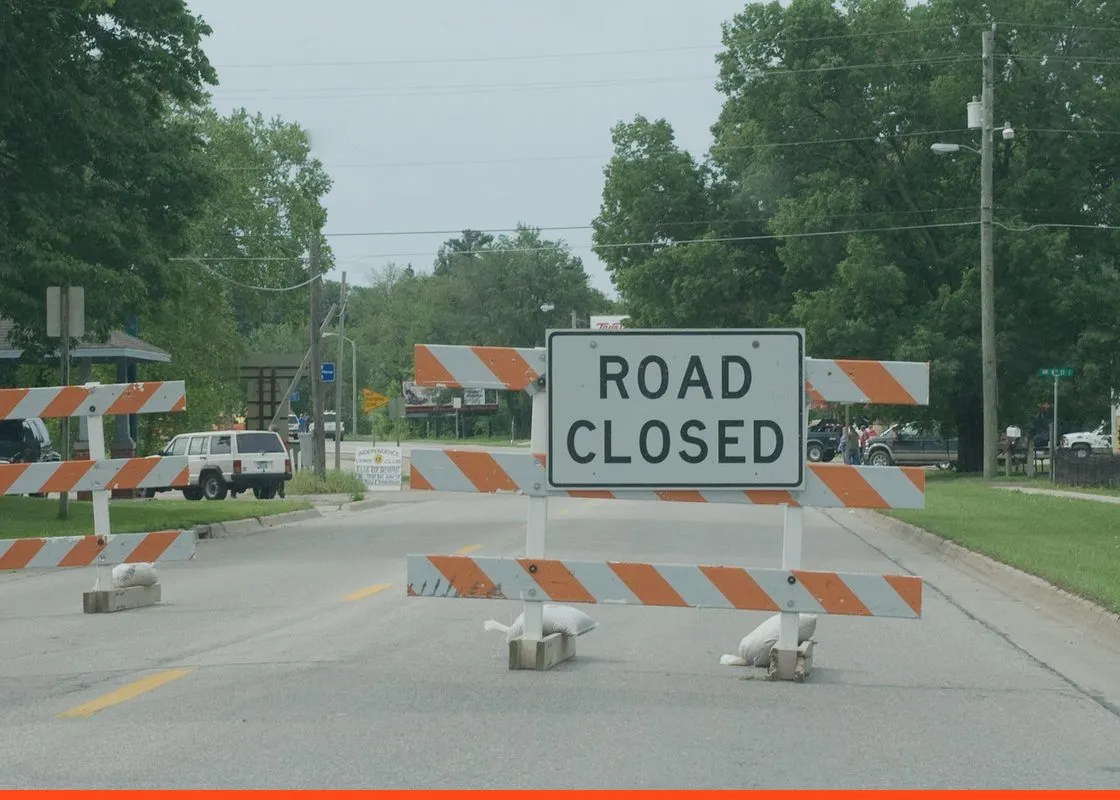
- CloseType 3 barricades
- GuideCones and barriers
- WarnArrow boards
The rules
What the rules say
OSHA requires construction areas to be posted with legible traffic control signs and protected by traffic control devices, and the signs, signals, markings and barricades must conform to Part 6 of the federal highway manual.1 Part 6 describes the devices and when to use them.2
| Device | What the manual says | Use |
|---|---|---|
| Type 1, 2 and 3 barricades | Portable or fixed devices with one to three rails and sloping orange and white retroreflective stripes. Type 1 may be used on conventional roads and urban streets, and Type 2 or 3 should be used on freeways and other high speed roads | Type 3 barricades should be used to close or partially close a road |
| Cones | At least 18 inches high for daytime and low speed roads, and at least 28 inches on freeways, at high speed and at night | Guiding traffic around work |
| Arrow boards | A sign with a matrix of elements that flashes or displays in sequence, placed on the shoulder or farther from the lane where practicable | Lane closures and shifts |
| Concrete barrier | Oregon DOT's Type F precast barrier is 32 inches tall with 12 foot 6 inch sections3 | Separating traffic from work |
Closing a lane or a street?
Tell us the location, the length and the dates. We source devices and place them with your traffic control plan.
Planning
What to settle before you order
Devices are only part of the plan.
- 01
Who writes the plan?
Public streets usually need a traffic control plan and a permit. Check with the city. Our dumpster permits guide shows how street permits tend to work.
- 02
What speed is the road?
Speed decides the type of barricade and the size of cones, so tell us the posted speed.
- 03
Day or night?
Night work needs retroreflective devices and lighting. See light towers.
- 04
How long will it stay?
Devices get moved as work moves. Tell us the schedule so we plan the swaps.
Common questions
Barricade questions
What is a Type 3 barricade?
A barricade with up to three rails and sloping orange and white stripes. The federal manual says Type 3 barricades should be used to close or partially close a road.
How tall do traffic cones have to be?
At least 18 inches for daytime and low speed roads, and at least 28 inches on freeways, at high speed and at night, according to the federal manual.
Do I need a permit to close a lane?
Usually yes for public streets. Check with the city or the road authority, and ask us to match the devices to the plan.
What does OSHA require?
Construction areas must be posted with legible traffic control signs and protected by traffic control devices that conform to Part 6 of the federal highway manual.
Can you supply arrow boards and concrete barrier?
We source them through local providers. Tell us the location and dates.
How do I get a quote?
Call sales at (888) 588-2607 or request a quote.
Devices, lights and fence on one agreement
Local providers do the work; we hold the contract, own the problems, and send one bill. If a delivery gets missed, we contact the provider the same business day.
Read next
Sources
- 29 CFR 1926.200, Accident prevention signs and tags. Checked November 3, 2026. ecfr.gov
- Federal Highway Administration, Manual on Uniform Traffic Control Devices, 11th Edition, Part 6, Temporary Traffic Control. Checked November 3, 2026. fhwa.dot.gov
- Oregon Department of Transportation, Standard Drawing RD500, Type F Precast Concrete Barrier (July 2023). Checked November 3, 2026. oregon.gov