Commercial dumpsters and compactors
A commercial dumpster stays on your property and is emptied on a schedule, so the trash leaves without anyone ordering a haul. Contracts often call it a permanent dumpster. We source front-load and rear-load containers, carts, compactors and balers, and a roll-off on long-term placement where a project needs one, from local providers in every market you operate in. Recycling rides beside the trash, and it all sits on one agreement and one invoice. This is our commercial waste collection program.
- StaysOn your property
- EmptiedOn a schedule
- One billFor every site
Your account executive
Keith Bonneau
Account Executive, commercial dumpsters and compactors
Talk to Keith about front-load containers, compactors and balers, and recurring service for your sites.
Reporting on ESG or sustainability? Ask Keith for waste data by site: tons by stream, tons diverted and tons landfilled, from hauler and facility tickets. ESG waste reporting
The options
Which commercial service fits
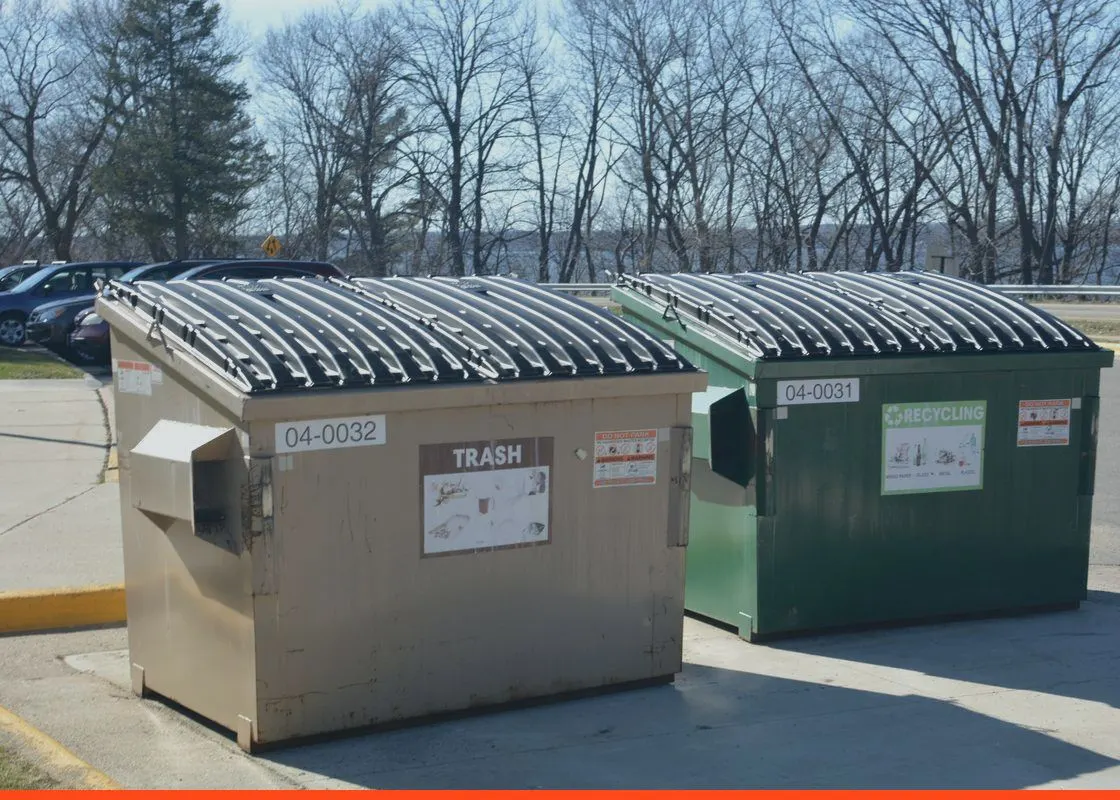
The container stays in the same place. What changes is the machine and how it is emptied. Pick by what the site produces and how often.
| Option | How it works | Best for |
|---|---|---|
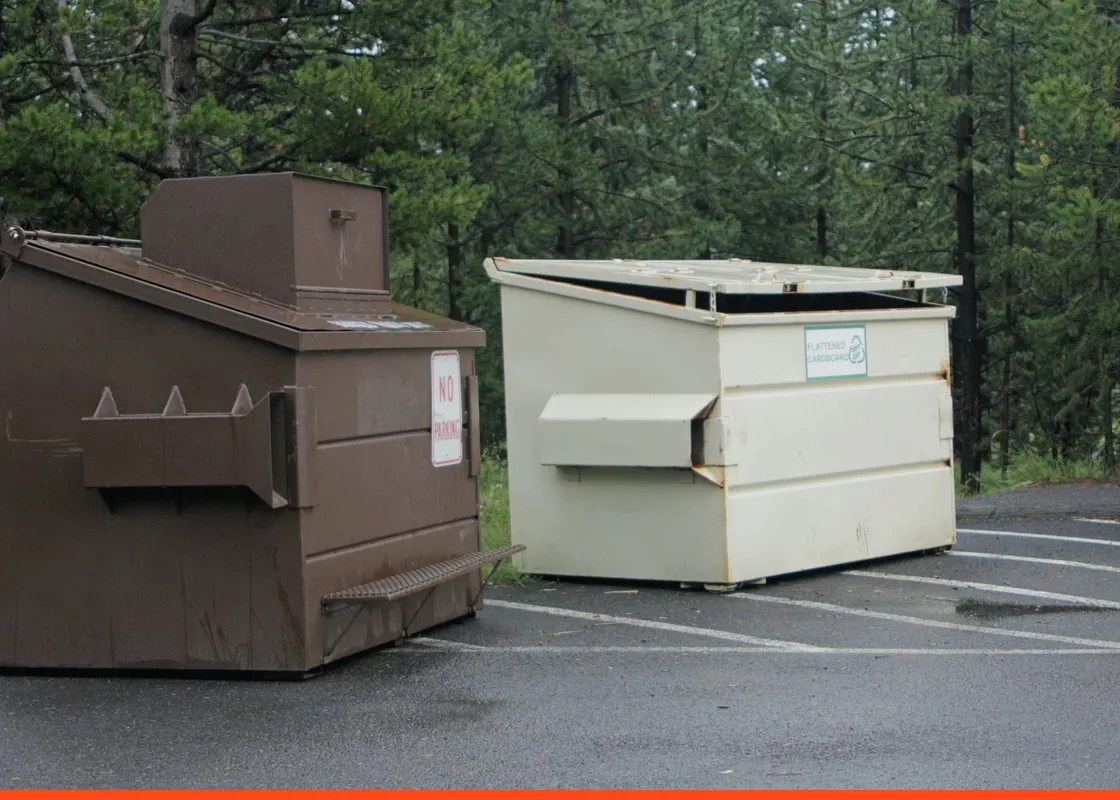
| Front-load container | The container stays, and a front-load truck lifts it, empties it and sets it back on a schedule | Stores, offices, restaurants and buildings that make waste every week. See front-load vs roll-off |
| Rear-load container | The container stays, and the truck loads it from the back on a schedule | Alleys, tight enclosures and docks where a front-load truck cannot reach the container with its forks |
| Carts | Wheeled carts emptied on a route, from one to seven times a week on one published city schedule | Sites that do not fill two yards, or that cannot fit a dumpster. Cart size is set by the local hauler |
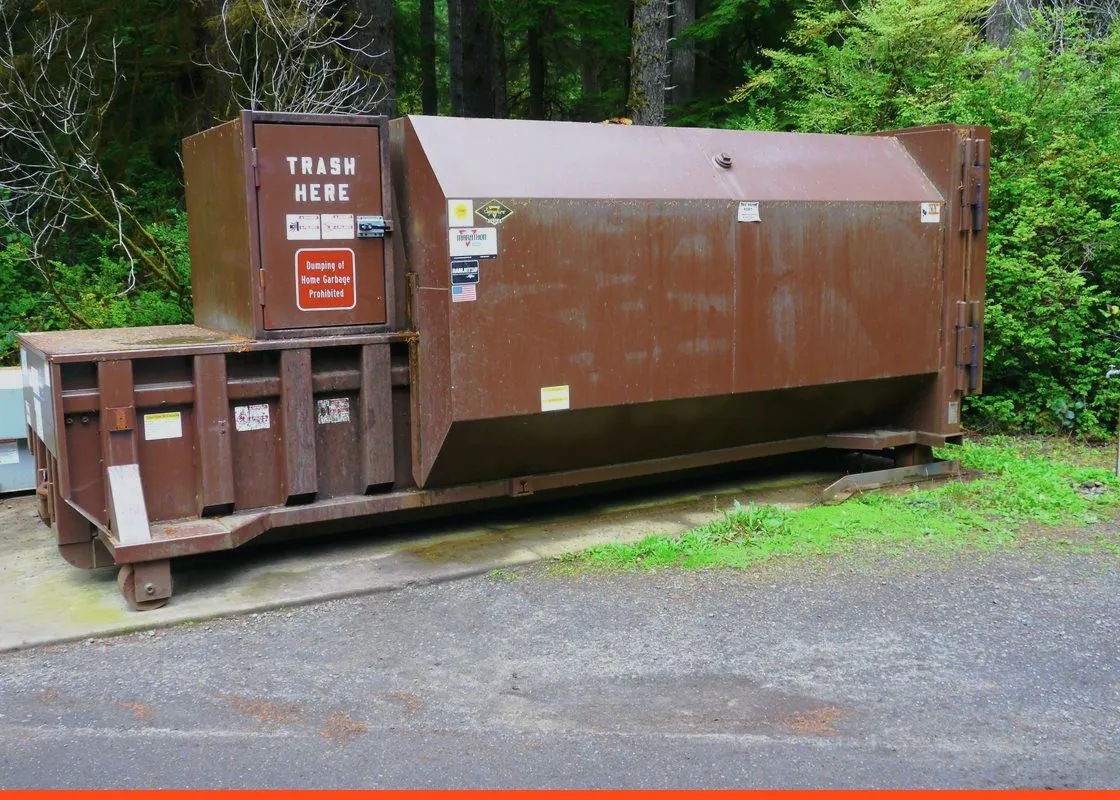
| Stationary compactor | A compactor stays at the dock and packs the waste into a container that is hauled when it is full | High volume sites where hauls would otherwise be too frequent. See compactors and balers |
| Self-contained compactor | A compactor and its container in one unit, hauled when full | Sites that want packed waste and a smaller footprint. See compactors and balers |
| Baler | Presses cardboard into bales that are picked up when the stack is ready | Stores and docks with a lot of cardboard. See baler vs compactor |
| Roll-off on long-term placement | A roll-off stays for an ongoing project or process and is swapped when it is full | Long remodels, plant cleanouts and ongoing bulky waste. See dumpster rental |
Setting up commercial service?
Tell us the sites, what you throw away and how often. We source local providers and put it on one agreement.
Container sizes
Front-load sizes and their footprints
Commercial front-load containers commonly run from 2 to 8 cubic yards. Public hauler and city schedules do not print the same footprint for the same yard size, so treat these as approximate. Your quote names the actual container the local hauler will set.
2 cubic yards
Approximate footprint, from public schedules
6 ft L by 3 ft W by 3 ft H, or 6 ft L by 3 ft 1 in W by 3 ft 3 in H
4 cubic yards
Approximate footprint, from public schedules
6 ft L by 4 ft 2 in W by 4 ft 2 in H, or 6 ft L by 4 ft 2 in W by 5 ft H
6 cubic yards
Approximate footprint, from public schedules
6 ft L by 5 ft 7 in W by 5 ft 8 in H, or 6 ft 6 in L by 5 ft W by 6 ft H
8 cubic yards
Approximate footprint, from public schedules
6 ft L by 6 ft 8 in W by 6 ft 2 in H, or 6 ft L by 5 ft 6 in W by 6 ft 8 in H
Three and five yard containers are listed on some public schedules, but those did not print a footprint for them.1 Headcount is a weak way to pick a size: a restaurant and an office with the same number of people do not fill a container at the same rate. Size from how full the container is on pickup day, check the enclosure can take the next size up, and use our cubic yard calculator to turn a pile into yards.
Service frequency
How often it gets emptied
Frequency and size are one decision. A 4 yard container emptied twice a week and an 8 yard emptied once a week can move similar volume and cost different amounts, and the enclosure may only take one of them. Published city schedules run the same container from one lift a week through six or seven.
- 01
Watch pickup day
The useful record is how full the container is when the truck arrives, not a national average.
- 02
Over the rim
Add a lift per week or step up a size. An overloaded container is how a cheap schedule becomes an extra fee.
- 03
Routinely half empty
Drop a lift or step down a size. Paying for air is the other way a schedule drifts.
- 04
Keep the streams apart
A recycling container full of trash is no longer a recycling container. Size each stream on its own.
A line by line reading of published local fee lines, including extra debris, locks, distance, overage and disposal, is on the commercial dumpster cost guide.
Recycling and cardboard
Recycling rides beside the trash
Trash, cardboard, mixed recycling and organics are different streams. They can sit on the same agreement as separate containers or carts. Cardboard is usually its own container because it is bulky and, where a mill buys it, it is a different ticket from trash. Organics belong in their own container where the jurisdiction requires food waste collection. See commercial recycling laws and cardboard recycling.
Contamination is the failure mode. If trash goes in the recycling container, the load is not a recycled load, and the hauler's rule for that load is local. Do not treat a second container as recycling until the stream stays clean.
Some cities provide recycling carts and dumpsters to businesses on a franchise. That arrangement is local.
Compactors
Which machine for which waste
Compactors and balers are not interchangeable. The waste decides the machine.
| Machine | How it works | Usually fits |
|---|---|---|
| Stationary compactor | Stays on the pad and packs waste into a separate receiver that the hauler takes | Dry trash in volume |
| Self-contained compactor | Packs into a container that is part of the same machine, and the whole unit is hauled to unload | Wet waste, so the liquid leaves with the box |
| Pre-crusher compactor | A stationary compactor with a breaker ahead of the ram | Bulky items such as pallets, crates and furniture |
| Vertical or horizontal baler | Presses cardboard and similar recyclables into bales | Cardboard and clean recyclables |
Public schedules list vertical compactors from 2 to 8 cubic yards, and 20, 30, 35 and 40 yard compactors. A roll-off hauled on a repeating schedule, rather than removed at the end of a project, sits in the same program, and we dispatch those hauls on the agreement. The full comparison is on compactors and balers. If a machine goes down, we can set a roll-off beside it and swap it on a schedule until it is repaired.
Site readiness
Questions to settle before a compactor arrives
A compactor needs more of the site than a dumpster does. Ask your provider for the actual requirements for the machine they will set, and get the answers in writing.
- 01
The pad
How big the pad has to be and how strong, and whether yours is level and sound.
- 02
The power
Whether the machine needs an electrical supply or a disconnect, and who provides it.
- 03
The access
Room for the truck to reach, turn and pull the receiver or the whole unit, with clearance overhead and to the sides.
- 04
The rules
Whether your landlord or city requires an enclosure, and who locks out and trains your team. See dumpster enclosure requirements.
Before service starts
What to settle before the first pickup
A container that stays is easy to order and annoying to move. A few decisions up front save the rework.
- 01
Where it sits
A level pad, with the truck able to reach it and room to lift it. Many places require an enclosure, so read the dumpster enclosure requirements before you pour a pad.
- 02
How big and how often
Size from how full the container is on pickup day, not from headcount. Tell us what the site makes and we will recommend a size and a frequency.
- 03
What is in the contract
The term, how rates can change, the fuel method and your way out. See waste contract terms.
- 04
What it costs
Monthly rates depend on the city, the size and the lifts per week. Commercial dumpster cost has published local examples.
How it works
From first call to a standing schedule
You get one point of contact. Local providers do the hauling.
We look at the site
Address, access, what you throw away and where a container could sit.
We source and quote
A local provider in each market, a container and a schedule, with every charge listed.
The container is delivered
Placed where you agreed, and set up for the first pickup.
Service runs on schedule
Pickups happen on your schedule. If one is missed, call us. We contact the provider the same business day.
We review it with you
If the container is too full or too empty, we change the size or the frequency.
Compactor safety
Compactors and balers have safety rules
OSHA's bulletin on compactors and balers lists the standards that apply, including confined spaces, lockout and tagout and machine guarding, and refers to the ANSI Z245 standards for compactors and for baling equipment.2
Ask your provider who services the machine, how it is locked out and how your team is trained to use it.
Working with us
What you can expect
What we promise is what we do already.
- 01
One agreement and one invoice
Local providers do the work, and every site is on one agreement, with charges by site on one invoice.
- 02
A named contact
Keith Bonneau is your account executive for commercial dumpsters and compactors, with a direct line.
- 03
Containers named in your quote
The quote names the actual container and its size, since footprints vary by hauler.
- 04
A fast answer on a missed pickup
Call us. We contact the provider the same business day. Already a customer? Use customer support.
- 05
A record you can check
See our past performance for programs we have delivered, and commercial dumpster cost for published local rates.
Multi-site portfolios
Running it across many sites
A portfolio is the harder version of the same job. Each location has its own enclosure, its own volume and often a different local hauler. You still want one agreement, one service record and one invoice. Who we serve describes that facilities pattern, and waste broker vs hauler describes who owns the trucks and who owns the miss.
One agreement, one invoice
Local haulers do the work; we hold the contract, own the problems, and send one bill. The hauler can change by city. The agreement does not.
Account rates apply across the locations, so you get one rate card across sites. The invoice can be one bill, or split by entity, region or cost center, and the service record under it stays per site: container, frequency, hauler and the misses. One customer's national program ran through 45 local providers in 22 cities, on one contract, one rate card and one invoice. That record is on past performance.
A public example of an increase clause is on the commercial dumpster cost page: Highland Park's agreement floors the annual adjustment at 2 percent and caps it at 5 percent. Ask what the quote says about term, renewal, fuel and environmental lines.
Coverage and a service change
We have 7,900+ providers on record and delivered work in 5,908 cities in 2025, in all 50 states. Those figures are operating records, explained in the coverage whitepaper. A site the current hauler does not serve is dispatched to another provider on the same agreement, so one city outside a route does not start a new vendor cycle.
A frequency change, an extra container, a compactor haul or a new address goes to the same place as a new order: email, the customer app or your own system. How an order is sourced, priced, dispatched and billed is that path. The change stays on the existing agreement, we contact the hauler the same business day, and a named account manager owns the missed pickup until it is fixed. Questions to ask before you award the work are on how to evaluate a site services partner.
Roll-off, septic and the rest of the site services program are on site services and waste for multi-location businesses. Buying for one job site? Single-site project containers book through our single-job brand, Dumpster Rental Dogs.
All in one place
Everything on commercial dumpsters and compactors
Guides, costs, rules and industry pages, grouped by what you are trying to decide. Keith can walk you through any of them.
Services
Cost and contracts
Rules and setup
Common questions
Commercial dumpster questions
What is a commercial dumpster?
A dumpster or container that stays on your property and is emptied on a schedule, usually a front-load container. Compactors and balers are machines that stay on site and work the same way.
Is a permanent dumpster the same thing?
Yes. Permanent is the word many contracts use for a container that stays on site. It is the same service: a front-load container, compactor or baler emptied on a schedule.
What is the difference between a commercial dumpster and a roll-off?
A commercial dumpster stays and is emptied in place, while a roll-off is delivered and hauled away when it is full or the rental ends. A roll-off can also be placed long term for an ongoing project, and a roll-off hauled on a repeating schedule is part of this service.
How often will my dumpster be emptied?
As often as the container fills. Published city schedules run the same dumpster from one lift a week through six or seven. If the lid will not close, add a lift or step up a size. If the container is routinely half empty, drop a lift or step down. We help you set it and change it.
Do I need an enclosure?
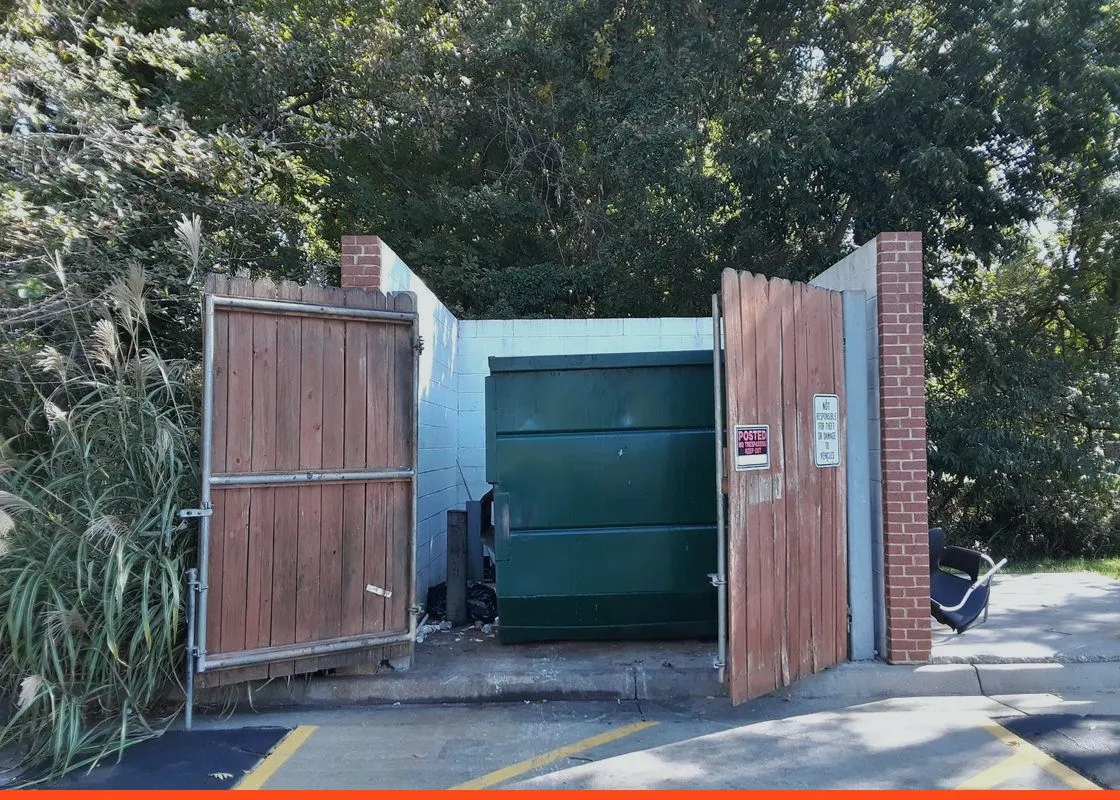
Many cities require one, and it has to fit the truck. See our dumpster enclosure requirements before you build or change one.
What does a commercial dumpster cost?
It depends on the city, the size and the pickups per week. Our commercial dumpster cost guide shows published local rates.
What size front-load container do I need?
Commercial front-load containers commonly run from 2 to 8 cubic yards, and some public schedules also list 3 and 5 yard containers. Size from how full the container is on pickup day, and check that your enclosure can take the next size up. Your quote names the actual container.
When is rear-load used instead of front-load?
When the front-load truck cannot reach the container with its forks. Alleys, tight enclosures and some docks are the usual cases. Rear-load is still recurring collection: the container stays, and the truck empties it on a schedule.
Can recycling and cardboard be collected with the trash?
Yes, as separate containers or carts on the same agreement. Cardboard, mixed recycling and organics, where a local rule requires organics, are different streams from trash and have to stay separate. A cart is the usual choice when the volume is too small for a dumpster or the enclosure will not fit one.
What do I need to prepare for a compactor?
Ask your provider for the pad, power, access and clearance requirements for the machine they will set. A compactor needs more of the site than a dumpster does.
Can every location sit on one agreement and one invoice?
Yes. We hold the customer agreement, including when the hauler is not the same company in every city. Account rates apply across the locations, and the invoice can be consolidated or split by entity, region or cost center. One customer's national program ran through 45 local providers in 22 cities on one contract, one rate card and one invoice.
How is a service change requested?
Send the site, the container and the frequency by email, in the customer app or from your own system. The change stays on the existing agreement. We contact the hauler the same business day, and a named account manager owns the missed pickup until it is fixed.
Does Detritus own the trucks?
No. Local haulers do the work; we hold the contract, own the problems, and send one bill. We quote the work, keep the service record, pay the hauler and bill you.
Do you publish prices?
We publish local rates from public bids and contracts on our commercial dumpster cost guide. Your own price depends on the city, the size and the pickups per week, and your quote lists every line.
Who do I talk to?
Keith Bonneau is our account executive for commercial dumpsters and compactors. Call him at (978) 612-6647.
One agreement for every container, in every market
Local providers do the work; we hold the contract, own the problems, and send one bill. If a pickup gets missed, we contact the provider the same business day.
Read next
Sources
- City of Ann Arbor, Commercial Trash Services. Rates valid through June 30, 2027. Dumpster sizes from 2 to 8 cubic yards, 96 gallon business carts, and compactor sizes from 2 to 8 cubic yards plus 20, 30, 35 and 40 yard compactors. Checked October 26, 2026. a2gov.org
- U.S. OSHA, Safety and Health Information Bulletin on safety of compactors and balers (SHIB 08-13-13). Checked November 3, 2026. osha.gov