Emergency restoration site services
After a storm, flood or fire, the work starts before anyone has a plan: debris to move, a crew with nowhere to wash up, no power and no light. We source roll-offs, restrooms, generators, light towers and water from local providers, fast, and keep them on one agreement so the response is one call.
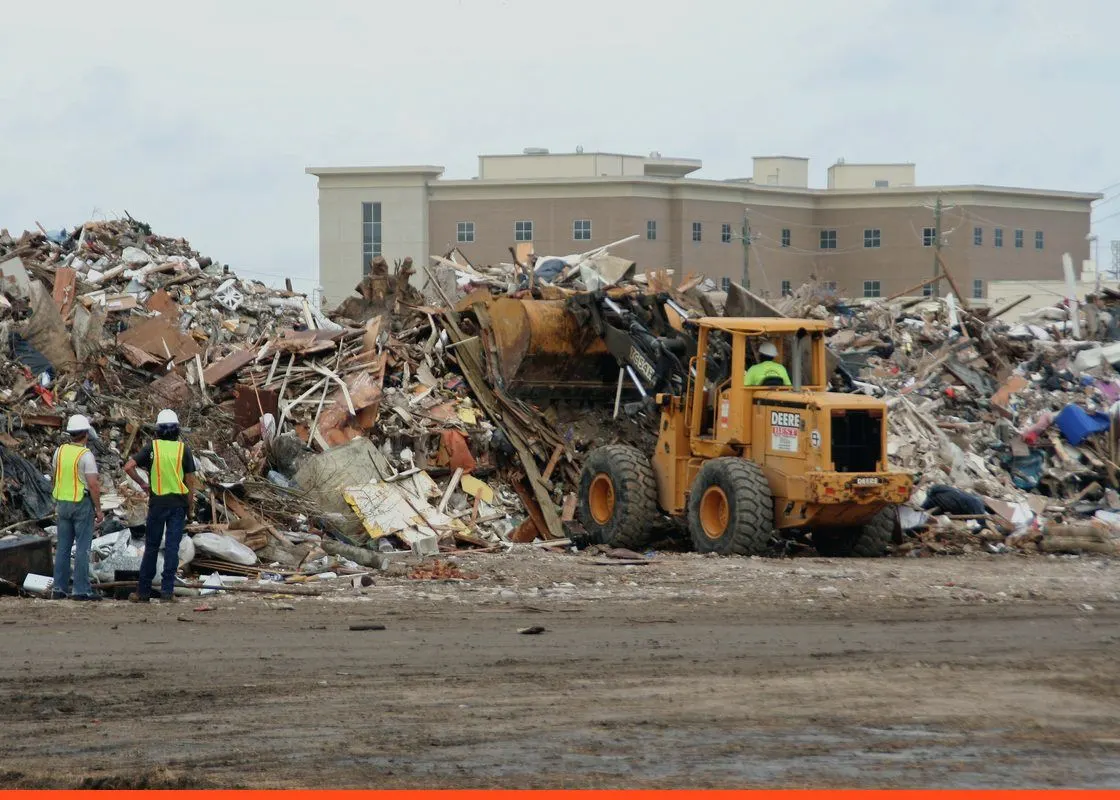
- DebrisRoll-offs and sorting
- CrewRestrooms and hand wash
- PowerGenerators and light
What the job needs
The first services on a response site
The list is short, and every item matters on day one.
| Need | What we source | Related |
|---|---|---|
| Debris removal | Roll-offs for construction debris and bulky material, with swaps as work proceeds | Dumpster rental |
| Crew facilities | Portable restrooms and hand wash stations | Portable toilet rental |
| Power and light | Generators and light towers for tools, drying and night work | Temporary power and light towers |
| Water and fuel | Water delivery and fuel for equipment | Water and fuel |
| Air and heat | Dust control, heating, cooling and drying support | Air quality and heating and cooling |
Responding to a loss or a storm?
Tell us the address and what is needed first. We source local providers and keep it on one agreement.
Debris categories
How disaster debris is sorted
FEMA's public assistance guidance describes debris as including vegetative debris, construction and demolition debris, sand, mud, silt, gravel, rocks, white goods, and vehicle and vessel wreckage.1 EPA suggests separating disaster debris at the curb into household garbage, construction debris such as drywall, lumber and carpet, vegetative debris, household hazardous waste, large appliances and electronics, and says to check with your local government on how to separate and set it out.2 Refrigerator and freezer doors must be secured, and EPA's example is duct tape.2 Local rules and any public program come first, so ask before you order containers.
Response
How we work in an emergency
Speed comes from not starting from scratch.
- 01
One call
Tell us the address and what is needed first.
- 02
We source locally
A provider near the site, so the delivery is quick.
- 03
We check the rules
Debris programs and local rules decide how material is sorted and where it goes.
- 04
One invoice
Everything on the response is on one agreement, so the bill is clear for the client or the claim.
Common questions
Emergency restoration questions
What do you provide after a storm or flood?
Roll-offs for debris, restrooms and hand wash stations, generators and light towers, water and fuel, and dust and air equipment, sourced from local providers.
How fast can services be placed?
It depends on the market and the provider. Tell us the address and the timing and we will tell you what is possible.
How is disaster debris categorized?
FEMA lists vegetative debris, construction and demolition debris, sand and mud, white goods and vehicle wreckage, among others. Local programs may use different categories.
Should I sort debris before pickup?
EPA suggests separating at the curb into garbage, construction debris, vegetative debris, hazardous waste, large appliances and electronics. Check with your local government first.
Do you work with restoration contractors?
Yes. See our restoration contractors page.
How do I get started?
Call sales at (888) 588-2607 with the address and what you need.
Debris, restrooms and power on one agreement
Local providers do the work; we hold the contract, own the problems, and send one bill. If a delivery gets missed, we contact the provider the same business day.