Erosion and sediment control

Stormwater inspectors check your perimeter BMPs before the first dozer cuts grade. Where local SWPPP crews operate, we source and schedule trenched silt fence, storm inlet protection, fiber wattles, and stabilized entrances on one agreement alongside your portable restrooms, washout bins, and dumpsters.

  • PerimeterSilt fence and wattles
  • InletsProtected drains
  • ExitsStabilized entrances
  • Service
  • Updated November 4, 2026
  • Sources: U.S. EPA
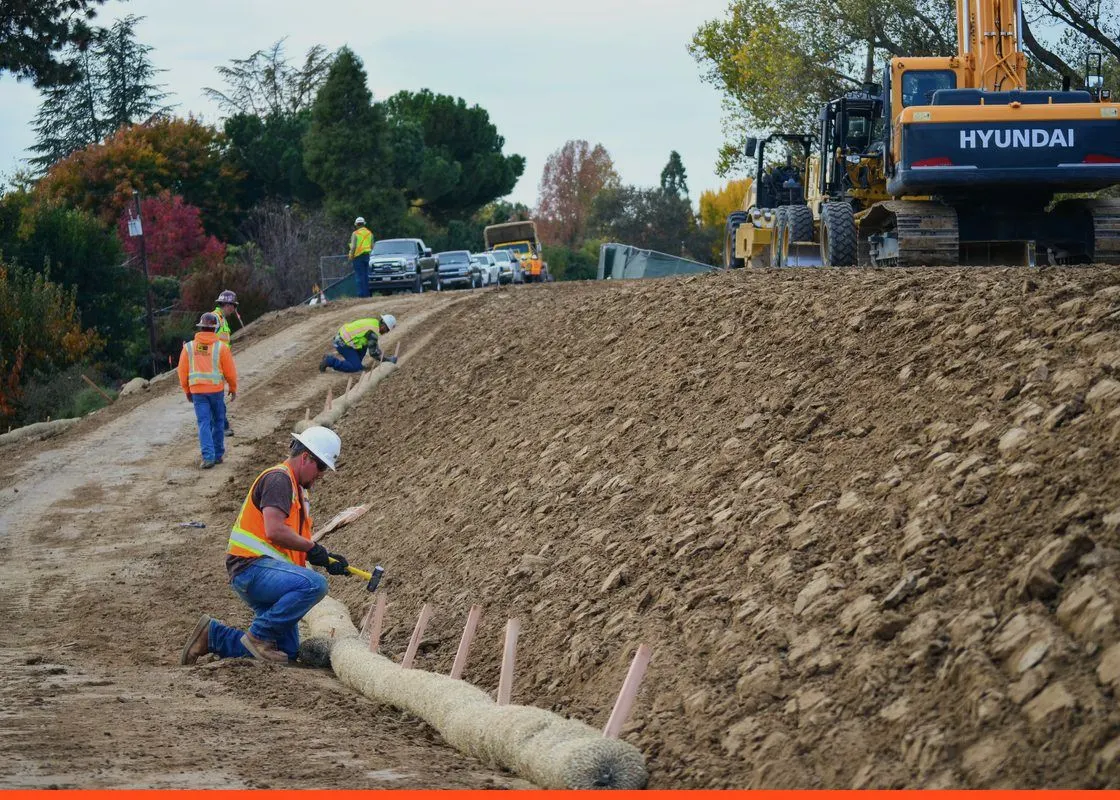
Workers staking a straw wattle along a newly graded slope
Photo: U.S. Army Corps of Engineers, Sacramento District, public domain.

What it is

Two jobs: hold the soil, catch what moves

Erosion controls keep soil in place, with cover and stabilization. Sediment controls catch the soil that moves before it leaves the site or reaches a drain. Most sites need both, and the stormwater plan says which go where.

Common controls

  1. Silt fenceFabric on stakes along the downslope edge of disturbed ground, which holds back sediment while water passes.
  2. Fiber rolls and wattlesRolls of straw or other fiber staked along the contour, at the toe of a slope or around a stockpile.
  3. Inlet protectionFilters or barriers at storm drain inlets that remove sediment before stormwater goes in.
  4. Stabilized entranceStone over fabric at each exit, so trucks do not carry mud out. See wheel wash and track-out.

When a job needs it

When the site needs controls

Controls go in before the earthwork they protect, and stay until the ground is stable.

  1. 01

    Clearing, grading and digging

    Any time soil is exposed and rain can move it.

  2. 02

    Sites under a stormwater permit

    Under EPA's permit, sites that disturb one acre or more, or are part of a larger plan that will.

  3. 03

    Work near drains and water

    Storm drain inlets on or next to the site, or water within 50 feet of the disturbance.

  4. 04

    Stockpiles

    Soil and debris piles need a barrier on the downhill side, and cover when they sit unused.

The rules

What the construction stormwater permit requires

EPA's 2022 Construction General Permit applies where EPA is the permitting authority. Most states run their own permits with similar rules, so check yours.

CGP Part 2.2.3

Perimeter controls downslope

Install sediment controls along any perimeter downslope of exposed soil, such as silt fence, compost filter socks, filter berms or gravel barriers. Run them on the contour with the ends turned up the slope, and remove sediment before it reaches half the height of the control above ground.1

CGP Part 2.2.10

Protect storm drain inlets

Install inlet protection at inlets that carry your stormwater to a receiving water, where you have access, and clean or replace it as sediment builds up. Sediment next to an inlet comes out by the end of the same business day, or the next if that is not feasible.1

CGP Part 2.2.5

Barrier and cover stockpiles

Put a sediment barrier, such as fiber rolls, silt fence or sandbags, along the downhill side of soil and land clearing piles, and cover or stabilize piles that will sit unused for 14 days or more.1

CGP Parts 2.1.3 and 2.1.4

Install first, keep them working

Controls needed for the next phase go in before that earth disturbance starts. Routine maintenance starts right away and is finished by the close of the next business day, or within seven calendar days where that is infeasible and documented.1

Your stormwater plan decides which controls go where. We source local providers to supply and install them. See SWPPP site services.
Controls to install before grading?

Send us the plan and the dates. We source a local provider to supply and install the controls.

The options

Where each control goes

Each control has a place on the site and a way it fails. Inspections look for both.

ControlWhere it goesWatch for
Silt fenceThe downslope perimeter of disturbed groundUndercutting, and sediment past half its height
Fiber rolls or wattlesOn the contour, at slope toes and around stockpilesGaps between rolls and loose stakes
Inlet protectionStorm drain inlets on and next to the siteClogging, and sediment building up beside it
Stabilized entranceEvery exit onto a paved roadStone packed with mud, and tracking onto the street

How it works with Detritus

One request for the whole SWPPP sheet

You coordinate through one account desk while local BMP crews install, maintain, and pull the controls.

  1. Send your SWPPP or civil grading sheet

    Share your erosion control drawings, linear footages, inlet counts, and earthwork start date.

  2. Local crew quote on one agreement

    We price BMP materials and installation alongside your restrooms, washout, and roll-offs.

  3. Pre-grading installation

    Downslope silt fence, inlet filters, and exit pads go in ahead of clearing and stripping.

  4. Post-storm cleanout and repairs

    After heavy rain or a SWPPP inspection punch list, call us to dispatch cleanout or re-staking.

  5. Final teardown at stabilization

    Once turf, seeding, or paving achieves final stabilization, temporary fabric and stakes come out.

For a quote

What to tell us

Attaching your civil erosion-control plan sheet gets the fastest takeoff; otherwise send these site counts.

  • Site address and total disturbed acreage
  • Civil erosion-control or SWPPP plan sheets, if issued
  • Estimated linear footage of trenched silt fence, filter sock, or straw wattles
  • Count and grate style of storm drain inlets requiring protection
  • Number of construction exits opening onto paved streets
  • Target pre-grading install date and earthwork phase schedule
  • Whether weekly and post-rain SWPPP inspections are handled in-house or by a third party

Common questions

Erosion control questions

What is the difference between erosion control and sediment control?

Erosion control holds exposed soil in place using mulch, blankets, hydroseeding, or temporary cover so rain cannot detach it. Sediment control traps soil particles already in motion before runoff exits the perimeter or enters a storm drain, using silt fence, wattles, or inlet filters.

Do I need silt fence on my site?

Sites regulated under EPA's Construction General Permit (generally disturbing 1 acre or more, or part of a larger common plan) must install perimeter sediment controls such as silt fence, compost filter socks, or berms along any downslope edge of disturbed soil; state and municipal permits enforce similar or tighter thresholds.

What is inlet protection?

A drop-in filter bag, curb sock, gravel berm, or block barrier placed at a storm drain grate or throat to trap suspended sediment before site runoff enters the municipal storm sewer.

When does sediment have to be removed from silt fence?

Under Part 2.2.3 of EPA's Construction General Permit, accumulated sediment must be dug out before deposits reach half the above-ground height of the silt fence or barrier, and any washouts or undercutting must be repaired promptly after rain.

Can you supply wattles and inlet protection?

Yes, in markets where local SWPPP installers operate, we source and schedule silt fence, straw wattles, compost socks, inlet filters, and stone entrances together. Send your civil sheet and target dates.

How do I get a quote?

Call sales at (888) 588-2607 or submit your site address, SWPPP plan or linear footages, and pre-grading dates on our quote form.

Erosion control on one agreement

Local providers do the work. We source them, schedule them with your toilets, washout and containers, and send one bill.

Read next

Sources

  1. U.S. EPA, 2022 Construction General Permit, Parts 1.1.2, 2.1.3, 2.1.4, 2.2.1, 2.2.3, 2.2.5 and 2.2.10. Applies where EPA is the permitting authority. Checked November 4, 2026. epa.gov