Light towers for night work and early starts
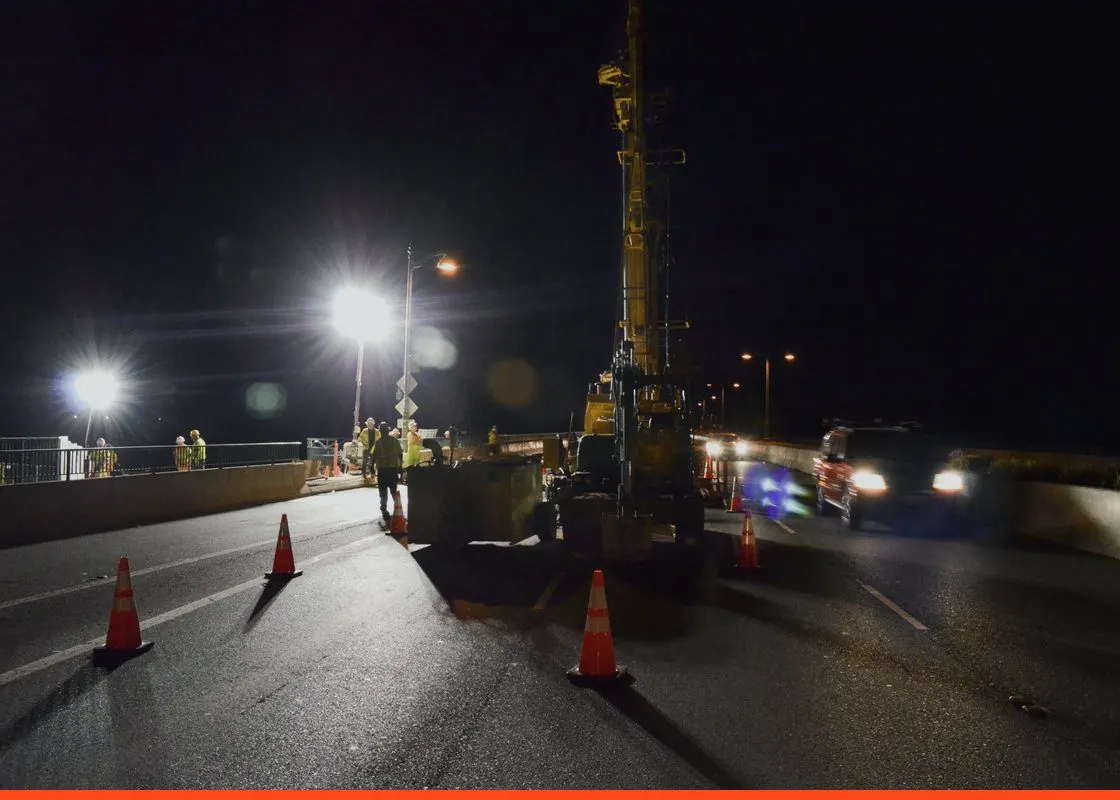
Pre-dawn concrete pours, overnight lane closures, and winter shifts need task lighting that hits OSHA minimums without blinding passing drivers. We source towable diesel and plug-in light towers from local providers, coordinate fuel drops, and put the rental on one agreement with the rest of your mobilization.
- LightEnough for the task
- AimDown and away from traffic
- PowerFuel or plug-in
The rule
How much light the rules require
OSHA requires construction areas to be lit to at least the minimums in its illumination table while work is in progress.1
| Area or operation | Minimum foot-candles |
|---|---|
| General construction area lighting | 5 |
| General construction areas, concrete placement, excavation and waste areas, accessways, active storage areas, loading platforms, refueling and field maintenance areas | 3 |
| Indoors: warehouses, corridors, hallways and exitways | 5 |
| General construction plant and shops, such as batch plants, carpenter shops and mess halls | 10 |
| First aid stations, infirmaries and offices | 30 |
Foot-candles measure illuminance on the work surface itself rather than lamp lumens at the mast. Ask the local supplier for each tower's throw footprint at full mast height, and check critical work zones with a pocket light meter once towers are spotted.
Need light for a night shift?
Send your work-zone footprint, shift hours, and fuel access. We source local towers and schedule refueling around your crew.
Glare control
Aim fixtures down at the deck, never into oncoming lanes
Along active roads and occupied properties, glare creates as many safety issues as dark spots. Part 6 of the Manual on Uniform Traffic Control Devices requires work-zone floodlighting to be positioned so it does not blind approaching drivers, flaggers, or crew members.2 FHWA's nighttime lighting guide directs crews to aim fixtures away from travel lanes and tilt lamp heads outward no more than 30 degrees from vertical.3 Raise the mast to full height before tilting heads so light hits the grade cleanly instead of shining flat across eye level.
Ordering
Four details that size your tower order
Share your site footprint and shift window so we match tower count and tank runtime to the work.
- 01
Work-zone dimensions and task
Total square footage or lane length plus the work underway, since fine slab finishing needs tighter spacing than bulk grading.
- 02
Shift hours and rental term
Overnight closures, early morning starts, or continuous 24-hour operations, along with expected mobilization dates.
- 03
Diesel, solar, or plug-in feed
Diesel towers need scheduled wet-hosing on multi-week runs, while electric towers tie into site power or generators (see temporary power).
- 04
Outrigger pads and adjacent traffic
Level spots out of haul paths where outriggers can set firm and lamp heads can point away from traffic and neighboring windows.
Common questions
Light tower questions
How much light does a construction site need?
OSHA 29 CFR 1926.56 sets minimum illumination in foot-candles by work area: 3 foot-candles for concrete placement, excavation, active storage, and accessways; 5 for general construction areas and indoor corridors; 10 for batch plants and field shops; and 30 for first aid stations and offices.
What is a foot-candle?
A foot-candle measures how much light actually reaches a work surface (one lumen per square foot), which drops off quickly as distance from the mast increases.
How do I stop work lights blinding drivers?
Raise the mast fully and aim fixtures down toward the work rather than toward oncoming lanes; FHWA nighttime work-zone guidelines recommend tilting lamp heads no more than 30 degrees outward from straight down.
Do light towers need fuel?
Standard towable diesel towers need periodic refueling based on nightly run hours, though plug-in electric and solar-hybrid units are available in many markets. We can put scheduled fuel drops on the same agreement, and our temporary power page covers generator tie-ins.
Can you place towers for a night shift?
Yes. Share your work-zone footprint, shift hours, and drop-off window, and we will source local towers and coordinate delivery ahead of your crew start.
How do I get a quote?
Call sales at (888) 588-2607 or submit your job address, tower count, and dates through our quote form.
Light, power and fuel on one agreement
Local providers do the work; we hold the contract, own the problems, and send one bill. If a delivery gets missed, we contact the provider the same business day.
Read next
Sources
- 29 CFR 1926.56, Illumination, Table D-3. Checked November 3, 2026. ecfr.gov
- Federal Highway Administration, Manual on Uniform Traffic Control Devices, 11th Edition, Part 6, Temporary Traffic Control. Checked November 3, 2026. fhwa.dot.gov
- ATSSA for FHWA, Nighttime Lighting Guidelines for Work Zones (2013). Checked November 3, 2026. workzonesafety.org