29 CFR 1926.252(a)
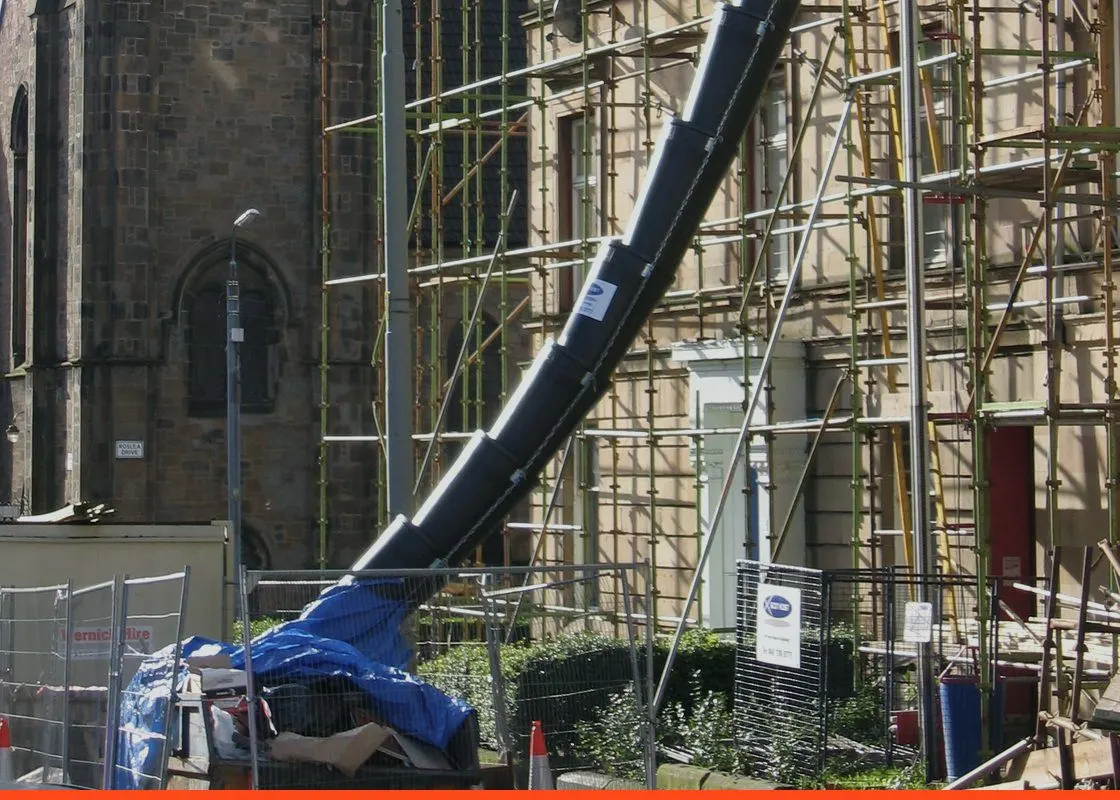
Over 20 feet, use an enclosed chute
When material is dropped more than 20 feet to any point outside the exterior walls of the building, an enclosed chute of wood or equivalent material has to be used. The standard defines an enclosed chute as a slide closed in on all sides.1
29 CFR 1926.252(b)
No chute inside? Barricade the drop zone
When debris is dropped through holes in the floor without a chute, the area below has to be enclosed with barricades at least 42 inches high and at least 6 feet back from the edge of the opening above, with warning signs at each level.1 See barricades.
29 CFR 1926.852(b) to (d)
Demolition chutes are enclosed and gated
In demolition, chute sections at more than 45 degrees from horizontal have to be entirely enclosed apart from loading openings with closures. A substantial gate goes at or near the discharge end, run by a competent employee, and the area around the discharge end is closed off when work stops.2
29 CFR 1926.852(e) to (g)
Guard the loading openings
Openings where workers dump debris need a guardrail about 42 inches high. Where material is dumped from equipment or wheelbarrows, each opening needs a toeboard or bumper at least 4 inches thick and 6 inches high, and the chute has to be strong enough for the impact of the debris.2
Settle who mounts, inspects and takes down the chute before it goes up, and check whether your city needs a permit for a chute or dumpster over a sidewalk or street. See dumpster permits.