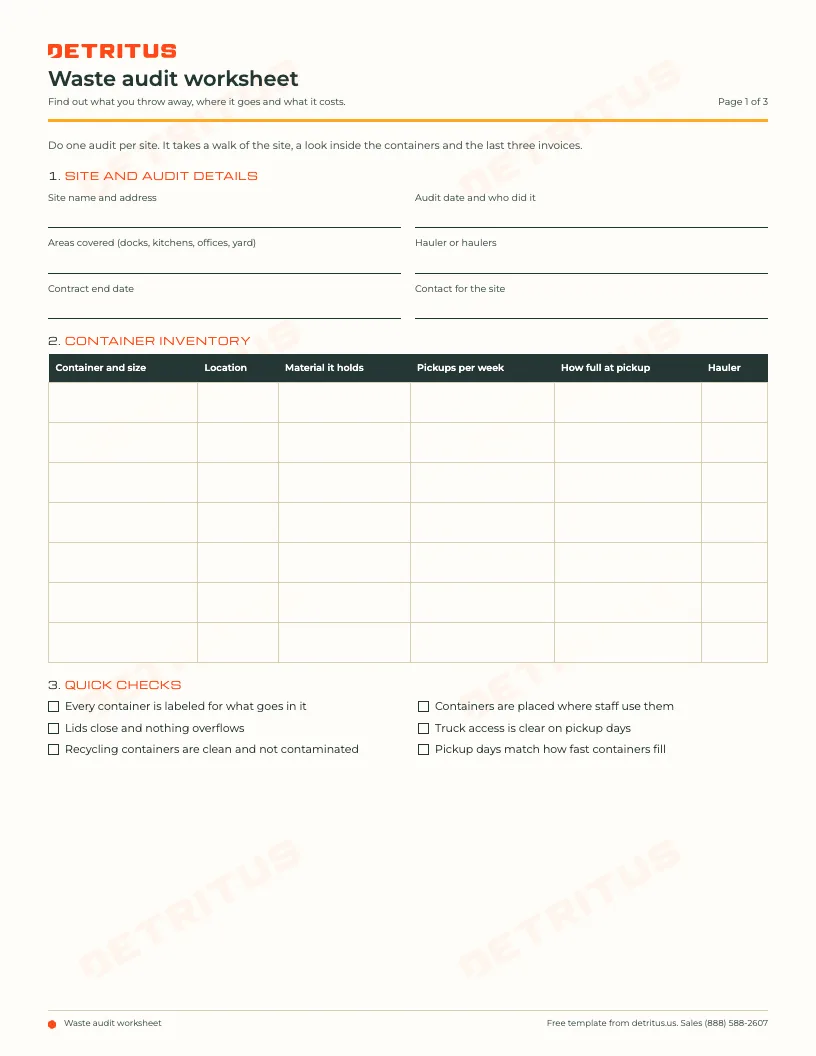
Page 1: site and containers
Site details, a container inventory and a quick checklist of common problems.
UseFill in on the walk
Half-empty front-load bins getting hauled three times a week and unflattened cardboard filling trash compactors quietly drain facility budgets. A quick site waste audit links what sits inside your enclosures to what shows up on your monthly hauler statements so you can cut excess pickups, divert clean recyclables, and right-size equipment. Download our free three-page PDF and Word worksheet to run a walk-through in an hour.
How to audit
Skip the hazmat suits and bag-sorting tables on your first pass; a clipboard, phone camera, and 90 minutes right before collection day will catch 80 percent of easy savings.
Record each bin, cart, baler, and compactor on site: cubic yards, stream label, lock bar condition, hauler decal, and scheduled pickup days.
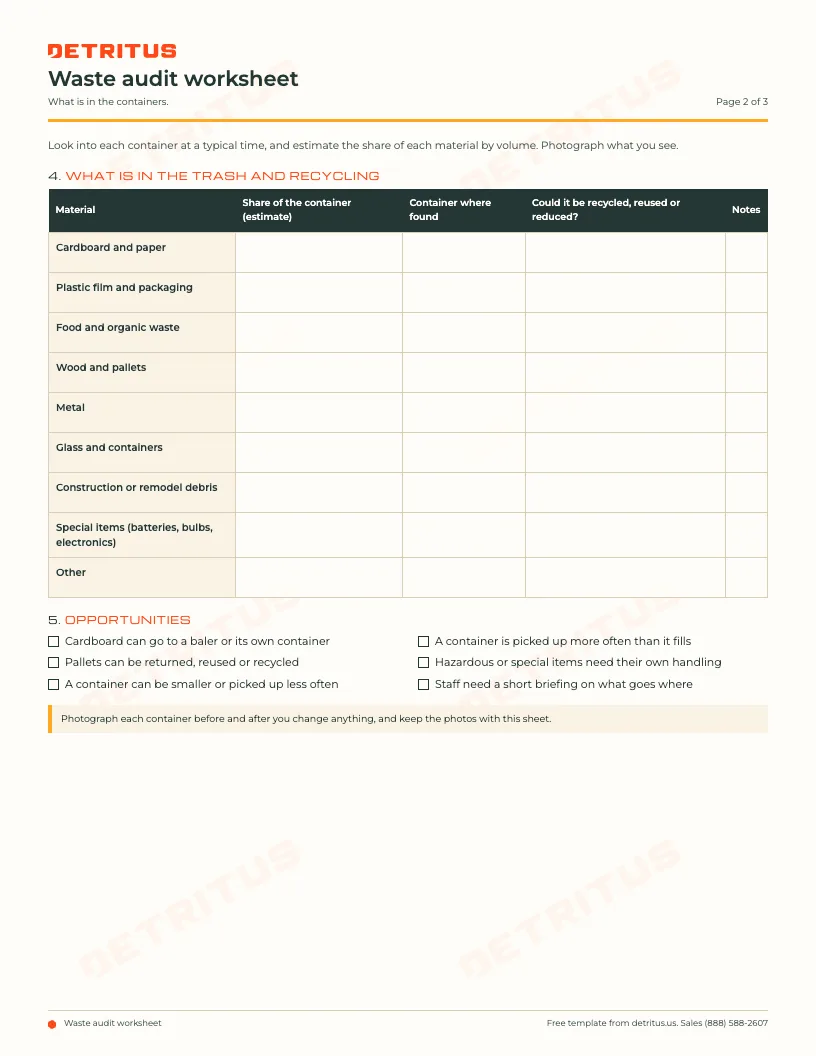
Open lids right before scheduled service day to record real fill level (quarter, half, full, or overflowing) and photograph dominant materials sitting in the trash.
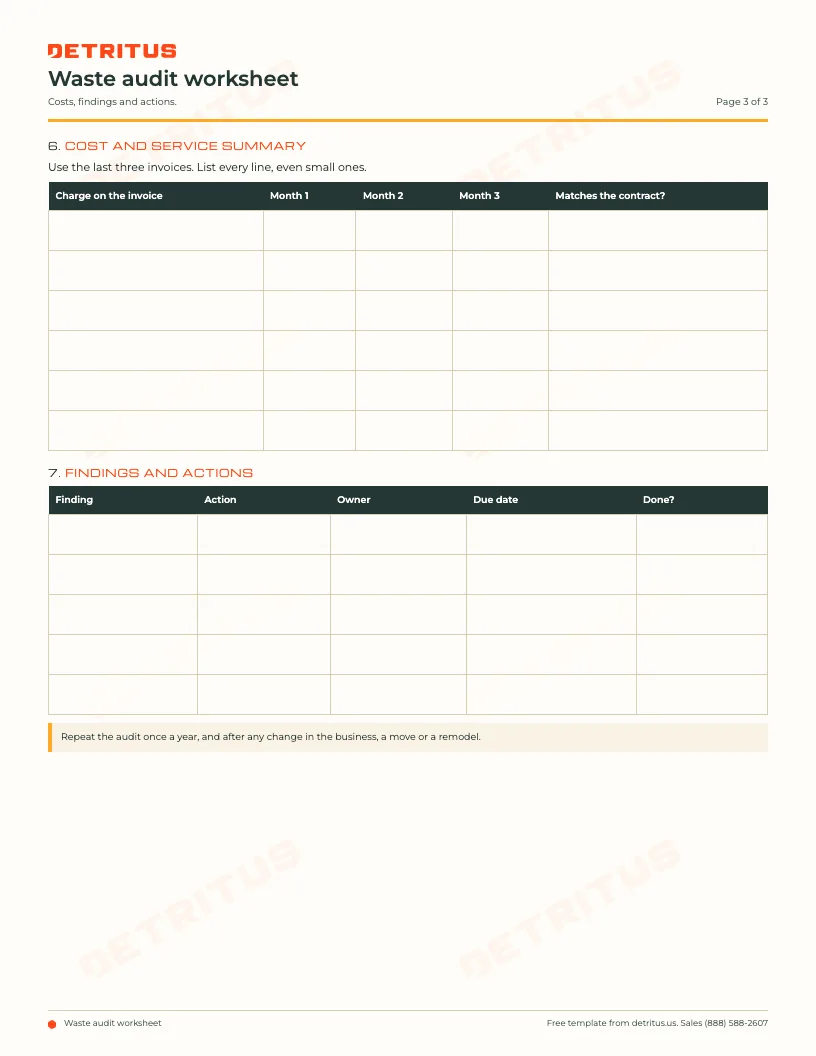
Match your pad inventory against the last three monthly bills using our invoice audit worksheet to spot ghost containers, unneeded extra pickups, or recurring contamination fees.
Convert findings into concrete service adjustments: drop a weekly pickup on half-empty bins, add a cardboard baler or OCC bin, fix dock signage, and re-check bills 60 days later.
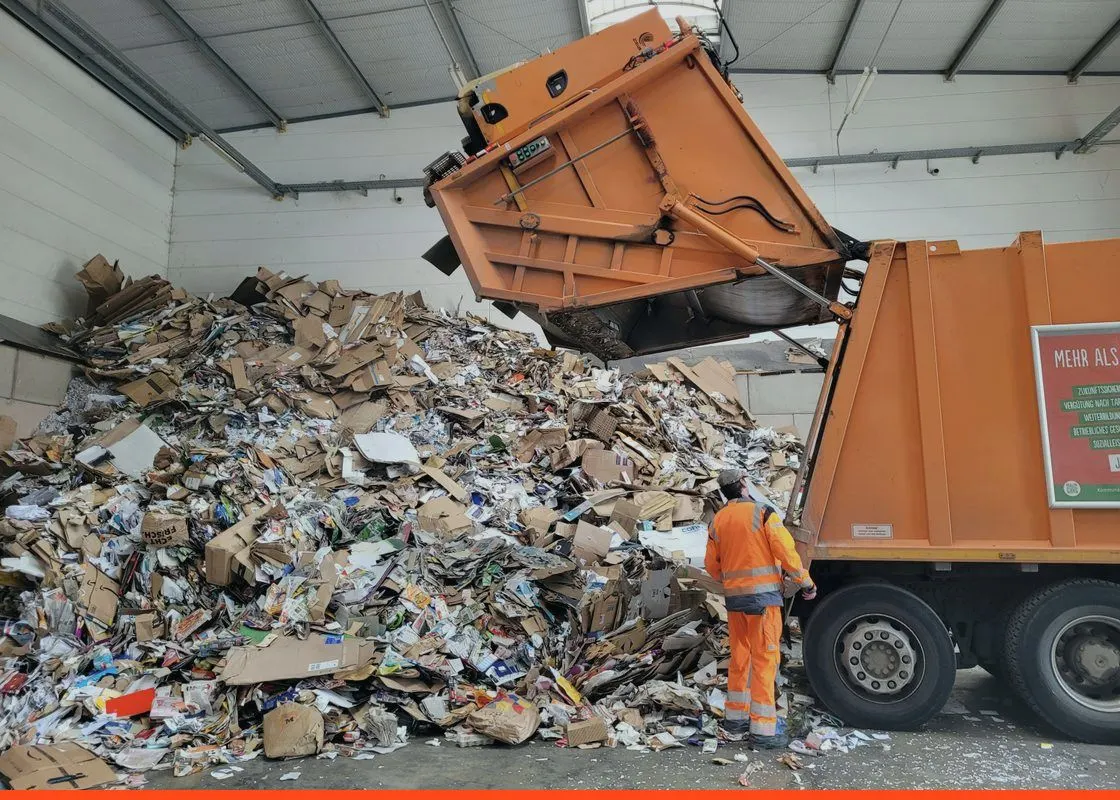
Look for corrugated cardboard in the trash stream first. EPA's national materials data reports a 96.5 percent recycling rate for corrugated boxes in 2018, meaning clean OCC has established mill demand almost everywhere and takes up huge air volume when tossed loose into trash bins.1 On roll-off and compactor accounts billed by weight, also verify net disposal weights against certified scale tickets governed by NIST Handbook 44 tolerances.2
We adjust bin sizes, add cardboard balers or compactors, and consolidate all of your locations onto one agreement and one invoice.
The template
Three letter size pages. The PDF has fields you can type into, and the Word version opens in any editor. Use the preview to see the layout first.
Site details, a container inventory and a quick checklist of common problems.
UseFill in on the walk
Material by material estimates, with a column for what could be recycled, reused or reduced, and an opportunities checklist.
UseFill in with photos
A three month cost summary against the contract and a findings and actions table.
UseReview with the site team
Common questions
A commercial waste audit is a structured check of every trash and recycling container on a property, how full each bin actually gets before pickup, what materials are landing in the wrong stream, and how physical service matches the last three hauler invoices.
A practical visual dock-and-enclosure audit takes 60 to 90 minutes per facility when timed just ahead of scheduled collection day, plus 20 minutes at a desk reconciling the last three monthly bills.
Check container fullness before pickup (consistent half-empty bins point to excess weekly frequency) and look for high-volume recyclables sitting in the trash, especially unflattened cardboard, shrink wrap, wooden pallets, scrap metal, and food waste, alongside trash contaminating recycling bins.
Run a physical container check annually, 90 days before any contract renewal opt-out window, and whenever a facility changes headcount, production shifts, tenants, or shipping volume.
Yes. Both a fillable three-page PDF and an editable Word file are linked above at no cost, with no form gate or sign-up required.
Yes. Share your completed worksheet or current invoices, and we can right-size front-load containers, add cardboard balers or compactors, and consolidate service across your locations onto one agreement. Call sales at (888) 588-2607.
Local providers do the work; we hold the contract, own the problems, and send one bill. If a delivery gets missed, we contact the provider the same business day.