First choice
Send them back or reuse them
Ask your suppliers whether they take pallets back, and set aside the good ones for your own shipping before anything goes in a box.
Clean lumber and pallets are some of the easiest debris to recycle. EPA says wood can become engineered products, mulch and compost, and scrap wood can be chipped on site.1 Treated and painted wood is different, so the grade of the wood decides where it can go.
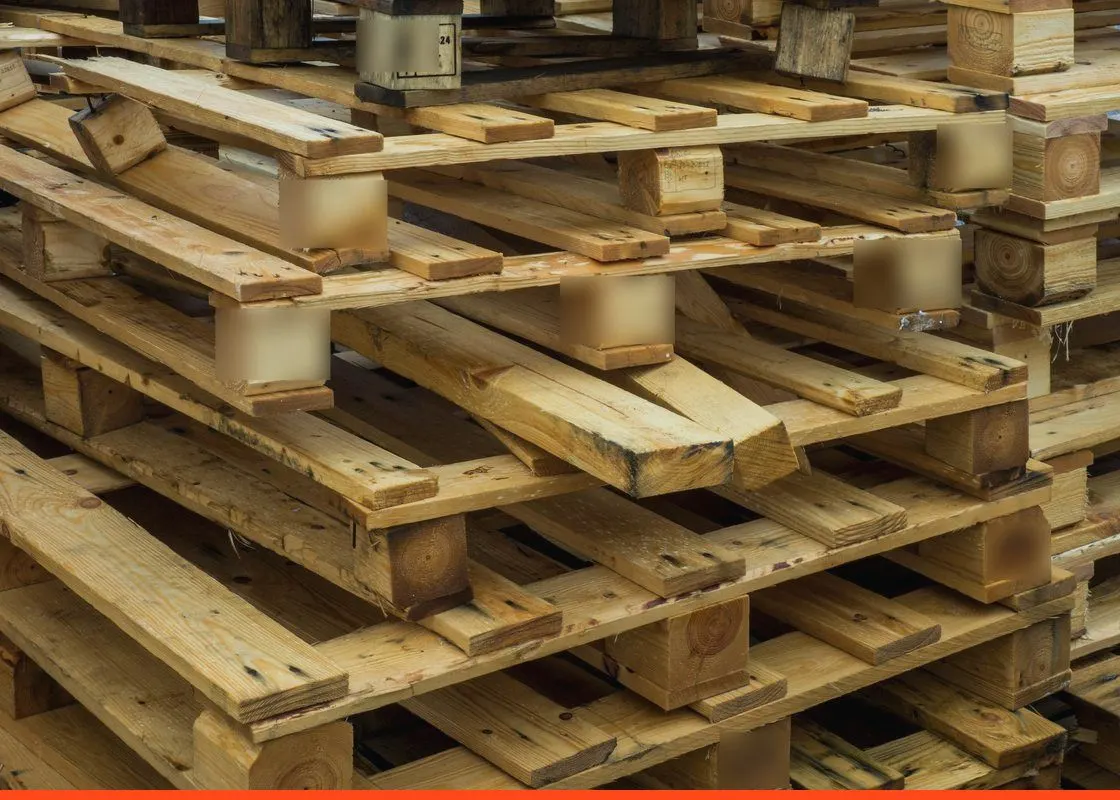
Why it is its own stream
A wood recycler cares about what is on the wood and in it. Sort by grade, from clean to treated, and each pile has a clearer place to go.
Grade 1
Framing offcuts, unpainted trim, crates and pallets. EPA says pallet recycling is usually chipping for uses such as mulch or bedding.2
Where it goesA wood recycler or chipper, where one exists
Grade 2
Engineered wood is clean in the sense of no paint, but recyclers differ on whether they take it. EPA weighs it at 268 pounds a loose yard, heavier than lumber.3
Where it goesAsk the recycler, or a mixed debris box
Grade 3
Doors, siding, cabinets and finished trim. Clean and painted wood can go to different places, so say which you have when you order.
Where it goesUsually a mixed debris box. Ask first
Grade 4
Old decks, fence posts and playsets. EPA says wood treated with chromated arsenicals (CCA) should not be reused in products such as mulch and should not be burned in a residential setting.4
Where it goesNever a mulch or chip load. See the rules
Which container
Lumber is standard construction debris, so a mixed box always works. A separate box earns its place when there is a lot of clean wood and somewhere for it to go.
Framing, trim, cabinets and painted wood ride with the rest of the demolition. The load goes wherever mixed debris goes in your market.
One grade of wood, nothing else. Pallets are one of the clean, single-material loads listed in our guide to what can go in a dumpster. Ask us where a local program exists.
CCA-treated wood never belongs in a load headed for mulch or chips. Keep it with mixed debris or follow your state's guidance.
On a job that separates several streams, see construction recycling. A wood stream counts toward diversion, and diversion reports keep the weights by stream.
How big
Loose wood is light for its size, so space is usually the limit, the opposite of shingles or concrete.
| Material | EPA loose weight | A full 20 yard | A full 30 yard |
|---|---|---|---|
| Clean dimensional lumber | 169 lb a cu yd | About 1.7 tons | About 2.5 tons |
| Pallets and crates | 169 lb a cu yd | About 1.7 tons | About 2.5 tons |
| Painted, stained or treated wood | 169 lb a cu yd | About 1.7 tons | About 2.5 tons |
| Clean engineered wood | 268 lb a cu yd | About 2.7 tons | About 4 tons |
Loose weights from EPA.3 Full-container figures are the container's yards times those weights. Real loads pack tighter or looser than this, and wet wood is heavier: EPA weighs green wood chips at 473 pounds a yard against 243 for dry.3 Limits vary by hauler and market, so confirm the tons included in writing. For a mixed load, use the debris weight calculator and the dumpster size guide.
Pallets for businesses
Pallets account for over 90 percent of wood packaging, by EPA's estimate, and about 3.1 million tons of them were recycled in 2018, a 17.1 percent rate.2
First choice
Ask your suppliers whether they take pallets back, and set aside the good ones for your own shipping before anything goes in a box.
Second choice
Broken pallets are usually chipped. Keep them free of shrink wrap, cardboard and trash so the load stays clean.
At volume
A plant or warehouse that fills a box with pallets every few weeks can set up a pallet-only container where a local program exists. See manufacturing and distribution.
Rough count
EPA's averages, 25 pounds a pallet and 169 pounds a loose yard of pallets and crates, work out to about 7 loose pallets a yard.3 Stacked flat, more fit. Count yours and tell us when you order.
Prep and loading
Clean, engineered, painted and treated in separate piles before anything is loaded.
Nails, screws, metal straps and plates: some sites want them out, some do not mind. Find out first.
Cut long pieces and knock apart broken pallets. Wood fills a box by space, so flat loads hold more.
Old decks and posts go with mixed debris, never in a load headed for chips or mulch.
EPA warns against burning CCA or other preservative-treated wood in a residential setting.4 Local burn rules often go further.
If the project counts diversion, ask for a weight record for each haul.
Keep it out
A clean load stays clean only if nothing else gets in. The receiving site has the final say.
Rules and recycling
Federal guidance sets the floor. State and local rules on treated wood and burning can be stricter.
U.S. EPA
EPA says homeowners can usually dispose of CCA-treated wood through ordinary trash collection, and that state and local governments may have their own guidance.4
U.S. EPA
For treated wood thrown out by anyone other than a household, EPA says the person generating the waste is responsible for deciding whether it is hazardous waste under RCRA.4 Ask your state agency if you are not sure.
U.S. EPA
EPA says wood can be recycled into engineered wood products such as furniture, as well as mulch, compost and other products, and that scrap wood can be chipped on site as mulch or groundcover.1
U.S. EPA
Landfills received 12.2 million tons of wood from municipal solid waste in 2018, by EPA's estimate.2 Where a wood recycler operates, a clean load is how you reach it.
How it works with Detritus
Send one request. We source a roll-off from a local provider in the markets we serve and match the container to the material. Availability varies by market. Clean wood and pallet recycling exists in some areas, so ask us where a local program exists.
Decide
| Your situation | What to do |
|---|---|
| A remodel with some lumber in it | A mixed construction debris box |
| Lots of clean framing offcuts | Ask us whether a clean wood load is possible in your market |
| A warehouse with a steady pile of pallets | Supplier take-back first, then a pallet-only container where a local program exists |
| An old deck, fence or playset coming down | Treat it as treated wood: no chips, no mulch, no burning |
| A LEED or waste plan project | Separate wood as its own stream and keep the weights. See diversion reports |
| Branches and stumps, not lumber | That is yard waste. See yard waste dumpsters |
Common questions
Yes. Lumber, framing, trim and cabinets are standard construction debris. Separate clean wood only if a local recycler will take it.
Often. EPA says pallet recycling is usually chipping for uses such as mulch or bedding, and estimates 3.1 million tons were recycled in 2018. Reuse and supplier take-back come first.
EPA says homeowners can usually put CCA-treated wood in ordinary trash, and that it should never be burned in a residential setting or reused as mulch. Businesses must decide whether their treated wood waste is hazardous. Check your state's guidance.
EPA puts clean lumber and pallets at about 169 pounds per loose cubic yard, so a full 20 yard is about 1.7 tons. Wood usually fills the box before it reaches the weight limit.
It depends on the recycler. Clean and painted wood can go to different places, so say which you have when you order.
Call sales at (888) 588-2607 or request a quote with the address, what the wood is, roughly how much and the dates.
Tell us what it is and how much. Local providers do the work; we hold the contract, own the problems, and send one bill.
Related guides
Sources